Care and Maintenance
Medium Bristle Brush Guide for Window Cleaning
Discover why a medium bristle brush is the ultimate tool for window cleaning. Learn about materials, pure-water systems, and expert selection tips.


You're probably standing in one of two places right now. Either you're in the cleaning aisle looking at a row of bright blue spray bottles, or you're at home staring at fingerprints, dust, and that hazy film on the glass wondering whether a window cleaner with ammonia is the right call.
That question comes up all the time because ammonia cleaners have been around for decades, and they still work. But homeowners and property managers also hear mixed advice. Some people swear by them. Others avoid them completely because of the smell, the safety warnings, or concerns about damage.
After over 26 years of hands-on work, Professional Window Cleaning has seen where ammonia helps, where it causes trouble, and where people confuse the cleaner with the actual method. That matters, because a product and a professional process aren't the same thing.
A lot of glass cleaners look similar on the shelf. Blue liquid. Trigger sprayer. Promises of shine. For many of those products, the familiar punch behind the cleaning power has long been ammonia.
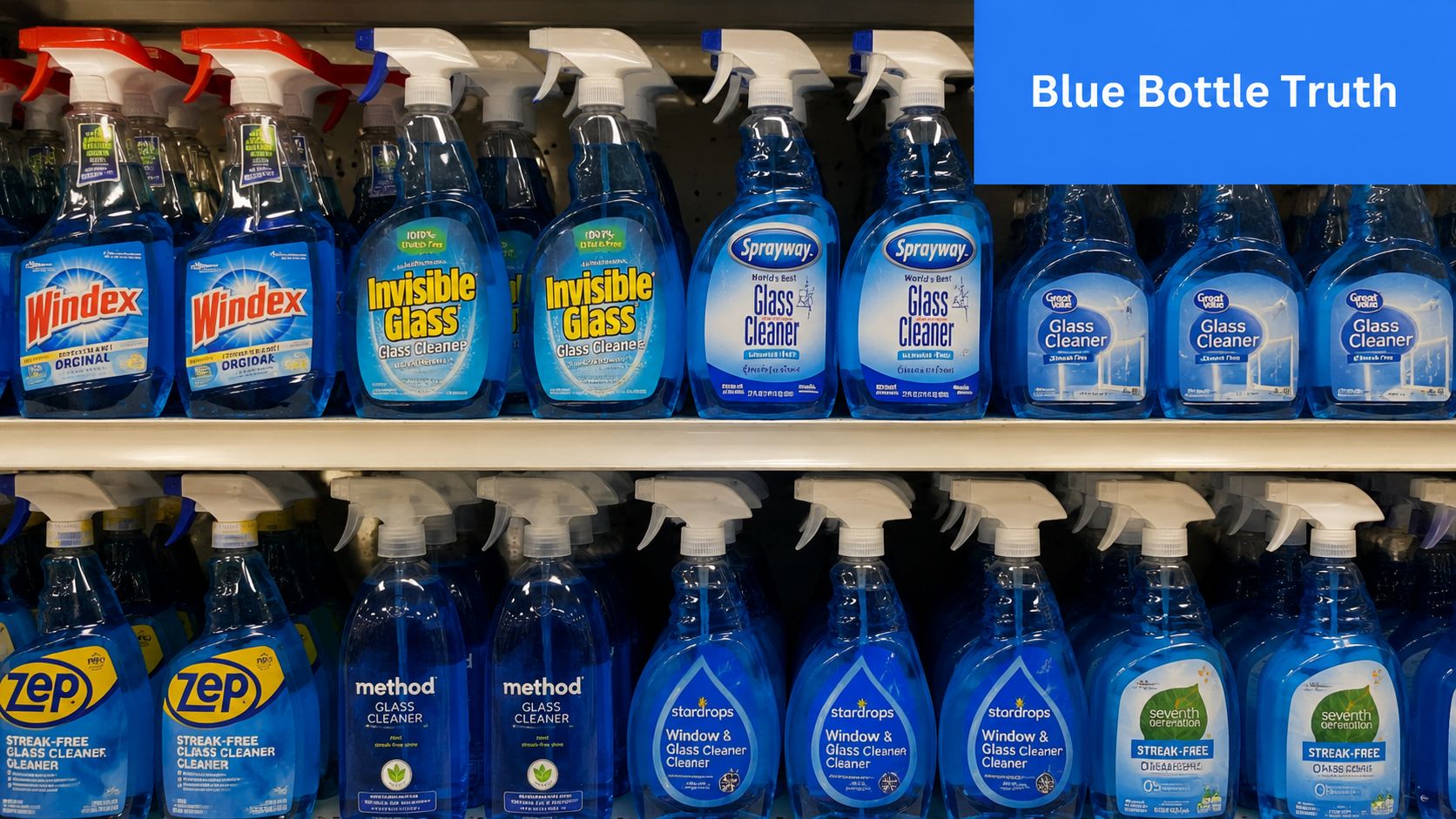
That's why people keep coming back to the same basic questions. Does it clean better? Is it safe to spray inside the house? And is this what professional window cleaners use on every job?
The short answer is simple. Ammonia works well on the kind of mess that plain water struggles with. Window glass often doesn't just collect dust. It picks up cooking residue, hand oils, outdoor pollution, and the thin greasy film that builds slowly enough that people don't notice it until the glass looks dull.
Ammonia-based products remained a dominant segment of the global glass cleaner market, which was valued at USD 2.45 billion in 2023, and ammonia formulations hold a huge share because they dissolve oily films 30 to 50 percent faster than many non-ammonia alternatives, according to Professional Window Cleaning's ammonia window cleaner guide.
Most people aren't trying to remove “dirt.” They're trying to remove a film they can't quite name.
A homeowner can get decent results with the right product and the right technique. But a spray bottle and paper towel won't behave like a professional system on large glass, exterior panes, or sun-heated windows.
That's especially true on properties in Phoenix, Denver, Scottsdale, and Las Vegas, where heat, dust, traffic film, and hard-use commercial glass create a very different cleaning problem than a bathroom mirror.
Ammonia sounds harsher than it really is in this context, and that's where readers often get stuck. In window cleaning, ammonia isn't magic. It's chemistry doing a specific job.
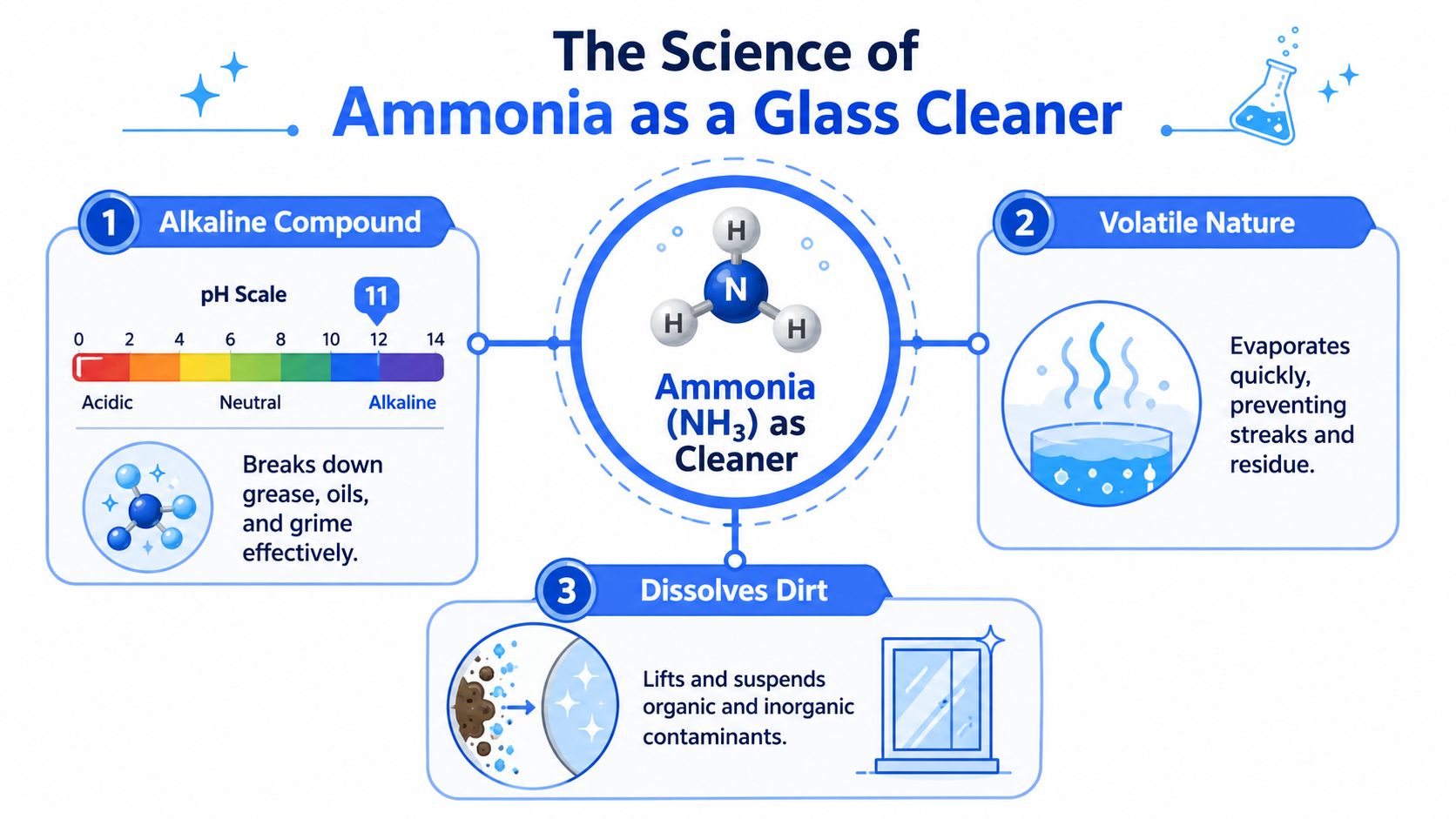
Ammonia (NH₃) functions as a mild base on the pH scale. In plain language, that means it's good at breaking apart greasy residue that water alone tends to slide over.
Think about washing a pan after cooking bacon. Water moves the loose bits, but it doesn't do much to the oily film. A cleaner that cuts grease changes the surface, loosens the film, and helps you move it off the material instead of smearing it around. Ammonia does that on glass by denaturing lipids and dissolving grime, while also adding “slip” so your cloth or applicator moves more smoothly across the surface, as explained in this guide to ammonia cleaning windows.
People often blame ammonia itself for streaking. Usually, the bigger problem is timing and evaporation.
If you spray an ammonia cleaner on hot glass or in direct sunlight, the liquid can evaporate before you've fully lifted and removed the grime. The residue stays behind, and the towel just chases it around. That's why a window can look worse after cleaning even when the product itself is effective.
Practical rule: If the glass feels hot to the touch, wait for shade or move to another side of the building.
| Cleaner type | Best at | Common limitation |
|---|---|---|
| Ammonia-based cleaner | Grease, oily film, urban residue | Can evaporate too fast on hot glass |
| Milder ammonia-free cleaner | Light routine touch-ups | May need extra passes on greasy buildup |
| Plain water | Dust and loose debris | Struggles with oils and fingerprints |
That's the science in everyday terms. A window cleaner with ammonia is effective because it changes how oily grime behaves on glass. Used under the wrong conditions, though, the same fast-drying behavior that makes it appealing can work against you.
Ammonia isn't something to fear, but it isn't something to use casually either. It has clear advantages, and it also has hard limits.
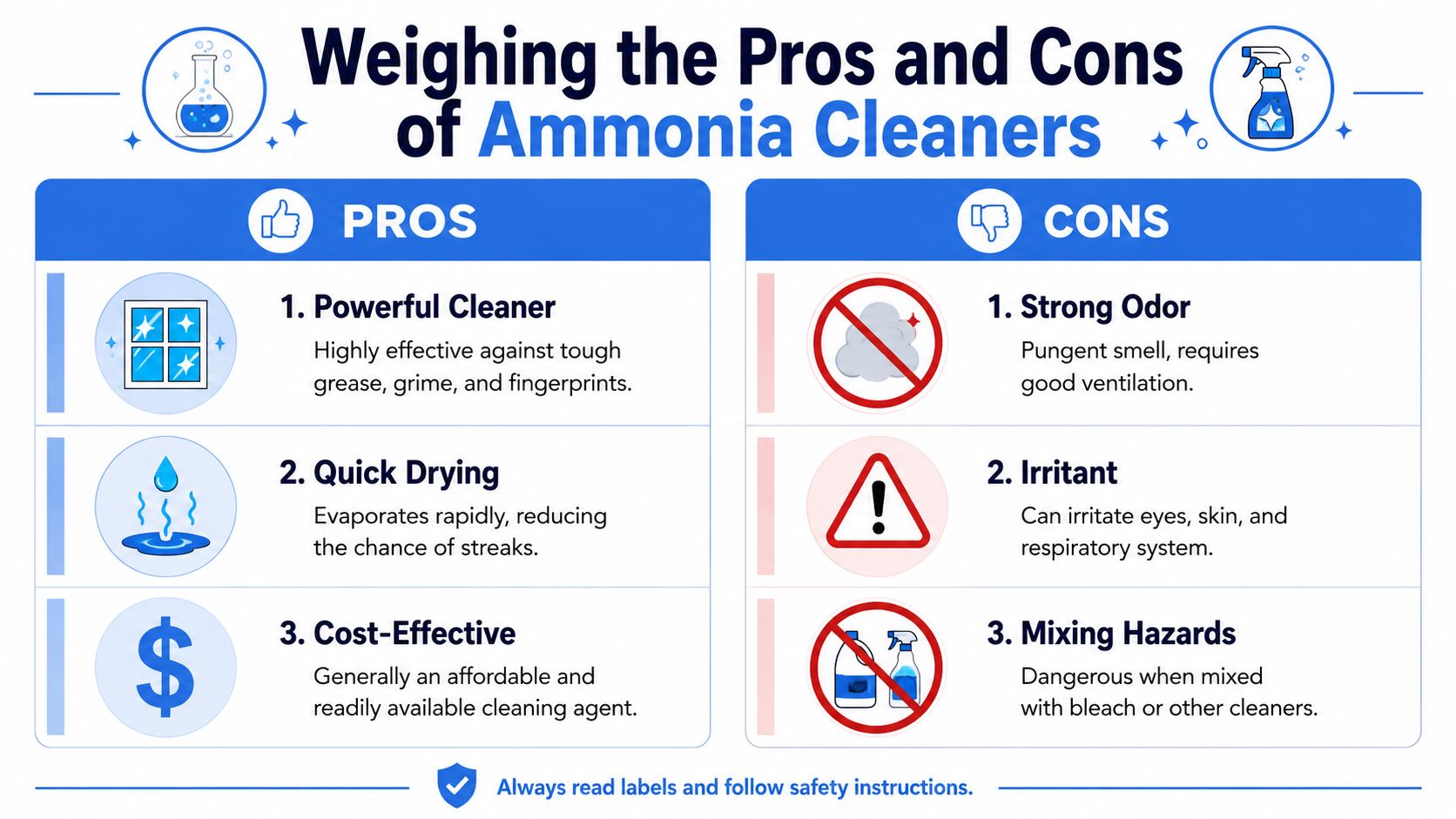
For the right surface, ammonia is a strong degreaser. It's especially useful when glass has more than dust on it. Kitchen-adjacent windows, storefront glass near parking lots, and panes exposed to traffic residue often clean up faster with ammonia than with gentler alternatives.
It also works well as a DIY option when diluted properly and used with airflow. A standard home-use mix is a 1-to-10 ratio, about ½ cup of clear, non-sudsing ammonia per gallon of cool water, as outlined by Earth911's guidance on better glass and window cleaners.
One rule overrides everything else. Never mix ammonia with bleach or chlorine-containing products. That combination creates chloramine gas, which can cause coughing, wheezing, shortness of breath, and more severe respiratory harm.
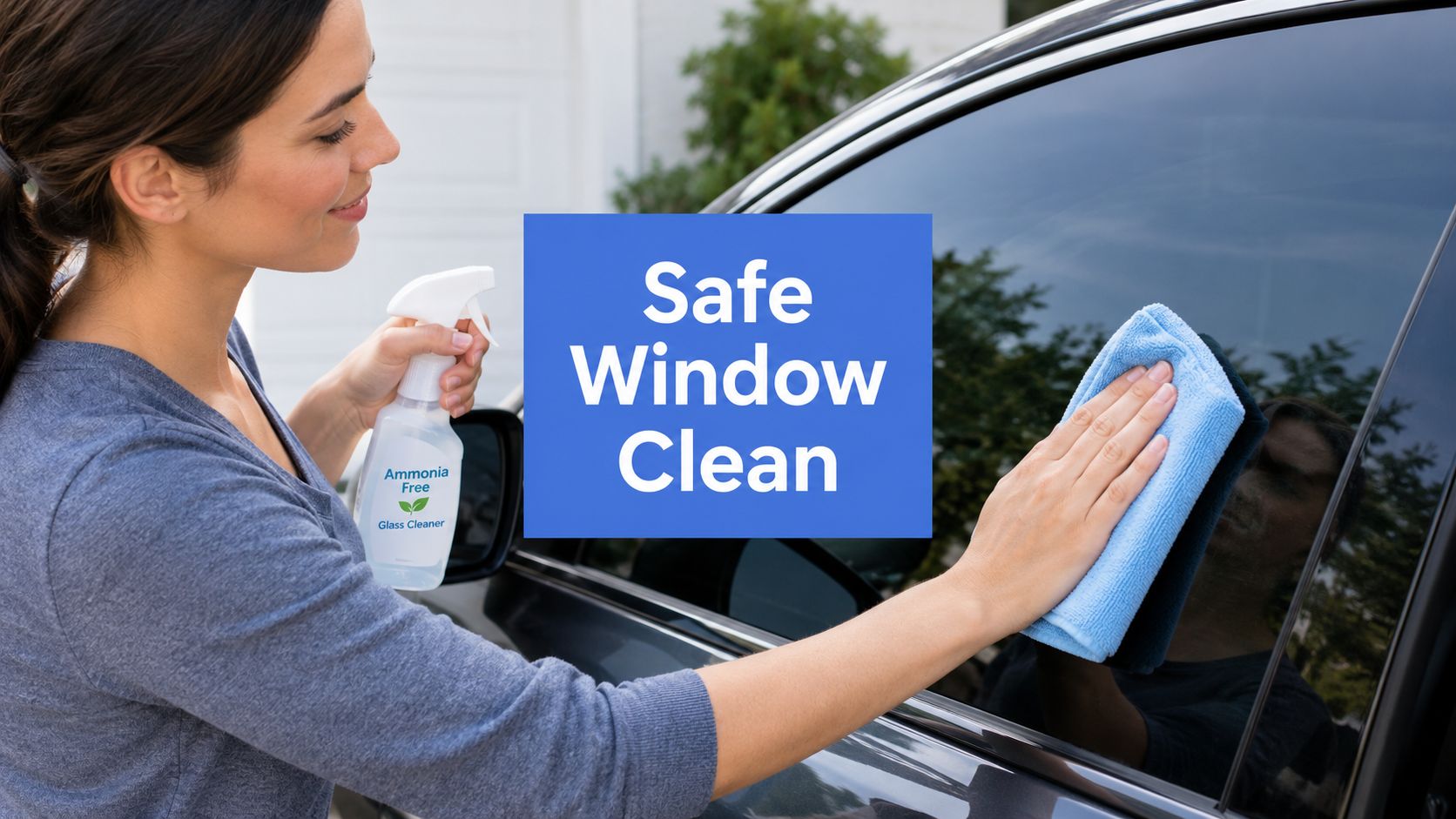
Ammonia also doesn't belong on every clear-looking surface. It should never be used on tinted car windows, because it can attack the tint film and lead to bubbling, peeling, and discoloration. It's also a poor choice for plexiglass and acrylic, where it can damage the surface.
Before the video, keep this in mind. Product safety depends on both chemistry and the material you're cleaning.
For standard household window-cleaner use at 0.1 to 0.2% concentration, inhalation exposure is considered minimal. Spray-on window cleaner use produced a Time-Weighted Average of 0.65 p.p.m., which was over 10-fold lower than exposures from stronger cleaning scenarios, while concentrated ammonia in poorly ventilated spaces could exceed 125 to 200 p.p.m., according to the PubMed summary on ammonia exposure during household cleaning.
That distinction matters. A diluted glass cleaner used normally isn't the same as handling concentrated ammonia in a closed room.
If you have to wonder whether a surface has a film or coating on it, treat it like a specialty surface until you know.
You spray one window and the residue wipes away cleanly. You spray the next one and end up with smears, haze, or a damaged film. The difference usually is not the brand. It is the combination of soil, surface, and how much cleaning power the material can safely handle.
A simple way to choose is to ask two questions. What is on the glass? And what is the glass made of?
Ammonia works well when the problem is oily residue. That includes fingerprints, cooking film, nicotine residue, and the light greasy haze that builds up on interior glass near busy hands or food prep areas. In those cases, an ammonia-based cleaner can save time because it breaks that film apart instead of just pushing it around with a cloth.
Dust, pollen, and ordinary water spots are different. They usually do not need ammonia at all. A mild soap solution, an ammonia-free glass cleaner, or plain water with the right towel can often handle them with less risk to nearby materials.
Surface choice matters just as much as dirt type.
Use extra caution on tinted windows, acrylic, plexiglass, coated glass, mirrors with damaged edges, and any surface with a film or laminate. Those materials can react badly to stronger chemistry, even if the glass itself looks ordinary. If you need material-specific guidance, this guide on cleaning tinted windows is a helpful place to start.
For standard untinted glass in a kitchen, entryway, office, or storefront, ammonia can be a reasonable option. For specialty surfaces, ammonia-free is the safer default.
Choose an ammonia cleaner if:
Choose an ammonia-free cleaner if:
If you cannot identify the surface, treat it like delicate fabric before using stain remover. Start with the gentlest effective option.
One more practical point. If the window has stubborn mineral staining, seal failure, etched glass, or construction debris, chemistry alone may not solve it. That is often the point where a professional should assess the glass, because the wrong product or tool can turn a cleaning problem into permanent damage.
You spray a window, wipe it carefully, step back, and the streaks show up only after the light hits the glass. Professional cleaners avoid that cycle because they are controlling two things homeowners often cannot control well enough. Water and residue.
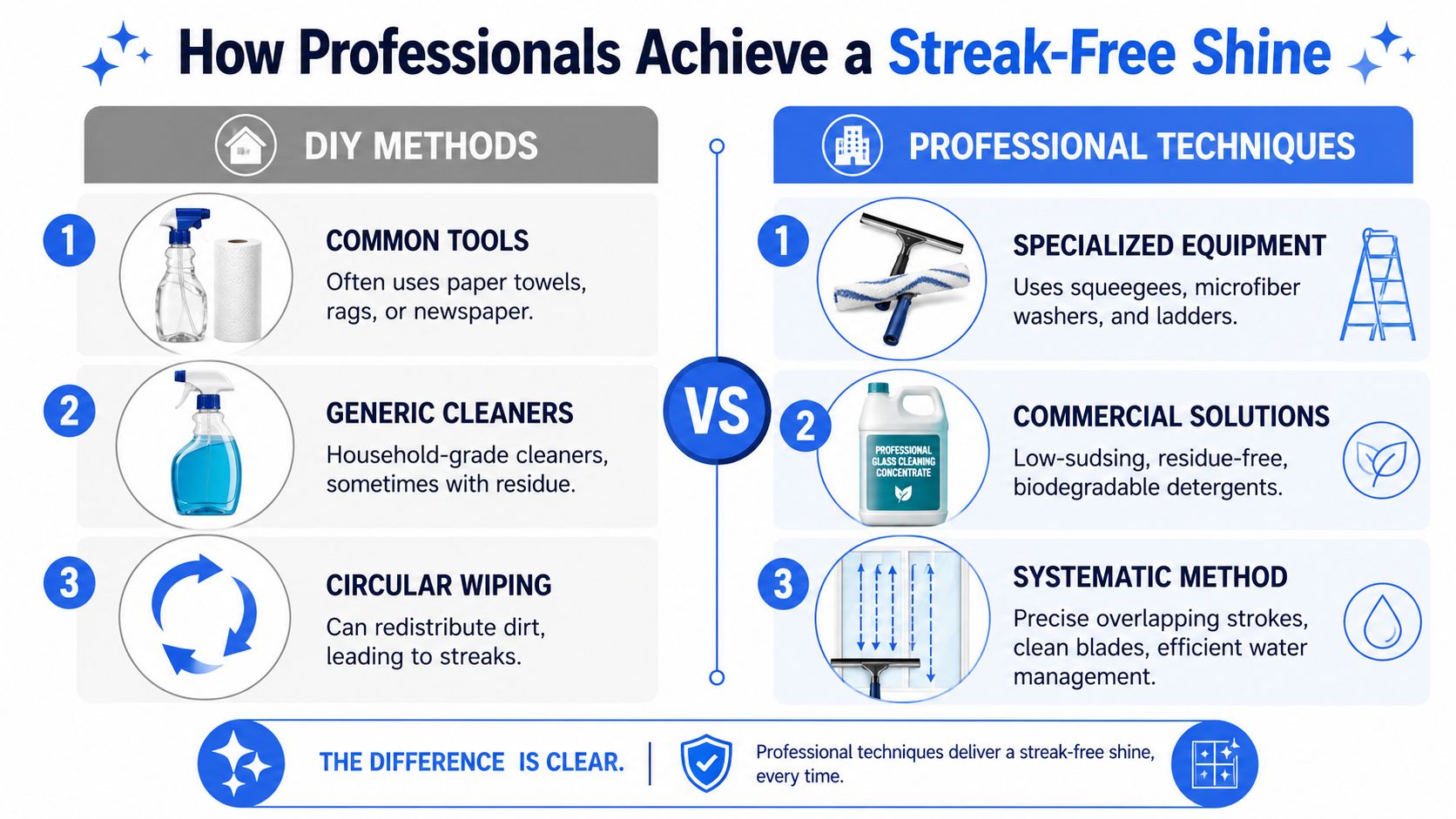
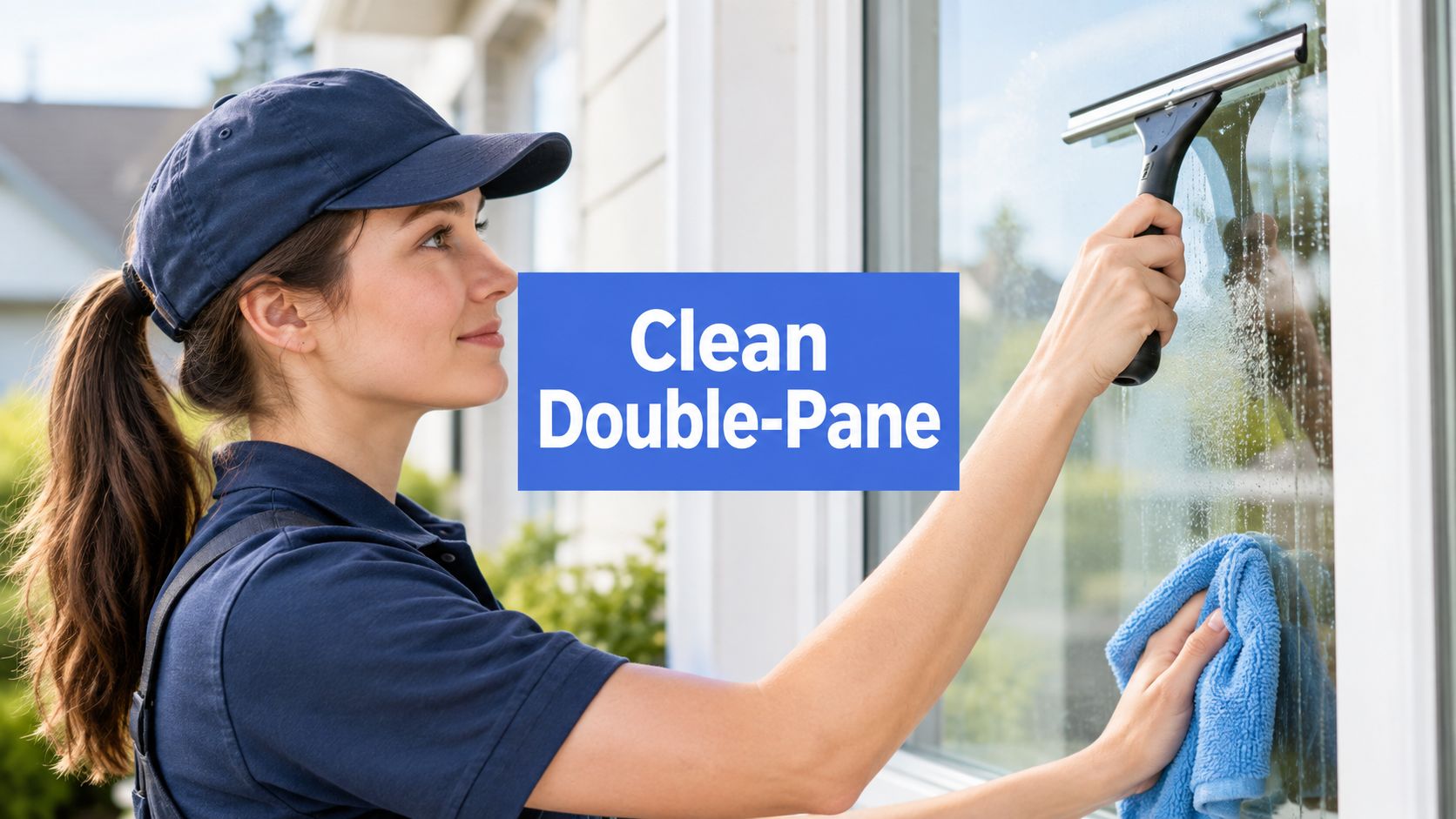
The squeegee system is still the foundation of professional glass cleaning. A washer or mop loosens soil, a cleaning solution suspends it, and the squeegee removes that dirty liquid from the surface before it can dry back onto the glass.
That last part matters. Streaks usually come from something left behind, not from glass that is somehow still dirty. Soap residue, dissolved minerals, loosened oils, and lint can all dry into visible lines. A squeegee works because it physically carries that film off the pane instead of asking a towel to absorb all of it.
Soap also changes how the rubber blade moves. It adds slip, which helps the blade stay in even contact with the glass. If the blade skips, chatters, or leaves trails, the result looks worse than the cleaner itself deserves. For a closer look at technique, this guide to the best window washing techniques shows how pros manage blade angle, overlap, and edge detailing.
The second professional approach is the pure-water-fed pole system. Instead of relying on a chemical to flash off cleanly, it uses water that has had the dissolved minerals removed through filtration. Unger explains the method here: https://usa.ungerglobal.com/blog/squeegee-window-cleaning-for-a-streak-free-shine/
The chemistry is simple. Ordinary tap water leaves minerals behind as it dries. Purified water does not leave that mineral residue, so the glass can dry spot-free without a final squeegee pass in many exterior applications. That is why pure-water systems are common on upper-story glass, storefront exteriors, and other areas where ladder work would add time and risk.
The equipment is also expensive enough that many homeowners never see it up close. A trade video discussing system cost and setup is here: https://www.youtube.com/watch?v=Hg3ML6z32ko
A blue ammonia spray can help on small indoor glass, especially when the problem is oily film. Professional crews are solving a different problem. They need repeatable results across large panes, changing temperatures, screens, frames, hard water exposure, and difficult access points.
Method decides the finish. Chemistry supports the method.
That is why trained cleaners choose tools that remove contamination from the glass instead of spreading it around with a dry towel. In practice, the cleanest window often comes from better water control, cleaner rubber, better cloth discipline, and knowing when a stain is no longer a cleaning issue.
Professional Window Cleaning has been cleaning windows for over 26 years, and that experience matters most when the glass is large, high up, delicate, or affected by heat, mineral deposits, or long-term buildup. Those are the jobs where the right process protects the glass, and where an expert should step in if the problem is beyond routine cleaning.
You spray the glass, wipe it down, and the streaks are still there when the light hits. At that point, the question is usually not, "Which bottle should I buy next?" It is, "What is on the glass, and what method will remove it safely?"
A window cleaner with ammonia works well for a narrow job. It dissolves oily residue on indoor glass and can speed up routine cleaning when the surface is compatible. It does not solve every window problem. Mineral staining, baked-on exterior grime, damaged seals, and heat-related streaking often need a different process.
That is the practical takeaway. Use ammonia cleaner for small interior jobs where grease or film is an issue, and follow the label closely. If the glass is tinted, exposed to heavy sun, hard to reach, or still looks poor after careful cleaning, stop guessing and change methods.
Professional Window Cleaning has been cleaning windows for over 26 years. For homeowners, property managers, and commercial buildings, that experience helps determine whether the glass needs standard cleaning, detail work, screen and frame cleaning, or a specialist for damage that cleaning will not fix.
If you want clear, practical help from Professional Window Cleaning, reach out for a free estimate. We clean residential, commercial, and high-rise windows using the right professional method for the glass, the building, and the conditions.
Read our blog posts regularly and keep learning.