Care and Maintenance
How to Restore Window Glass and Frames the Right Way
Learn how to restore window glass, frames, and seals with pro methods, real tools, and honest trade-offs. A practical guide


High-rise window washing is one of those jobs people see but don't really see. It’s a complex dance of technical skill, ironclad safety protocols, and sophisticated equipment, all happening hundreds of feet in the air to keep the world's tallest buildings looking their best. It's so much more than just cleaning glass—it’s a critical maintenance service that protects property value and makes sure a building’s facade holds up against the elements.
Beyond the dramatic sight of technicians hanging from ropes, window washing high-rise buildings is a meticulous and vital part of property management. Think of it as an investment in your building's longevity and curb appeal, not to mention keeping your tenants happy. The service often includes inspecting for leaks, checking for damaged seals, or spotting facade issues you’d never see from the ground.
It's essentially a strategic check-up for your building's entire exterior. You wouldn’t hire a general handyman for complex electrical work, and the same logic applies here—high-rise window cleaners are the trained specialists for your building’s vertical surfaces. As cities have grown, so has this industry. In fact, the global window cleaning market was valued at USD 141.00 billion in 2024, with North America grabbing a huge 37.75% share. That number alone tells you how essential this work is in modern cities. You can read more about this expanding market and its projected growth.
At its heart, professional high-rise cleaning boils down to two main techniques. The method a team chooses depends on the building's height, its unique architecture, and what the job calls for.
The Squeegee Method: This is the classic, hands-on approach. Highly skilled technicians use a squeegee and a specialized cleaning solution to get that perfect, streak-free finish by hand. Whether they're on a suspended platform or using rope access gear, this method allows for incredibly detailed work and a close-up inspection of every single window.
The Pure-Water System: A more modern technique, this system uses long, water-fed poles to spray purified, deionized water onto the glass. This water is so pure it naturally attracts and lifts dirt away, then dries completely spot-free without ever needing a squeegee. It’s a game-changer for efficiently cleaning the lower floors of a skyscraper.
Understanding these two methods helps property managers appreciate the skill and strategy that goes into the job. The choice between a squeegee and a pure-water system isn't random; it’s a calculated decision to get the best results safely and efficiently. This is the foundation for everything else—the tools, the safety rules, and the costs that define this demanding profession.
When you see those flawless, streak-free windows on a skyscraper, it’s not by chance. That pristine look is the result of highly specialized techniques, each chosen for a specific purpose. In the world of professional high-rise window cleaning, experts really only rely on two primary methods to get the job done.
Understanding these two approaches is key for any building manager. One is a time-honored craft that demands incredible precision and skill at extreme heights. The other uses modern technology for remarkable efficiency, but it’s limited to the lower floors. Let’s break down how these methods work and when pros decide to use them.
The traditional squeegee method is the true art of high-rise window washing. This is what most people picture: a skilled technician, suspended hundreds of feet in the air on a swing stage or secured by ropes, meticulously cleaning each window by hand.
They start by applying a specialized cleaning solution to dissolve all the grime. Then, using a professional-grade squeegee, they wipe the glass clean in a series of precise, overlapping strokes. This method requires an immense amount of skill and a rock-steady hand to avoid leaving behind any streaks or watermarks.
Think of it like a master painter using a fine brush for detailed work. The squeegee method is all about precision. It allows technicians to tackle stubborn grime and inspect the window and its seals up close, making it the gold standard for most of a skyscraper's facade.
The second professional method is the pure-water system, often called a water-fed pole system. This technique was a huge leap forward for the industry, designed for speed and effectiveness on the lower levels of a building.
The system works by pumping highly purified, deionized water through a long, extendable pole—usually made of lightweight carbon fiber—to a specialized brush head. The technician scrubs the window from the safety of the ground, and the ultra-pure water acts like a magnet for dirt, lifting it right off the surface. Because the water has zero minerals or impurities, it can be left to air-dry to a perfectly spotless finish. No squeegee needed.
This infographic breaks down the essential components of high-rise window washing, including the methods, skills, and safety required.
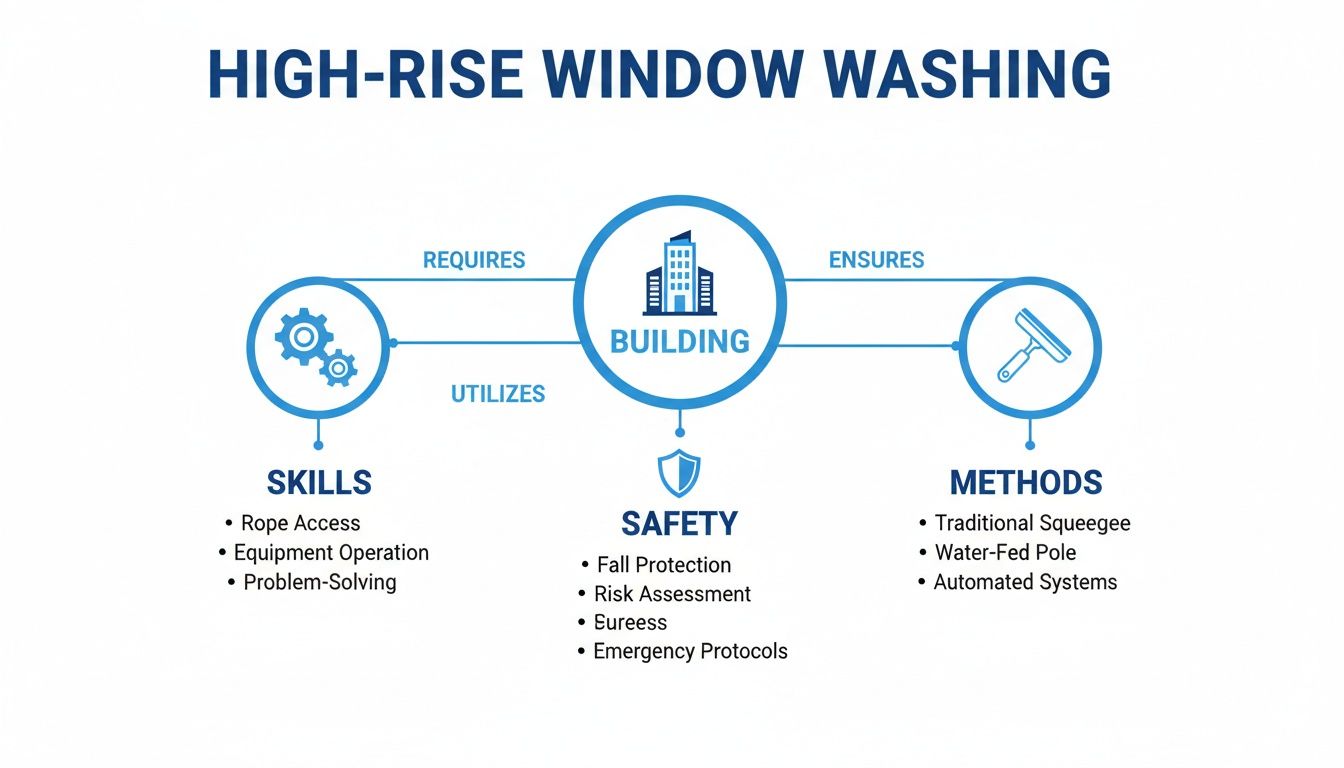
As the visualization shows, the cleaning method is just one piece of a much larger puzzle that involves rigorous safety standards and specialized technician skills.
So, which one is better? Honestly, neither is universally superior; they are just different tools for different tasks. The decision really comes down to a few key factors:
Let’s put it side-by-side to make the differences crystal clear.
Here’s a direct comparison of the two primary professional techniques used on high-rise buildings.
Ultimately, a comprehensive high-rise window washing service often uses a hybrid approach. A team might clean the first few floors with a pure-water system for speed and then send up a swing stage or rope access crew with squeegees for the rest of the building. This combination delivers maximum efficiency and a perfect finish from top to bottom.
When it comes to window washing high-rise buildings, safety isn’t just a talking point—it's the bedrock of the entire profession. For a technician hanging hundreds of feet above a busy street, every single piece of gear, every knot, and every safety check is non-negotiable. And for property managers, understanding these standards is just as crucial. It protects the crew, your tenants, and your own significant legal and financial interests.
Hiring a window cleaning company that can't show you verified safety credentials is a lot like handing the keys of a 747 to someone who just looks like a pilot. They might have the uniform, but they lack the proven training and regulatory discipline that prevents disasters. Let's walk through the essential safety pillars of the industry so you can ask the right questions and demand solid proof of compliance.
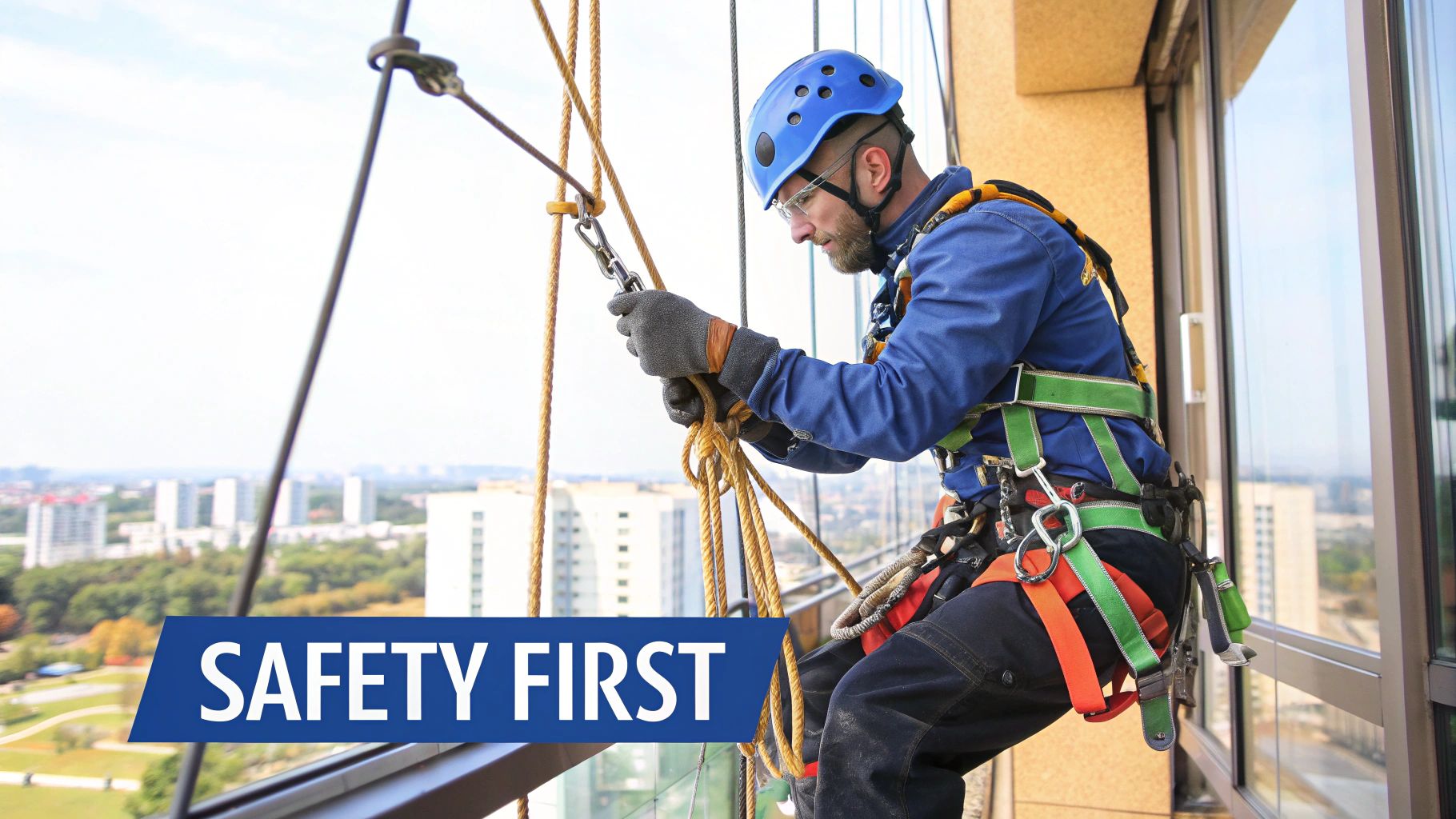
The Occupational Safety and Health Administration (OSHA) is the federal body that sets the rules for workplace safety, and their regulations for the window cleaning industry are incredibly strict. These aren't just suggestions; they are legally binding requirements designed to stop accidents before they can ever happen.
OSHA's guidelines touch nearly every facet of a high-rise window washing job. They include mandates on the structural integrity of roof anchors, strict inspection schedules for all equipment like ropes and harnesses, and the creation of a site-specific safety plan before a single technician goes over the edge. For example, OSHA standard 1910.27 lays out the exact requirements for rope descent systems, ensuring they can handle the intended weight and are used correctly.
A reputable contractor won't just be familiar with these rules—they'll have a documented history of following them. Their safety manual and training records should be a direct reflection of OSHA's fall protection and equipment standards.
While OSHA sets the legal baseline, industry-specific certifications show a company's dedication to a higher standard of skill and safety. Think of these credentials as a clear sign that a team has gone through rigorous, specialized training that far exceeds the basic requirements.
There are a few key certifications you should always look for when vetting a contractor:
Treat these certifications like a technician's professional license. They prove that an individual has mastered the complex skills needed to work safely at extreme heights, making them indispensable for any high-rise project. Implementing these protocols is also a key part of broader risk management strategies that identify and neutralize hazards before they become incidents.
Finally, never, ever overlook insurance. No matter how skilled or certified a crew is, the risks of working at height mean that accidents, while rare, can have devastating consequences. Without the right insurance, the liability could land squarely on you as the property owner.
A professional high-rise window washing company must carry two crucial types of coverage:
Before you sign anything, always ask for a certificate of insurance. Then, take the extra step to verify that the coverage is current and sufficient for the scope of your project. This simple check is your ultimate financial safeguard and the mark of a truly professional and responsible contractor.
Ever wondered why a quote for one high-rise building comes in thousands of dollars higher than the one right next door? When it comes to window washing high-rise properties, a simple per-window price just doesn't cut it. The final cost is a careful calculation based on a unique mix of risk, skill, and logistics.
Understanding what drives these costs helps property managers see beyond the price tag to the actual value being delivered. You're not just paying for clean glass. You're paying for a highly specialized service that requires immense training, expensive equipment, and meticulous safety planning to pull off.
Several core elements directly shape the cost of any high-rise window washing project. Any professional contractor worth their salt will assess each of these during an initial site visit to build an accurate, fair proposal.
The quote you receive is a direct reflection of your building's specific challenges. It accounts for the skill, equipment, and time required to safely and effectively service every square inch of glass on your property.
The price you pay for professional high-rise window washing covers a lot more than just a crew and some cleaning solution. It reflects the massive overhead required to run a safe, compliant, and skilled operation.
A huge chunk of that cost is tied directly to the safety and expertise of the technicians on the ropes. Safety requirements and workforce economics make this a well-paid trade. Specialized high-rise window cleaners often earn between USD 60,000 and USD 100,000 annually, a significant jump from residential cleaners. This premium is driven by measurable factors like mandated safety certifications, expensive fall-protection gear, and much higher insurance premiums—all of which are built into the service cost.
Thinking about the price in terms of value helps put everything in perspective. A lowball bid might look tempting, but it could be a red flag for cut corners on safety, insurance, or training. Investing in a qualified, properly insured, and certified team isn't just a cleaning expense; it's an investment in risk mitigation for your property.
Here’s a quick breakdown of what that investment typically covers:
By understanding what goes into the pricing, you can better evaluate proposals and make a truly informed decision.
Choosing the right partner for your high-rise window washing project is one of the biggest decisions a property manager can make. This isn’t just about getting clean windows; it’s about safety, liability, and the reputation of your building. A great contractor is more than a vendor—they’re a trusted partner who brings deep expertise, unwavering reliability, and a serious commitment to safety.
Finding that partner means looking beyond the price tag. You need to dig into a company's credentials, check their safety records, and understand their professional standing. This process ensures you're hiring a team that not only makes your windows sparkle but also protects your property, your tenants, and their own crew.
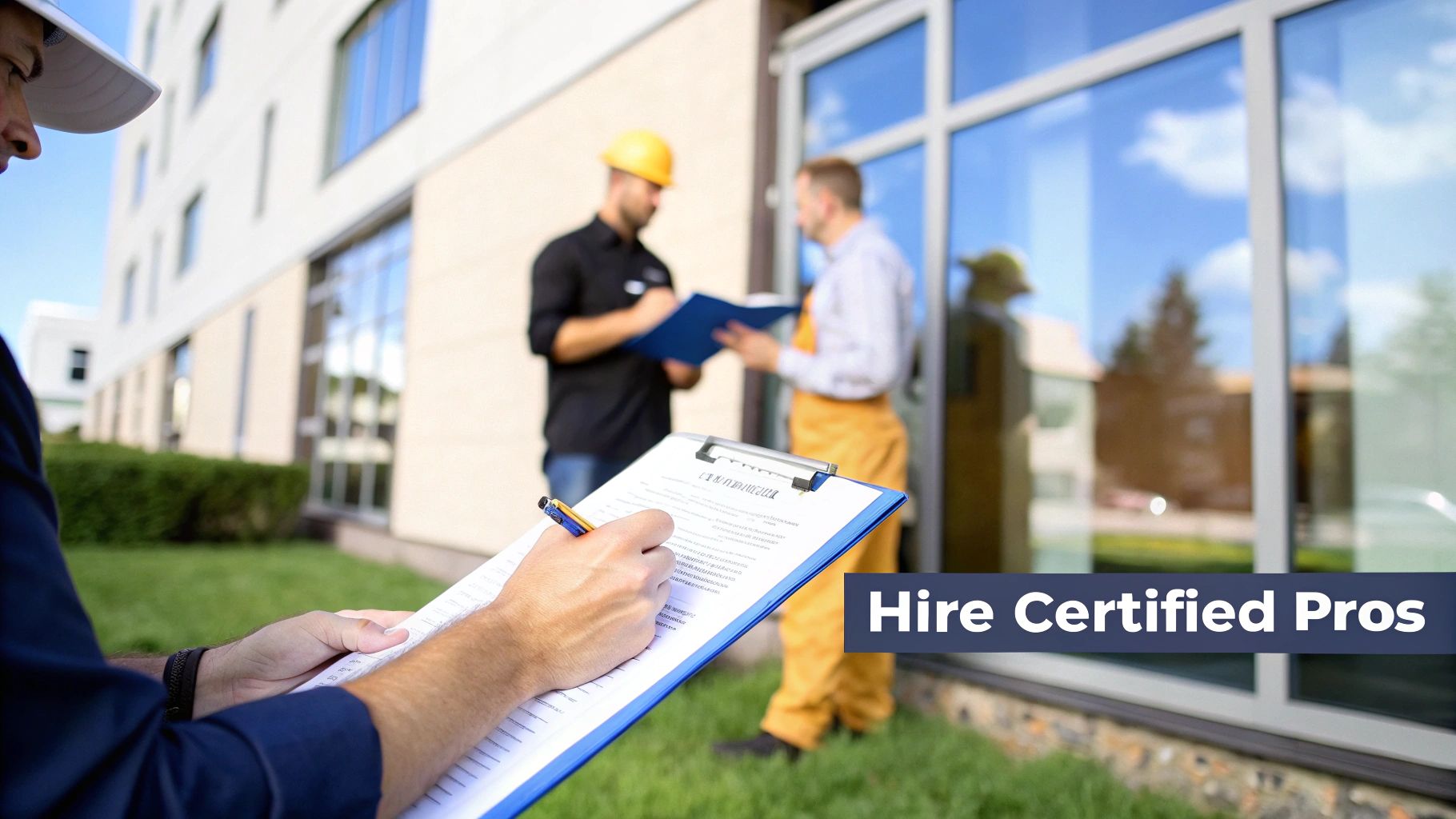
To pick a contractor with confidence, you need a structured game plan. Use this checklist to evaluate every potential company so no critical detail slips through the cracks.
Verify Insurance and Bonding: This is absolutely non-negotiable. Ask for a current Certificate of Insurance (COI) that shows both general liability and workers' compensation coverage. Confirm the policy limits are adequate for a project of your building's scale, and don't be afraid to call the insurance provider directly to verify the policy is active.
Confirm Industry Certifications: Look for proof they've done their homework. Certifications from the IWCA (International Window Cleaning Association) or rope access credentials from SPRAT/IRATA show a real commitment to industry best practices and ongoing training. It proves they're serious about their craft.
Request a Site-Specific Safety Plan: A generic safety manual just won't cut it. A true professional will walk your property and create a detailed, written safety plan tailored to your building’s unique architecture, anchor points, and potential hazards.
Check Relevant References: Ask for references from properties that are similar to yours in size and complexity. There’s no better gut check than talking to another high-rise property manager about a company’s reliability, professionalism, and the quality of their work.
Once the proposals start rolling in, it's time to read the fine print. A quality proposal is much more than a price; it’s a detailed blueprint for the entire project.
It should clearly lay out the full scope of work, specifying which windows get cleaned and the exact methods they plan to use—whether that's the squeegee method or a pure-water system for the lower levels. The proposal also needs transparent pricing that breaks down the costs, so you know precisely what you're paying for. Most importantly, it should reference their documented safety protocols, confirming their commitment to an incident-free job from day one.
A vague or incomplete proposal is a major red flag. True professionals provide comprehensive documentation that inspires confidence and leaves no room for misunderstanding about the process or the final price.
After you’ve vetted their credentials and picked apart their proposals, the final choice often boils down to professionalism and communication. Do they get back to you promptly? Are their answers clear and knowledgeable? Remember, this company will be on-site, potentially interacting with your tenants, so their professionalism is key.
Beyond just picking a window cleaner, understanding broader effective common area maintenance strategies can put your hiring decisions into a larger, more strategic context. By following these steps, you can move forward confidently, knowing you’ve found a reputable, qualified, and safety-first partner.
If you’re ready to start the search, our guide to finding high-rise window cleaning near me offers more tips to help you locate top-tier professionals in your area.
High-rise window washing isn’t a one-size-fits-all job. Think of the local climate as a powerful, invisible force that shapes how often you need to clean and which methods will actually get the job done right. A building’s location has a massive impact on the type of grime it collects, which means you need a smart, location-aware maintenance plan.
For instance, a skyscraper in a coastal city is constantly battling salt spray, while one sitting in an industrial zone fights off chemical residues. Adapting your strategy to these environmental quirks not only keeps your building looking sharp but also protects the glass and seals from expensive long-term damage.
High-rise buildings in arid climates like Las Vegas and Phoenix are in a league of their own. They face a tough combination of intense sun, relentless dust, and mineral-heavy water that can wreak havoc on a facade.
Here are the key issues we see in these areas:
In a high-altitude city like Denver, the weather isn't about consistent heat—it's about wild, unpredictable swings. The challenges here are all about moisture, extreme temperature changes, and weather that can turn on a dime.
A maintenance plan in this kind of environment has to be flexible. It needs to account for sudden snowstorms and the physical stress of freeze-thaw cycles, which can easily compromise window seals and create ice dams.
This is also where we’re seeing industry trends shake up old-school maintenance schedules. New technology and post-pandemic expectations for hygiene are changing how often buildings get cleaned. Innovations like pure-water systems make the work more efficient, while a bigger focus on facility hygiene has boosted demand for exterior cleaning. We're seeing schedules shift from annual to quarterly for many buildings.
When it comes to managing a high-rise, a few questions about window washing always pop up. Getting straight answers is key to budgeting and scheduling your building’s maintenance. Here are some of the most common things property managers ask us.
For most commercial buildings in busy city centers, the industry standard is a semi-annual cleaning schedule—that's twice a year. This is usually enough to keep the view clear and prevent a heavy buildup of pollutants and grime that can etch and damage glass over time.
But that's just a starting point. If your building is in a tougher environment, like near an industrial zone or in a dusty desert climate, you might need more frequent cleanings. In those cases, a quarterly schedule is a smart move to keep the building looking its best and protect your investment.
Definitely not. When you’re working hundreds of feet in the air, safety and quality are everything. Certain weather conditions are a complete no-go for high-rise window washing. Any professional crew will reschedule if they see:
A light drizzle might not stop the work, but a reputable company will always put their crew's safety first and won't compromise on the quality of the job. If the conditions aren’t right, they’ll reschedule.
Postponing a job due to bad weather isn’t an inconvenience—it’s the sign of a true professional. It shows they're committed to safety and won't cut corners to deliver the streak-free results you're paying for.
Both are tried-and-true methods for getting to a building's facade, but they’re built for different jobs and different types of architecture.
A swing stage (or suspended scaffold) is that motorized platform you often see. It’s rigged to the roof and moves up and down the side of the building. It’s perfect for big, flat surfaces because it can hold a couple of workers and all their gear, making it super efficient.
Rope access, on the other hand, is all about agility. Technicians use a system of ropes, harnesses, and specialized gear to rappel down the building. This method offers incredible versatility and is often the only way to reach windows on buildings with complex designs—think setbacks, spires, or weird angles where a swing stage just can't go.
Ready to make sure your property shines with a team that puts safety and quality above all else? For expert residential, commercial, and high-rise services, you can trust Professional Window Cleaning. Get your free estimate today and let us bring the sparkle back to your building.
Read our blog posts regularly and keep learning.