Care and Maintenance
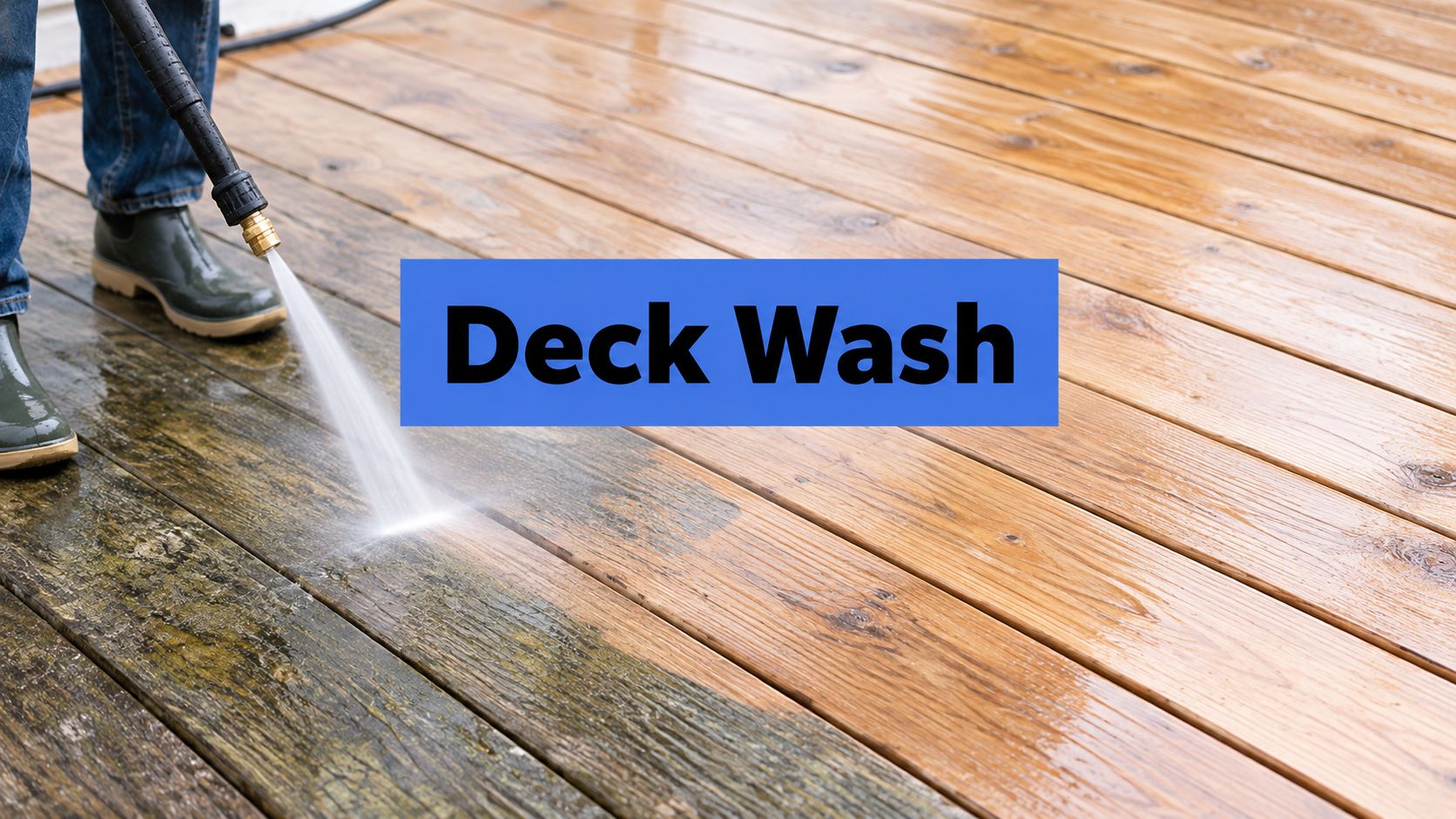
Deck Wash Before Staining a Practical Guide That Works
Learn how to do a proper deck wash before staining, from cleaner choice to pressure setting and drying checks, so your stain holds longer and looks even.


You're usually looking into one of two situations when you start caring about a window washing hose. Either you've tried cleaning exterior glass with a regular garden hose and ended up with spotting, runoff, and frustration, or you're hiring a service and want to know whether the crew showing up has the right equipment for the job.
That holds greater significance than commonly realized. The hose isn't just a tube that moves water from one place to another. In professional work, it directly affects rinse quality, control, safety, and how quickly a crew can finish without leaving behind streaks or over-wetting frames.
For homeowners, that means better results and less risk to the surrounding surfaces. For property managers, it means understanding why one company can clean a large building efficiently while another struggles with flow, leaks, or inconsistent finish quality.
You see it most often after a weekend wash. The glass looked clean while it was wet, then the sun hit it and every spot, streak, and runoff line showed up at once. In jobs like that, the problem usually starts with the wrong setup, not a lack of effort.
A professional result depends on controlling how water hits the glass, how contaminants are lifted off, and how the surface is finished. Pros rely on two proven methods, the traditional squeegee method with cleaning solution and the pure-water method using filtered water with no soap, as outlined in this overview of professional window washing systems.
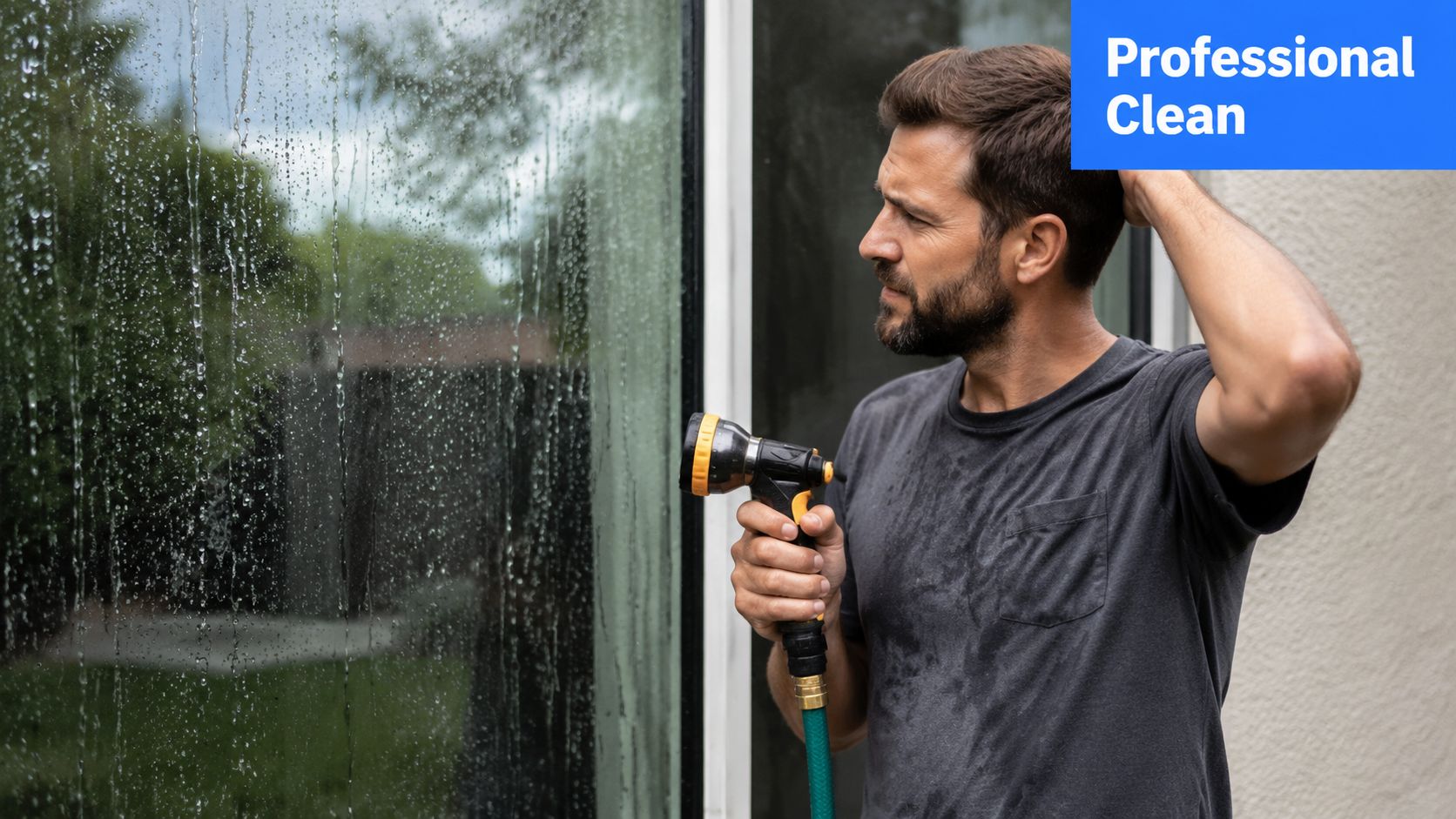
A garden hose is built to rinse volume, not clean glass with precision. It sprays broadly, pushes dirty water into frames and siding, and leaves behind minerals that dry into visible spotting.
That matters because clean windows are not just about removing visible dirt. The final result depends on what stays on the glass after the water evaporates. If the water carries dissolved solids, or if the rinse is uneven, the window tells on you a few minutes later.
With traditional work, the glass is washed, then finished by hand with a squeegee. With pure-water cleaning, the finish depends on filtration and a controlled rinse. In that setup, the window washing hose affects the result directly. Poor flow, kinks, drag, or inconsistent delivery can leave the upper panes looking different from the lower ones.
After years in the field, this is the practical difference I watch for. Professional equipment keeps the method consistent from the first window to the last.
In a pure-water system, the hose has to carry filtered water from the purification unit to the pole without choking flow over distance. It also has to move cleanly around corners, planting beds, walkways, and parked cars without constantly snagging or twisting. That is why crews use purpose-built tools instead of whatever hose happens to be on the truck. This overview of professional window cleaning equipment shows how the hose fits into the full system.
The spec sheet matters for one reason. It changes how the job performs in real conditions. A hose that is too stiff slows the technician down. A hose that kinks easily interrupts the rinse. A hose that leaves marks on painted surfaces creates extra cleanup and extra risk.
Homeowners and property managers do not need to memorize hose materials or internal diameters. The better question is whether the equipment matches the cleaning method and the building.
That is the professional difference. The hose is not an accessory. It is part of the system that affects speed, safety, and whether the glass dries clear or spotted.
A pro hose feels different in your hand because it's built for a different job.
The big differences aren't cosmetic. They come down to weight, flexibility, outer cover, and connection points. On a real jobsite, those details decide whether the hose glides around corners or fights you all day.
Some hoses are built to be light and flexible. Others are built to take more abuse. In window cleaning, that trade-off shows up fast.
A lightweight hose is easier to drag across long residential runs, thread through gates, and manage around shrubs or patio furniture. A tougher hose can handle rougher surfaces and repeated commercial use better, but it may feel heavier and stiffer, especially when temperatures shift.
The wrong material usually reveals itself in three ways:
Two hoses can look similar and still perform very differently because of their internal diameter and wall construction. A narrow hose may be easy to manage but can limit flow if the brush setup demands more water. A larger hose can support stronger delivery, but if it's bulky, it becomes harder to control on ladders, rooftops, or long perimeter work.
That's why professional setups often split the job between supply hose and pole hose. The supply side handles distance. The pole side keeps weight down where the technician works overhead.
A good window washing hose disappears during the job. A bad one keeps reminding you it's there.
Leaks usually start at the ends. Not in the middle.
The fittings on a professional hose need to connect securely to purification systems, reels, shutoff valves, and water-fed poles. If the connection is sloppy, the operator loses pressure, wastes purified water, and deals with constant dripping around walkways and entry points.
Common choices come down to function:
A poor connector setup also creates a safety issue. Water on smooth concrete, tile, or polished entry surfaces turns into a slip hazard fast.
The outer jacket is what takes the scraping, sun exposure, and friction. A hose with a non-marking outer finish is worth paying attention to, especially on residential properties with stucco, painted trim, decorative stone, or coated metal frames.
For crews that work across mixed property types, reliable connectors matter just as much as the hose itself. The attachments, reducers, and shutoff pieces have to match the system cleanly, which is why the details in this guide to hose attachments for window washing are so important.
A hose choice shows up on the glass fast. Use a line that is too narrow for the brush and pole length, and rinsing gets weak at the top of the window. Use a line that is too heavy for the job, and the operator fights drag all day, which slows production and makes detailed work harder.
The useful way to compare hoses is by what they have to do on site. One hose has to carry enough water from the purification system across the property. Another has to stay light enough at the pole to keep the brush moving cleanly and under control. Those are different jobs, and the specs matter because they affect speed, fatigue, and rinse quality.
For residential and light commercial work, 1/4-inch pole hose is common because it keeps weight down where it matters most, at the operator's hands. JRacenstein's guide to window cleaning water flow rates explains why that pairing works well with typical brush setups. A standard 2-jet brush does not need huge volume, but it does need steady delivery. If the hose, pump, and brush jets are mismatched, the brush still puts out water, yet the rinse takes longer and spotting risk goes up around frames and edges.
For the supply side, 3/8-inch hose is a common professional choice because it usually gives a better balance between flow, flexibility, and reel management than bulkier supply lines. On long runs, that balance matters more than raw size. A larger hose can carry more water in theory, but it also adds weight, takes up more space on the reel, and creates more drag around corners, landscaping, and entry walks.
That trade-off gets overlooked by homeowners who shop by diameter alone.
Water-fed cleaning depends on controlled rinsing. The hose has to deliver enough volume to flush soil off the glass and away from the brush path, but not so much that dirty runoff gets pushed back into seals, oxidized frames, or top-edge debris.
I see this most often on hotter days and on glass with dirty frames. If the flow pulses or falls off, the brush starts doing more scrubbing than rinsing. If the setup sends too much water for the brush and technique, runoff becomes harder to control. Either problem costs time, and both can leave more detail work at the end.
The right hose spec helps the water sheet cleanly and leave less behind.
| Hose Type | Primary Use | Common Diameter | Pros | Cons |
|---|---|---|---|---|
| Pole hose | Runs through or along a water-fed pole for brush delivery | 1/4-inch | Light, easier to manage overhead, well suited to residential and light commercial exterior glass | Can lose performance if paired with a high-demand brush, long pole, or weak output |
| Pure-water supply hose | Feeds filtered water from system to pole over longer runs | 3/8-inch | Good balance of flow and handling, easier to reel and drag than larger supply hose, fits many day-to-day setups | Heavier than pole hose and still adds drag on large sites |
| Larger supply hose | Used in higher-volume delivery setups | 1/2-inch | Can support high water demand in some systems | More bulk, more reel weight, and more effort to pull around a property |
| Pressure washer hose | Used for surrounding surfaces or prep work, not finish rinsing glass | Varies by machine | Built for high-pressure tasks, durable for exterior support cleaning | Not suitable for pure-water window rinsing |
| Vacuum or recovery hose | Interior cleanup or water recovery in specialty setups | Varies by tool | Useful for containment and cleanup in specialty work | Does not clean the glass itself |
A two-story home usually needs a setup that stays light and predictable. That often means a 1/4-inch pole hose matched with a 3/8-inch supply line, especially where the operator has to move around shrubs, patios, gates, and narrow side yards.
Larger commercial properties shift the priorities. Distance, hose routing, and drag start to matter as much as brush flow. In those situations, the best setup is usually the one that keeps water delivery steady without turning the hose into something the technician has to wrestle across the whole site.
The point is simple. Hose specs are not just technical details on a product page. They affect how safely the work gets done, how fast crews move, and how consistently the glass dries clean.
Choosing a window washing hose starts with the property, not the catalog.
A hose that works beautifully on a compact home can be the wrong tool on a long commercial frontage. The best choice depends on reach, the cleaning method, the amount of exterior glass, and whether the operator needs safe ground-based access or fast hand-detailing at lower levels.

If the glass is mostly ground level and easy to reach, traditional tools may still be the fastest option. When the windows are higher, more numerous, or spread across multi-storey exteriors, water-fed pole systems become the smarter fit. They're specifically recommended for windows above safe ladder height, large numbers of exterior windows on commercial or multi-storey properties, and eco-friendly chemical-free cleaning, while traditional squeegees remain faster for ground-level route work, according to this comparison of water-fed pole and traditional squeegee methods.
That one point clears up a lot of confusion. You don't choose a hose in isolation. You choose it as part of the method.
When homeowners or property managers evaluate hose needs, these are the questions that matter most:
For a typical residential property, lighter and more flexible setups are usually easier to live with. They move better around landscaping, patio furniture, and narrow access points. For large commercial sites, durability and consistent delivery over distance matter more.
In Scottsdale, for example, sprawling properties and long horizontal runs often demand more attention to supply-hose performance than a compact residential job would. High-rise work is its own category entirely. Those systems are more specialized, more safety-driven, and far less forgiving of bad hose choices.
Don't buy the hose that sounds the toughest. Buy the hose that fits the way the property has to be cleaned.
Cheaper hoses often cost more in field time. They kink, drag, leak at the fittings, or become stiff when you need them to stay flexible. On the other hand, the most expensive hose on the shelf isn't automatically the right one if the job doesn't need that level of durability or output.
For most buyers, the right decision comes down to this. Pay for smooth handling, dependable connectors, and a hose size that matches the method. Skip anything that adds bulk without improving control.
A window washing hose lasts longer when crews treat it like precision equipment instead of a throw-around accessory.
Most hose problems don't start with a dramatic failure. They start with small habits. Tight coils, sun-baked storage, gritty fittings, and repeated dragging across rough concrete all shorten service life and create flow issues long before the hose splits.
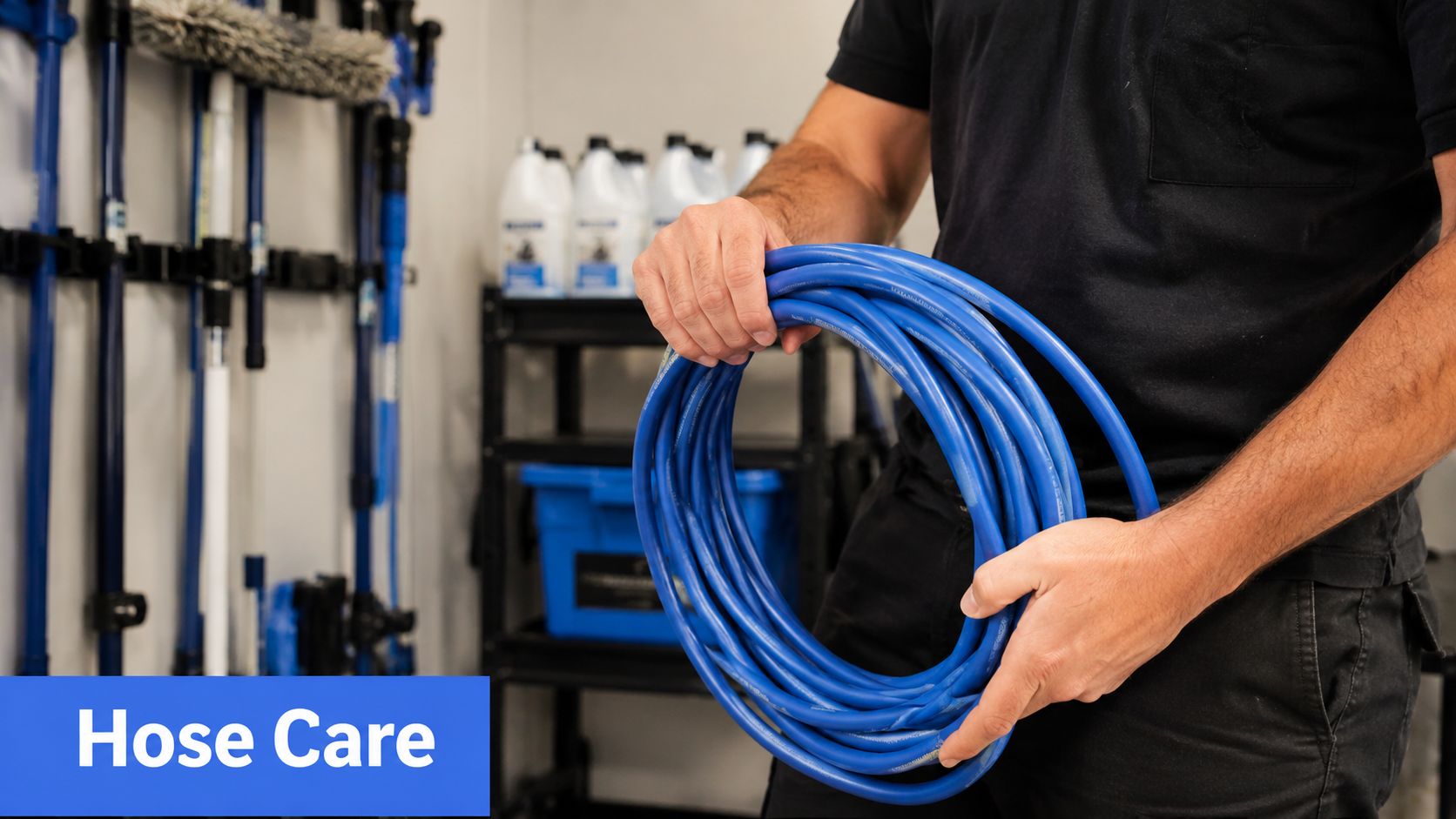
Good maintenance is mostly simple routine.
If the brush suddenly loses strength, start with the easy checks. Look for a kink, a partially closed valve, or a bad connector seal. If the hose seems fine but the system still feels weak, the issue may be upstream in the filtration or pump side rather than in the hose itself.
Leaking at the fittings usually points to wear at the washer or a connection that isn't seating squarely. Don't ignore small drips. They waste purified water and create slippery walk areas near entries, sidewalks, and loading zones.
This quick visual walkthrough is helpful if you want to see hose handling and field setup in action.
A hose near the end of its useful life usually gives warning before it fails outright.
Watch for recurring kinks in the same spots, outer jacket wear, fittings that won't stay dry even after replacing simple seals, or a hose that has become noticeably harder to handle. Once it stops moving smoothly and predictably, it starts costing time on every job.
A hose doesn't have to burst to be worn out. If it keeps slowing the work or compromising control, it's already past its prime.
Window cleaning looks simple from the sidewalk. The equipment decisions behind a good result aren't simple at all.
A proper hose setup has to match the cleaning method, the reach, the property layout, and the pace of the work. Get those details right and the job moves smoothly. Get them wrong and the crew spends the day fighting drag, weak rinse performance, leaks, and unnecessary risk.
The professional window cleaning industry in the United States includes 35,344 businesses and generated $2.9 billion in revenue in 2024, with market size projected to hold steady at $2.9 billion in 2026, while the stability alongside fewer businesses points to a more consolidated field of efficient operators, according to IBISWorld's U.S. window washing industry profile.
That tells you something useful as a buyer. In a steady market with fewer active operators, the companies that stay competitive are usually the ones that run cleaner systems, better processes, and more reliable gear. Equipment isn't a side issue. It's part of what separates a polished operation from a struggling one.
If you're hiring out window cleaning, ask practical questions.
For owners dealing with challenging conditions in Las Vegas or varied weather and building types in Denver, professional-grade equipment isn't about showing off technical gear. It's about protecting glass, frames, surrounding finishes, and the overall appearance of the property.
The same principle applies whether the site is a house, medical office, dealership, condominium, or large commercial building. The right hose, used the right way, helps produce the finish customers care about. Clean glass, controlled runoff, and a result that looks right when the sun hits it.
If you want that level of result without guessing which hose, pole, or cleaning method fits your property, Professional Window Cleaning brings more than 26 years of experience to residential, commercial, and high-rise work. Serving Arizona, Colorado, and Nevada, the team handles the equipment choices, safety considerations, and finishing details that turn clean-looking windows into professionally cleaned windows.
Read our blog posts regularly and keep learning.