Care and Maintenance
How to Restore Window Glass and Frames the Right Way
Learn how to restore window glass, frames, and seals with pro methods, real tools, and honest trade-offs. A practical guide


Removing water spots from windows means you have to dissolve the mineral deposits left behind by hard water. For light, recent stains, a simple mix of white vinegar and water often does the trick. But for those stubborn, etched-in spots, you'll need to step up your game with professional-grade mineral removers or even call in an expert.
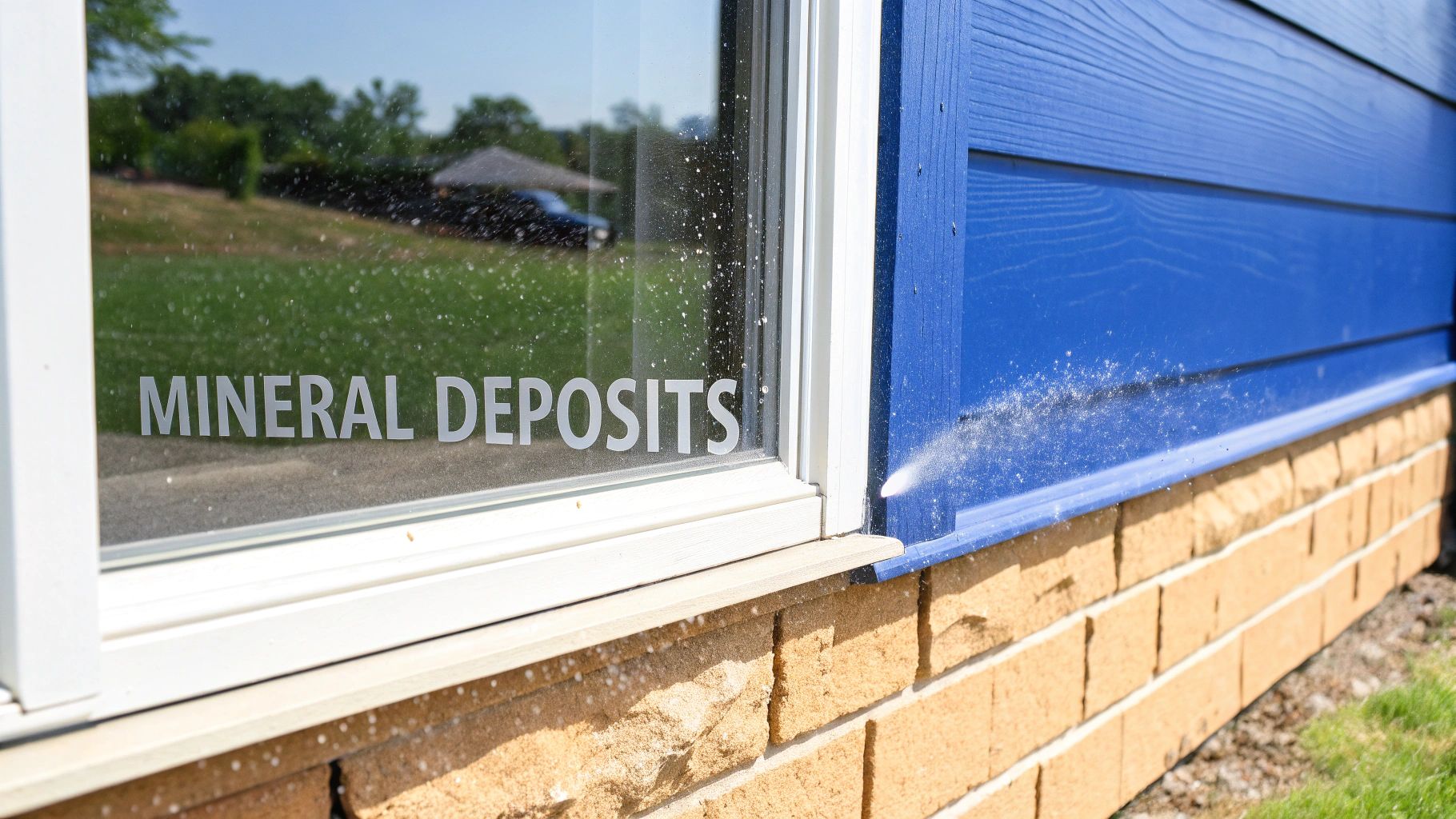
Let's be honest—those chalky, milky-white spots on your windows are more than just a minor annoyance. They block your view, make your property look neglected, and can be incredibly frustrating to clean. So, what exactly are they?
These stubborn blemishes are mineral deposits, mostly calcium and magnesium, that get left behind when hard water evaporates. It’s the same stuff that builds up in your kettle after boiling water; the same principle applies right to your glass.
Common culprits we see all the time include:
Knowing what kind of water spot you're up against is half the battle, as it dictates your entire cleaning strategy. There are really only two categories of damage to worry about.
First, you have surface-level spots. These are relatively fresh mineral deposits just sitting on top of the glass. If you run your finger over them, you can often feel a slight texture. These are the easiest to deal with and usually come off with the right DIY cleaning solutions. A classic example is the spray from a sprinkler on a home in Scottsdale, which can typically be removed before it becomes a real problem.
The battle against water spots intensifies in sunny states like Arizona and Nevada, where evaporation rates are 30% higher than national averages, leaving 70% of windows spotted post-rain or irrigation. You can find more insights about window cleaning industry statistics on wifitalents.com.
Then there’s glass etching, which is a much more serious issue. When those mineral deposits are left on the glass for too long, their alkaline nature starts to corrode the glass itself. This creates microscopic pits that the minerals bond with, making them almost impossible to remove with standard cleaners. At this point, scrubbing harder won't help and can even cause permanent scratches. This is when a professional approach is non-negotiable if you want to restore clarity without damaging the window for good.
Not sure where to start? Use this quick guide to diagnose the severity of your water spots and determine the best next step for your home or business.
Understanding the difference between a simple stain and permanent etching is key. If your efforts aren't working, it’s always best to stop and consult a professional before accidentally causing irreversible damage to your windows.

Ready to tackle those spots yourself? For light to moderate mineral stains, you don't need harsh chemicals. A simple, well-equipped toolkit can restore clarity to your glass using practical, at-home solutions that actually work.
The magic behind most effective DIY recipes is simple chemistry. Hard water spots are alkaline mineral deposits—mostly calcium and magnesium. To dissolve them, you just need a mild acid. This is why white vinegar and lemon juice are the unsung heroes of DIY window cleaning.
Before you get started, gathering the right tools will make the whole process smoother and, more importantly, safer for your glass. You don't need a lot, but the quality of your supplies definitely matters.
Here’s a complete list of what to have on hand:
A common mistake we see is people using tap water to mix their cleaning solutions, especially in hard water areas like Phoenix or Las Vegas. This can accidentally add more minerals right back onto the glass you're trying to clean. Always, always use distilled water for your mixtures to avoid undoing your hard work.
Your best bet for a homemade water spot remover is a simple vinegar mix. Start by mixing equal parts distilled white vinegar and distilled water in your spray bottle. This 50/50 solution is usually strong enough to handle most fresh mineral stains without being overly acidic.
For spots that are a little more stubborn, spray the vinegar solution on and let it sit for a few minutes. This "dwell time" gives the acid a chance to really work on dissolving the mineral buildup, making it much easier to wipe away.
If you need a bit more cleaning power, adding a few drops of pH-neutral dish soap can help cut through any surface grime that’s mixed in with the water spots. You can learn more about what makes a great all-around mix in our guide to the best cleaning solution for outside windows.
Honestly, the most important part of any DIY project is knowing what not to do. A simple mistake can turn a manageable cleaning job into a costly window replacement.
Here are the biggest pitfalls to steer clear of:
So, you’ve tried the vinegar solution, and those stubborn water spots are just laughing at you. That's a classic sign that the mineral deposits have done more than just sit on the surface; they’ve started to etch into the glass. When this happens, it’s time to graduate from household remedies to more advanced removal techniques.
This usually means reaching for a commercial-grade mineral remover. These products are specially formulated with mild acids or incredibly fine abrasives designed to break down the tough calcium and magnesium bonds that DIY solutions can't touch. When you're shopping for one, the key is to find a product that’s explicitly safe for glass and won't leave behind a mess of micro-scratches. Look for formulas labeled "non-abrasive" or those that use a fine, jeweler's-grade pumice.
Before you go all-in, always test the product on a small, out-of-the-way corner of the window. This quick check ensures the cleaner won’t have a bad reaction with your glass or any coatings it might have. Apply a small amount to a damp cloth—never spray it directly on the glass—and gently work it into the stain using small, circular motions. Remember, patience is more important than pressure here.
There’s a reason professional window cleaners can get glass so clear it looks invisible. One of the two primary methods we rely on is a pure-water system. This isn't just a fancy hose; it's a game-changer for obliterating water spots and is exactly how our teams restore glass on everything from homes in Phoenix to the towering high-rises across Denver.
So, what’s the magic behind it? A pure-water system runs tap water through a multi-stage filtration process, typically using reverse osmosis and deionization, to strip out 100% of its mineral content. What you're left with is ultra-pure, deionized water, which happens to be an incredible cleaning agent all on its own.
Because this pure water is completely free of dissolved solids, it's in a highly reactive state. It aggressively bonds with and dissolves minerals, dirt, and grime on the window surface, lifting them away without the need for harsh chemicals or detergents.
The process itself is remarkably efficient. We use water-fed poles to pump the pure water up to the window, scrub the glass with a specialized soft-bristled brush, and then finish with a final rinse of more pure water. Since there are absolutely no minerals left to deposit, the window dries to a perfectly clear, spot-free shine. No squeegee required.
Water spots are a persistent headache, especially in certain climates. These stubborn mineral deposits left behind by evaporated hard water plague property owners everywhere, but particularly in arid regions like Arizona and Nevada. It's a widespread issue—in major North American markets, hard water affects up to 85% of households. If left untreated, the buildup can reduce natural light by as much as 15-20%. You can find more fascinating window cleaning industry statistics over at zipdo.co.
Ultimately, removing tough water spots is all about using the right tool for the job. While commercial cleaners can handle moderate stains, a pure-water system offers a complete solution that not only cleans but leaves a flawless finish. For a deeper dive into tackling these challenging stains, check out our comprehensive guide on how to clean hard water stains on glass.
While DIY methods can definitely handle fresh, light mineral deposits, there are times when the smartest and safest move is to call for backup. Knowing when to put down the spray bottle and pick up the phone can save you a ton of time, prevent costly damage, and deliver results that at-home efforts just can't match.
Sometimes, the sheer scale of the job is a clear sign to call an expert. For multi-story homes or large commercial buildings, the risks that come with working at height are no joke. Professionals are armed with the proper safety gear and training to tackle these jobs efficiently, making sure no one gets hurt and your property stays pristine. This is especially true for our clients in Las Vegas, where the appearance of taller buildings is everything.
The most critical reason to hire a pro is when you're dealing with severe water spots that have turned into glass etching. If you've tried everything and that milky, cloudy look just won't budge, you're no longer cleaning a stain—you're dealing with corroded glass.
Applying more pressure or grabbing something abrasive at this point will only cause irreversible scratches, making the problem so much worse. Professional window cleaners have the experience to spot true etching and use specialized, non-abrasive techniques to restore the glass without causing any further harm.
This decision tree gives you a simple way to figure out whether a DIY approach is enough or if it's time to bring in professional tools and expertise.
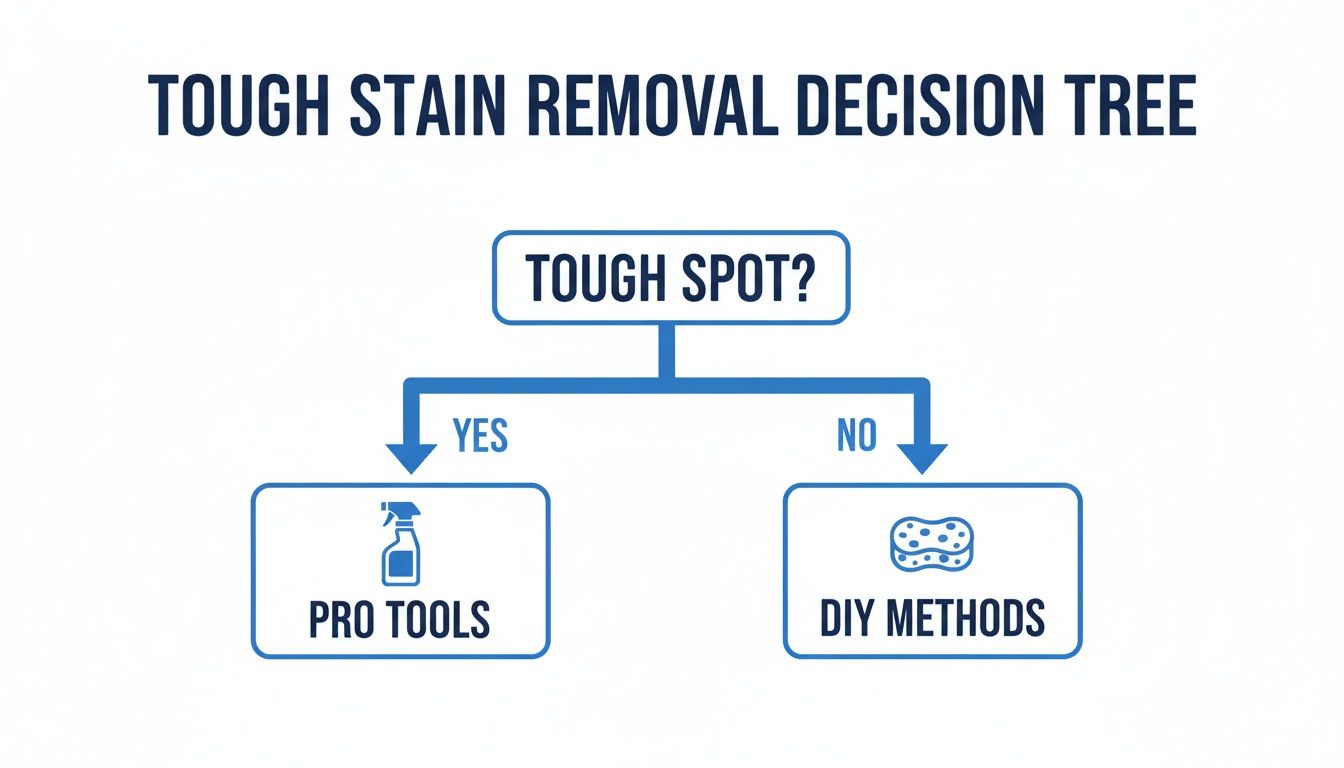
As the visual guide shows, the path forward really depends on how stubborn the stain is. Those persistent spots are the ones that need a professional solution.
At Professional Window Cleaning, we've seen it all, and we know what actually works. When you get down to it, there are only two trusted methods in the world of professional window cleaning for getting that perfect, streak-free finish.
These two methods are the gold standard for a reason—they are safe, incredibly effective, and deliver the flawless results customers expect. Any other approach is just a compromise.
Ultimately, calling a professional is an investment in protecting your property. For those stubborn stains, high windows, or simply to guarantee a perfect result, letting an experienced team handle the job ensures your windows will look their absolute best without any risk of damage.
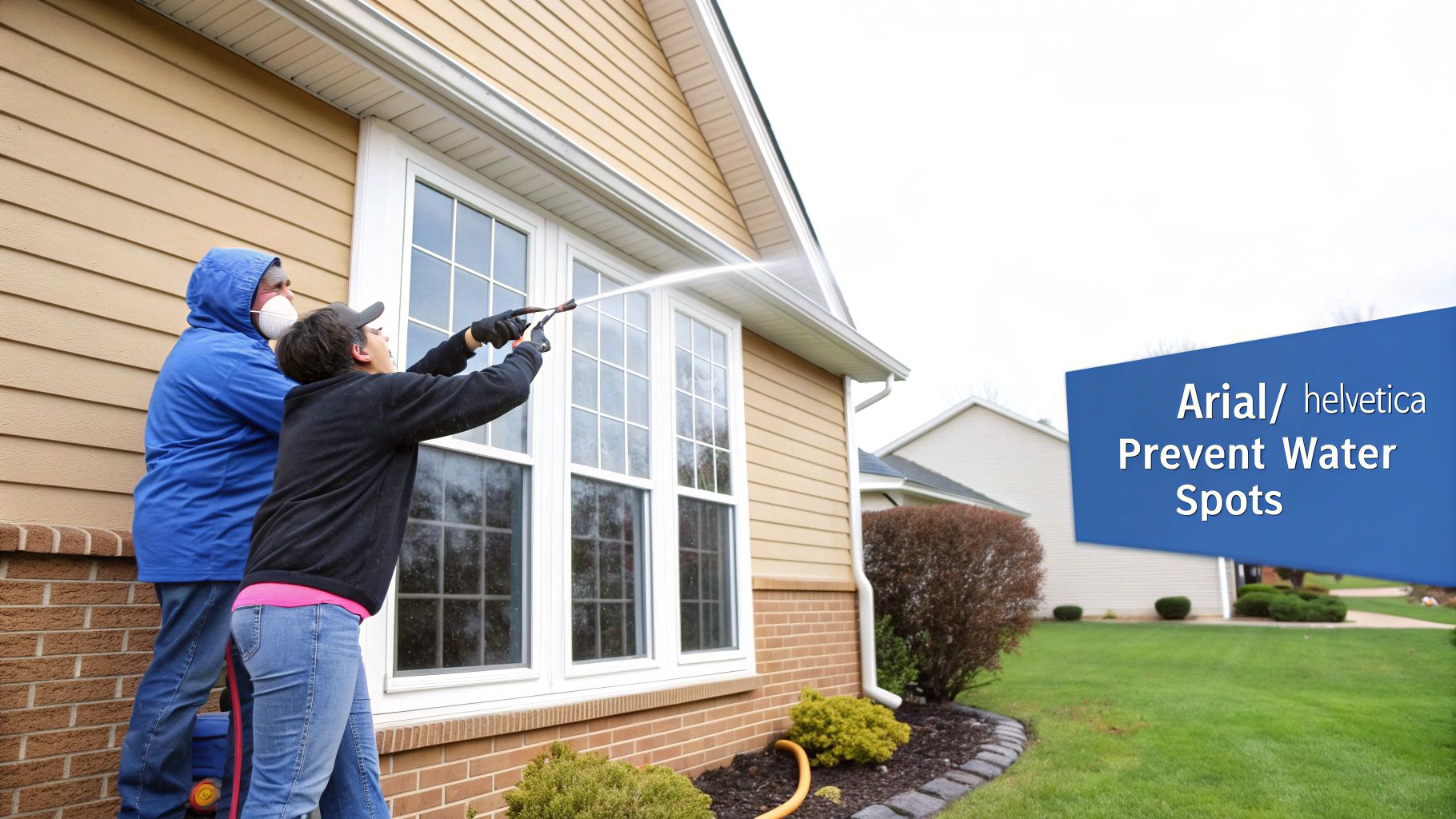
While it’s good to know how to get rid of water spots, the real long-term win is stopping them from showing up in the first place. A little proactive thinking saves you a ton of time and effort down the road and protects your glass from the risk of permanent etching. The best offense is truly a strong defense.
Preventing water spots is all about controlling the environment around your windows. The most common culprit is misdirected water, so start with a quick walk around your property. Look for sprinkler heads spraying your windows and give them a simple adjustment. It sounds too easy, but this one fix can eliminate up to 80% of new water spot problems.
Next, look up. How does water flow from your roof or siding? Runoff can carry minerals that leave nasty stains on the glass below. Making sure your gutters and downspouts are working correctly is crucial for guiding that water away from your windows where it belongs.
One of the most effective ways to defend your glass is by applying a hydrophobic sealant. These treatments create an invisible, super-smooth layer on the window that makes it incredibly difficult for water to stick around.
Instead of clinging to the surface and evaporating, water just beads up and rolls right off, taking dirt and minerals along for the ride. This "self-cleaning" effect keeps your windows looking great for longer and makes any future cleaning a breeze. You can find quality glass sealants at most hardware stores, and applying them is usually a simple wipe-on, wipe-off process.
Beyond just cleaning, other measures like installing window privacy film can also add a layer of protection, helping to maintain your windows' clarity and appearance over the long haul.
Even with the best preventative measures, some mineral buildup is bound to happen, especially in areas with notoriously hard water. This is where scheduling regular professional maintenance becomes a key part of your prevention strategy.
Think of professional window cleaning like a dental cleaning. You brush your teeth every day, but you still need a hygienist to remove the tartar buildup you can't handle. We do the same for your glass, removing the slow accumulation of minerals before it has a chance to cause permanent damage.
At Professional Window Cleaning, we’ve been providing these essential services in cities like Scottsdale and Denver for over 26 years. Our teams use one of two professional methods—either a flawless squeegee technique or advanced pure-water systems—to guarantee a perfect, spot-free finish every single time. Scheduling a professional cleaning once or twice a year is the ultimate protective measure, safeguarding your investment and keeping your view crystal clear.
Even with a solid game plan, you're bound to have some questions about getting rid of stubborn water spots. It’s a common challenge, and you're not alone in wanting to get the details right. We hear a lot of the same questions from homeowners and property managers, so let's clear up a few things.
Sometimes, tackling water spots feels like a bigger headache than it should be, which naturally leads to questions about shortcuts or different tools. We get it. But knowing what to avoid is just as crucial as knowing what to do.
We get asked this a lot, and our answer is always a firm no—at least for any DIY attempt. It's true that some professionals use ultra-fine #0000 grade steel wool for very specific, controlled situations, but it's incredibly risky if you don't know exactly what you're doing.
The wrong grade of wool, or even just a little too much pressure, can cover your beautiful glass in fine scratches. Those new scratches are almost always permanent and far more noticeable than the original spots ever were. It’s a high-risk, low-reward gamble that often ends in regret. A much safer route is to stick with a dedicated chemical cleaner made for mineral removal or just call in a pro who has the right touch and tools for the job.
While they're both caused by the same culprits—calcium and magnesium—they should absolutely be treated differently. The glass on your car isn't the same as the glass in your home. Automotive glass often has special tints and coatings, and it’s constantly exposed to a unique cocktail of road grime, oils, and other contaminants.
Using a household cleaner or an abrasive technique on your car can easily damage those specialized coatings or the surrounding rubber and plastic trim. It’s always best to use products specifically formulated for automotive glass. That way, you get a crystal-clear view without causing any unintended—and costly—damage.
This really comes down to your local environment and specific situation. For properties in areas with very hard water and dry, dusty conditions, like Phoenix, we typically recommend professional cleaning at least twice a year.
This frequency stops mineral buildup from getting so severe that it physically etches the glass. For a high-traffic commercial building, you might even need quarterly service to maintain that pristine, professional look that welcomes customers and clients. When it comes to water spots, regular maintenance is the best prevention.
At Professional Window Cleaning, we've seen it time and time again over our 26 years in the business: regular cleanings protect a property's value. Consistent maintenance keeps the small problem of water spots from turning into the expensive headache of permanent glass damage.
If you clean your windows only to see spots reappear almost immediately, there’s an ongoing source of hard water hitting the glass. It’s a frustrating cycle, but there's a logical explanation. The usual suspects are often right outside your window.
Common sources include:
The first and most important step is to find that source and fix it. Once you've stopped the cause, a thorough professional cleaning can get rid of the existing deposits for good. After that, applying a quality glass sealant can give you an extra layer of protection, making it harder for future spots to form.
When DIY solutions just aren't cutting it, or if you want to ensure your windows are protected and flawlessly clean, the expert team at Professional Window Cleaning is ready to help. Professional Window Cleaning has been cleaning windows for over 26 years! We use industry-leading techniques to deliver a perfect, streak-free shine every time. Contact us today for a free estimate!
Read our blog posts regularly and keep learning.