Care and Maintenance
Window Cleaning Maricopa AZ: Local Homeowner's Guide
Window cleaning Maricopa AZ services keep your home bright and curb appeal high. Compare local pros, pricing, and scheduling options today.


You wash the windows, step back, and the glass still looks dull. The streaks are gone, but a cloudy film or scattered white spots are still sitting there. That's the point where it's often assumed a stronger glass cleaner is needed.
Usually, they don't need a better cleaner. They need the right diagnosis.
After more than 26 years in the window cleaning trade, the pattern is always the same. Homeowners and property managers spend time trying soap, store-bought spray, paper towels, vinegar, and more elbow grease, only to get the same hazy result. The reason is simple. Many window problems that look like dirt are mineral deposits or, in worse cases, permanent glass etching. A proper water spot remover for windows can fix the first problem. It cannot reverse the second.
You finish cleaning, the streaks are gone, and the glass still looks washed out in the sun. I see that call all the time. The problem is usually sitting on the glass itself, not in your cleaning method.
On most jobs, that dull film comes from hard-water minerals left behind after sprinklers, runoff, or rinse water dries. Regular washing removes dust, pollen, and loose grime. It does not always remove calcium, magnesium, and other deposits that have already bonded to the surface. That is why the window can look cleaner and still not look clear.
The first job is diagnosis. Some spots are simple mineral buildup. Some are the early stage of glass damage. If you do not separate those two, you can waste a lot of time scrubbing glass that will never clear up with standard cleaning.
The source is usually easy to trace once you know what to look for:
Dry, sunny conditions make this worse because the water flashes off fast and leaves the mineral load behind. That is why spotting often builds slowly, then suddenly becomes impossible to ignore.
Standard glass cleaner is made for fingerprints, light grease, and routine film. Mineral staining is a different problem. It usually needs the right acid-based treatment, controlled agitation, or restoration work, depending on how long it has been there and whether the surface is still intact.
Here is the practical rule I give customers. If the glass feels clean but still looks cloudy or speckled, stop treating it like ordinary dirt. Check whether you are dealing with removable deposits or permanent etching before you choose a water spot remover for windows.
Professional window cleaning methods matter here too. A squeegee and a pure-water system both work well on normal soil. Neither one fixes bonded mineral deposits on its own.
This is the split that most DIY advice misses. A water spot remover for windows can remove surface mineral stains. It cannot repair etched glass.
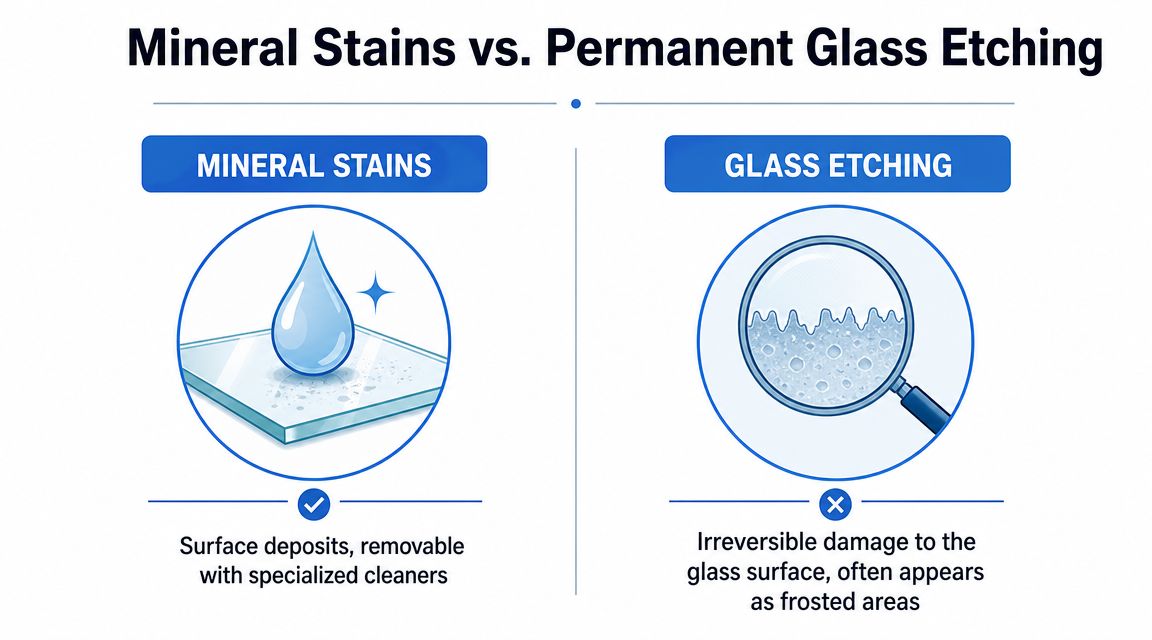
Mineral staining sits on top of the glass. Etching means the glass itself has been physically damaged. Once minerals remain on the surface long enough, or react under harsh conditions, they can leave behind a frosted or permanently roughened look that cleaning alone won't fix.
Industry guidance makes this clear. A frequently missed question is whether a water spot remover for windows is removing surface residue or only revealing that the glass is already damaged. Some stubborn spots remain after cleaning and may require a more aggressive mineral-deposit remover or even polishing if the glass is etched, as noted by GlasWeld's guidance on water spot removal.
Here's the basic method:
| Condition | What it usually means | What helps |
|---|---|---|
| Chalky residue that changes with treatment | Surface mineral deposit | Water spot remover, careful agitation |
| Cloudy area that stays after cleaning | Possible etching | Restoration or polishing |
| Rough buildup in concentrated drip lines | Heavy deposits | Stronger professional treatment |
| Frosted-looking patch with no real change | Surface damage | Cleaning won't fully restore it |
A seasoned cleaner doesn't just ask, “What product should I use?” We ask:
If a spot disappears while wet and reappears when dry, there's often still residue or surface damage involved. That's a sign to slow down and diagnose before scrubbing harder.
That's the difference between cleaning and restoration. It saves time, prevents unnecessary scratching, and tells you whether a realistic result is clear glass or improved glass.
You wash the window, step back, and the spots are still staring at you in the sun. If the earlier check showed a surface mineral deposit, not etching, home treatment can help. If you skip that diagnosis and start scrubbing, you can turn a light stain into scratched or hazy glass.
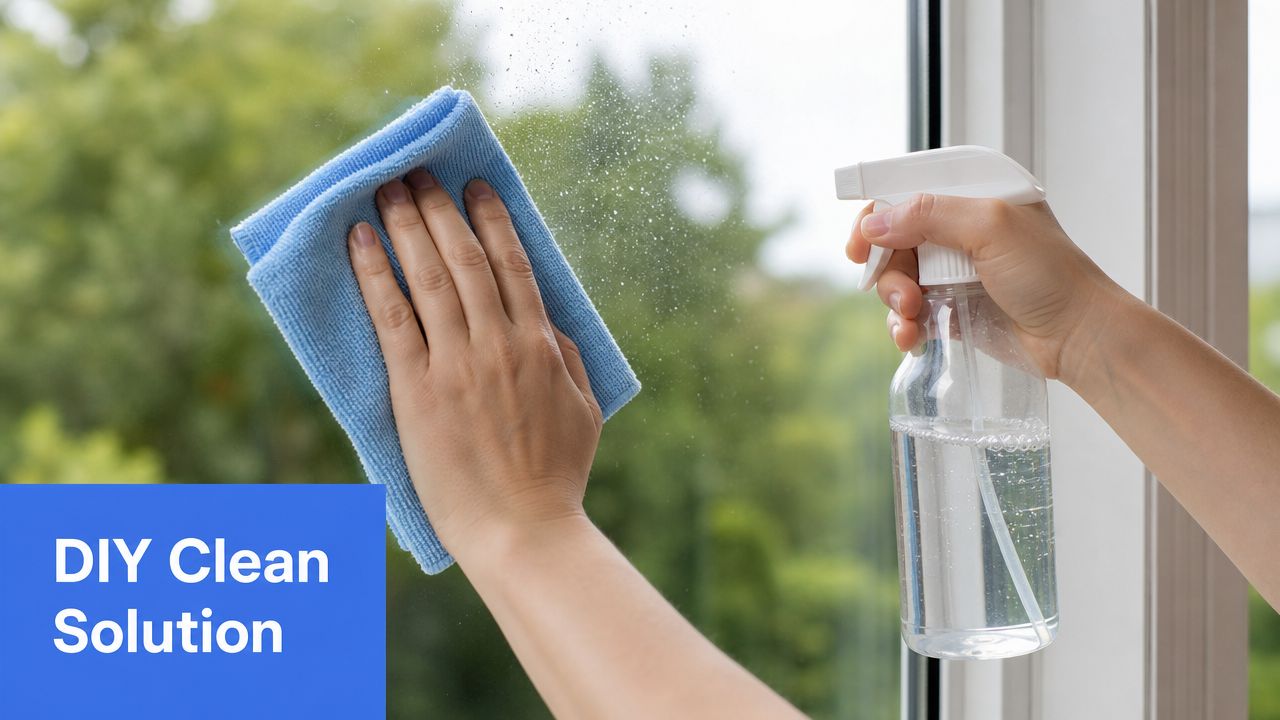
For fresh, light spotting, mild acid is usually the right starting point because it attacks the mineral residue ordinary glass cleaner leaves behind. Vinegar works for this reason. It is not powerful enough for every stain, but on new deposits it is often the safest first test.
Use a small test area first. Apply a vinegar-and-water mix with a microfiber cloth or soft applicator, let it sit briefly, then rub with light, even pressure. After that, clean the pane normally and check it dry, not wet. Wet glass can hide residue.
I tell homeowners to watch the response, not just the effort. If the spot lightens after one or two careful passes, you are dealing with residue on the surface. If nothing changes, stronger rubbing is usually the wrong move.
For a closer look at product options beyond basic vinegar, this guide on the best cleaner for hard water spots on glass covers the differences between common cleaner types. For a useful overview of how cleaning chemicals behave on different surfaces, see Estimatty's expert chemical tips.
The trouble starts when people jump from light stain removal to aggressive correction without realizing it. Stronger removers and fine abrasive products have their place, but they require control, especially on tempered glass, coated glass, and tinted surfaces.
Hillyard's window and mirror water spot advice explains that tougher spot removers often rely on either mild acids or fine abrasives, and that heavy pressure raises the chance of marring. That matches what I see in the field. Pressure does not replace chemistry.
A good rule: If a light deposit is not responding to a safe test, stop and reassess the glass before you push harder.
That pause saves glass. It also helps you stay in the right lane. Cleaning removes deposits. Restoration addresses damage.
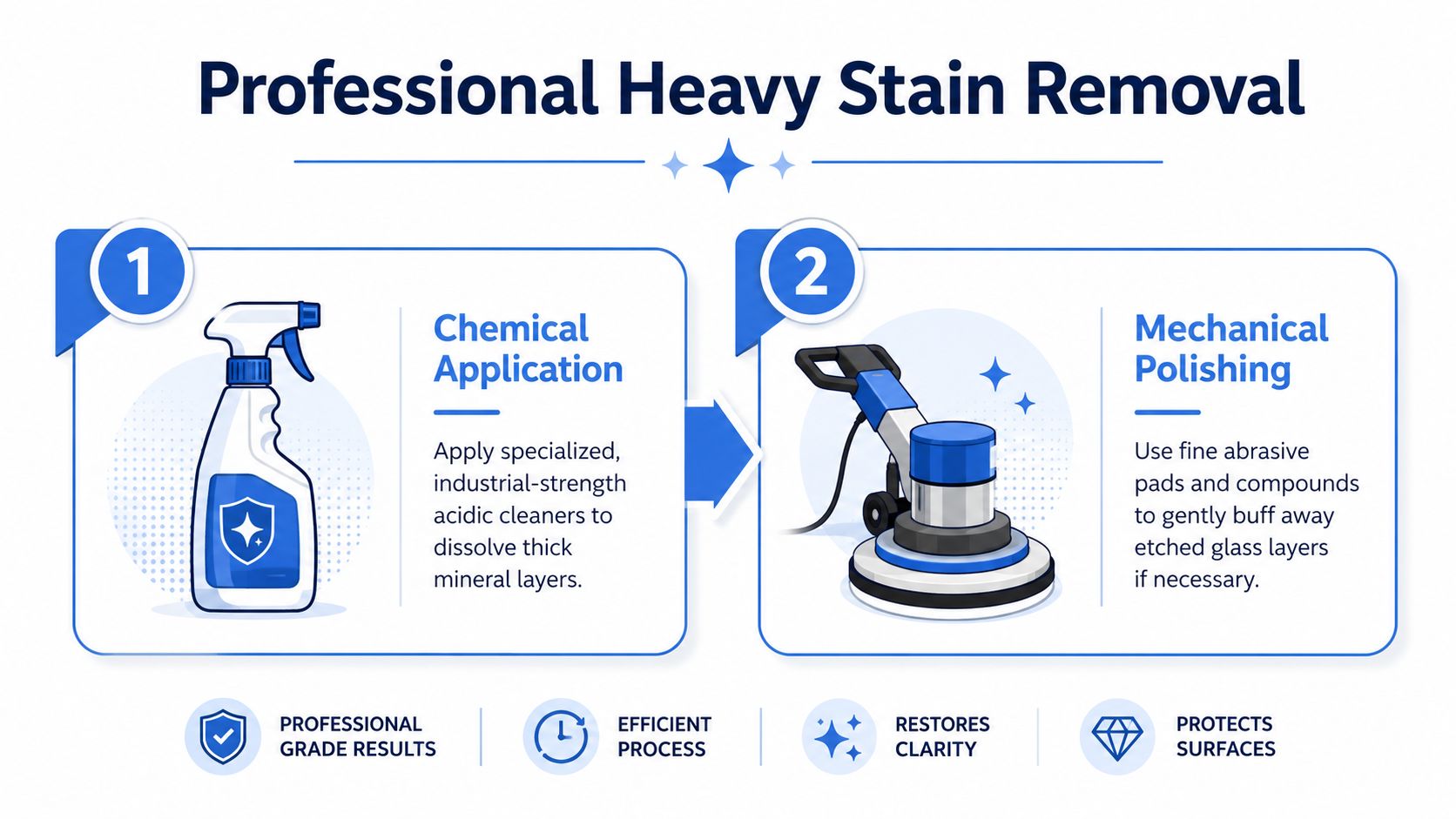
Heavy stain removal starts with diagnosis, not product choice. If the glass has a chalky surface deposit, restoration can often bring it back. If the minerals have already etched the surface, no remover will polish that damage away.
After 26 years in window cleaning, I can say that DIY work often gets expensive, particularly when people see white spotting, assume it is all removable, and keep scrubbing. On heavily stained glass, that can leave you with two problems instead of one: mineral residue that is still there, and scratch damage from the attempt to force it off.
In professional window cleaning, the final cleaning step still comes back to two systems: the squeegee method and the pure-water method. Heavy stain jobs may need restoration work first, but the finish cleaning is still built around one of those approaches.
For severe surface buildup, the squeegee method usually gives the technician the most control. The process is slower than routine cleaning because the goal is correction, not speed. I work small sections, watch how the deposit reacts, and adjust before treating the rest of the pane.
That matters because heavy staining is rarely uniform. One area may have loose mineral crust that softens with the right remover. Another area on the same pane may already be etched and only look better, not fully clear, after treatment.
Professional removers are chosen based on the deposit, the type of glass, and nearby surfaces like frames, seals, and painted trim. Dwell time matters. Agitation matters. Rinsing and neutralizing matter. Good results come from using the chemistry with control, then following with strip washer, squeegee, towels, and detail cloths to clear away loosened residue and inspect the glass thoroughly.
Chemical handling needs discipline. Estimatty's expert chemical tips are a useful reference for understanding how cleaning agents behave on different surfaces.
A close-up demonstration helps show why technique matters more than brute force.
Pure-water cleaning has a different role. It uses highly filtered water that dries without leaving fresh mineral residue, which makes it excellent for exterior maintenance, upper glass, and large buildings.
It is not usually the first correction step on thick, baked-on staining. Pure water removes loose soil well, but it does not dissolve established mineral buildup by itself. Where it shines is after restoration, once the deposits have been broken down and the glass is ready for a spot-free rinse.
That is why many pros pair stain removal with a maintenance plan built around pure water. Once the pane is corrected as far as the glass condition allows, pure water helps keep new deposits from building back up as fast.
If you want a closer look at the treatment options, this guide to window water stain removal methods for different levels of buildup explains the process in more detail.
The difference between a temporary improvement and a lasting result usually comes down to three things: correct diagnosis, controlled restoration, and a cleaning method that does not put new minerals right back on the glass.
A pane can look clear the day you clean it and start spotting again a week later if the source was never corrected. After 26 years in this trade, I can tell you the repeat offenders are usually easy to find once you stop looking at the whole house and start reading the pattern on the glass.
Start with the stain layout. Scattered dots across several panes usually come from sprinkler mist or hose spray. Tight vertical tracks point to runoff from frames, ledges, or roofing above. Heavy buildup in the lower corners often means water is hanging there, then drying slowly and leaving minerals behind. That pattern-reading matters because prevention only works when it matches the source.
| Source of Water Spots | Prevention Strategy |
|---|---|
| Sprinkler overspray | Re-aim sprinkler heads so they don't hit glass |
| Roof or ledge runoff | Improve drainage and address repeated drip lines |
| Screen-retained moisture | Clean screens and let them dry properly |
| Tap-water rinse residue | Use proper drying technique or purified rinse water |
| Condensation or trapped moisture | Improve airflow and inspect seals where needed |
The goal is simple. Keep mineral-heavy water from drying on the same pane over and over.
That usually means changing a few habits, not buying a stronger cleaner.
Skylights, transoms, and other angled glass surfaces spot faster because water tends to sit longer instead of running off cleanly. They also collect more dust, pollen, and roof runoff, which gives minerals more material to bind to. If your property includes overhead glazing, this guide to effective skylight maintenance covers practical upkeep that supports cleaner glass between service visits.
Consistency is what keeps a maintenance issue from turning back into a restoration job. Once the glass has been corrected, routine cleaning at the right interval keeps light deposits from building into the kind of stubborn staining that people mistake for permanent damage.
A good water spot remover for windows starts with the right question. Are you looking at removable mineral residue, or are you looking at damage that has already changed the glass surface?
That one distinction saves a lot of wasted effort. If the issue is light staining, a mild home solution and careful technique may be enough. If the buildup is older, heavier, or spread across multiple panes, professional removal methods are more reliable. If the glass is etched, no cleaner is going to restore it fully. At that point, polishing or restoration becomes the conversation.
After more than 26 years in the trade, one lesson stays consistent. The people who get the best results don't start with the harshest product. They start with the correct diagnosis, use the least aggressive effective method, and know when to stop before they damage the glass.
If your windows have stubborn spotting, lingering haze, or damage that doesn't change after cleaning, it's worth getting an experienced assessment. For properties in Las Vegas, NV, Phoenix, AZ, Denver, CO, or Scottsdale, AZ, expert help can mean the difference between temporary improvement and glass that looks clear again.
If you want a professional evaluation of stubborn water spots, etched glass, or recurring mineral buildup, contact Professional Window Cleaning. Their team handles residential, commercial, and high-rise window cleaning using the two methods professionals rely on most: squeegee cleaning and pure-water systems.
Read our blog posts regularly and keep learning.