Care and Maintenance
How Long Does Window Cleaning Take
Wondering how long does window cleaning take? Get realistic time estimates for homes, offices, and high-rises, plus the factors that change every job.


You usually notice the problem when you're in a hurry. The window drags, squeals, or stops halfway, and suddenly a simple task turns into a two-handed wrestling match. Most of the time, the fix isn't complicated. The track is dirty, the moving surfaces are dry, or both.
A good window track lubricant can restore smooth movement, but only when it's used the way a pro would use it. That means cleaning first, choosing the right product, and knowing when sticking is a lubrication problem versus a hardware problem.
A sticking window almost never starts with the glass. It starts in the track. Dust, pollen, pet hair, dead bugs, and gritty outdoor debris settle into the channel. Every time you open or close the sash, that debris gets dragged along the contact points and increases friction.
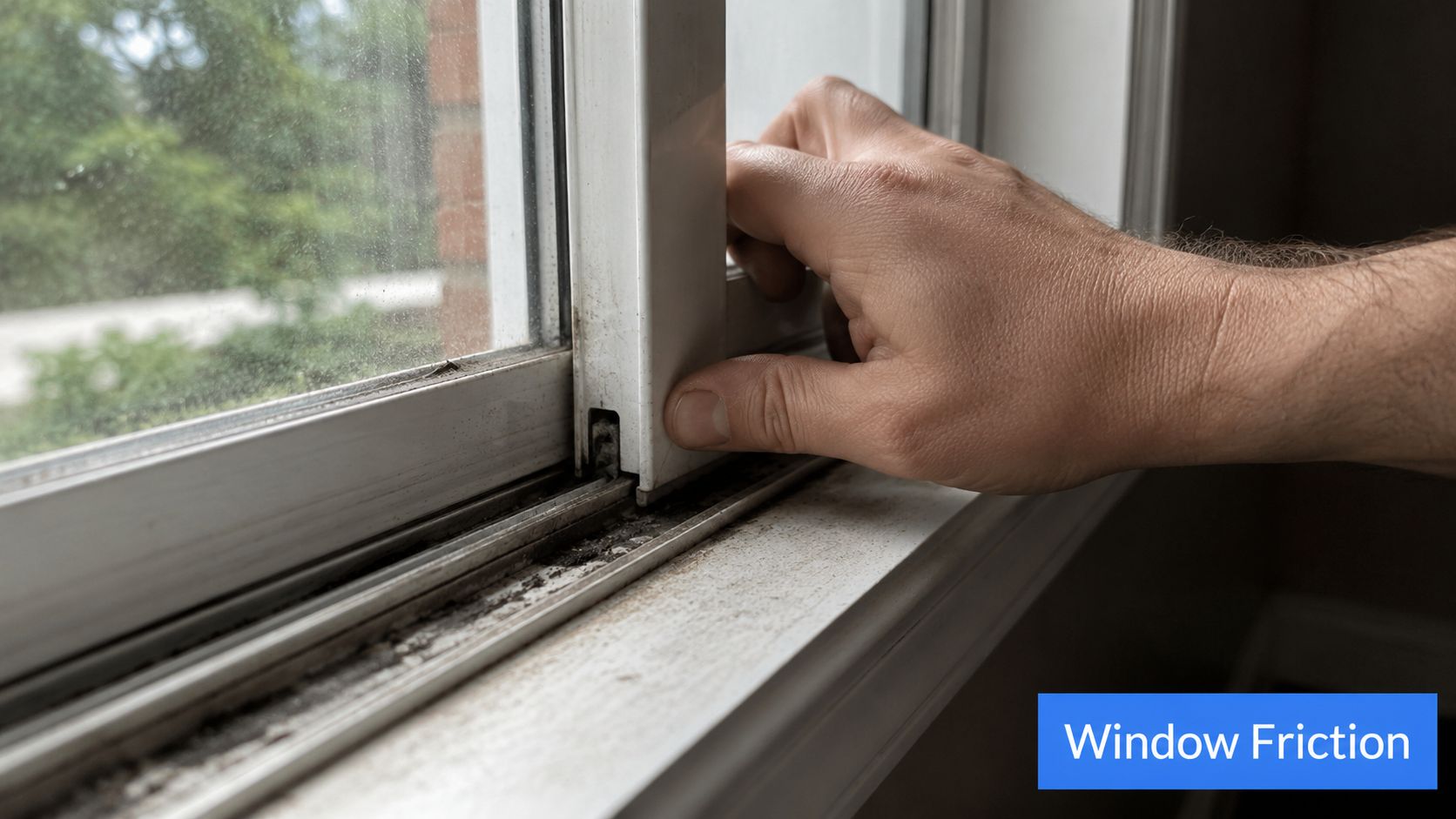
The symptoms are familiar. The window feels heavy. You hear a scraping sound. It may move in short jerks instead of a smooth glide. In sliding systems, dirty rollers ride through contamination. In hung windows, buildup in the side channels creates drag that feels like the window is swollen or off track.
Lubricant helps because it reduces friction where the sash, rollers, or guides contact the track. In automotive guidance, silicone-based products are recommended because they reduce friction while resisting dust buildup better than heavier greases, and that same basic principle carries over well to many common window systems when the track has been cleaned first. The same guidance also notes that lubrication lowers wear on moving parts and works best when applied sparingly after cleaning the track, then distributed by cycling the window through its motion according to this maintenance overview from CarParts.
Practical rule: If you lubricate over dirt, you don't fix the window. You turn loose grit into grinding paste.
That's why pros look at the entire opening, not just the glass. A smooth-operating window depends on clean tracks, intact weatherstripping, and hardware that still lines up correctly. If you're also dealing with larger sliding openings, this guide to space-saving doors gives useful background on how track-based systems behave and why alignment matters as much as lubrication.
A window that drags in the heat often gets hit with whatever spray is closest on the shelf. That quick fix is where many DIY jobs go sideways. General-purpose oils can make the sash feel better for a day or two, then the track starts collecting dust, pet hair, and grit, and the window gets sticky again.
Professionals avoid that cycle by matching the product to the surface. For most residential window tracks, a dry or light silicone product is the better first choice because it reduces friction without leaving the wet residue that turns debris into sludge. In dusty markets like Phoenix, AZ and Las Vegas, NV, that difference shows up fast.
Silicone also gives you a better margin for error. A light coat usually helps. A heavy coat still causes problems, but it is less likely than oil to create a gummy track.
If you want the best result, pair the right lubricant with a properly prepped track. This step-by-step window track cleaning guide shows the level of prep that makes lubrication last longer and work more like a professional service visit.
| Lubricant Type | Best For | Pros | Cons |
|---|---|---|---|
| Dry silicone spray | Most household window tracks and channels | Low residue, cleaner finish, less likely to collect dust | Won't do much if dirt and old residue are still in the track |
| Silicone spray | Sliding and moving track surfaces that need friction reduction | Good slip, easy targeted application with a straw nozzle | Too much can still leave buildup |
| Silicone grease | Select channels, seals, and parts that need a longer-lasting coating | Stays in place better than a thin spray, handles moisture well | Easy to overapply, messy in narrow tracks |
| Oil-based lubricant | Limited use on certain metal joints or hardware, usually not the track itself | Easy to find, immediate slippery feel | Attracts dust, leaves residue, can turn dirty channels into paste |
A track lubricant should reduce friction without becoming a dirt magnet.
Skip multipurpose oils, heavy greases in the wrong places, and the habit of soaking the whole channel. More product rarely solves the underlying problem. It usually buries it.
Keep track lubrication separate from hardware lubrication. A hinge, pivot point, or latch may need a different product than the track the sash rides in. That distinction matters if you want the window to operate well for more than a week.
This is also the point where DIY should stay honest. If the track is clean, the lubricant is appropriate, and the window still binds, the issue may be worn rollers, a twisted frame, failed balances, or alignment problems. Lubricant helps a healthy system work better. It does not correct worn or damaged parts.
If the track is dirty, lubrication is premature. That's the part many homeowners skip, and it's the reason a lot of “lubed” windows still feel terrible.
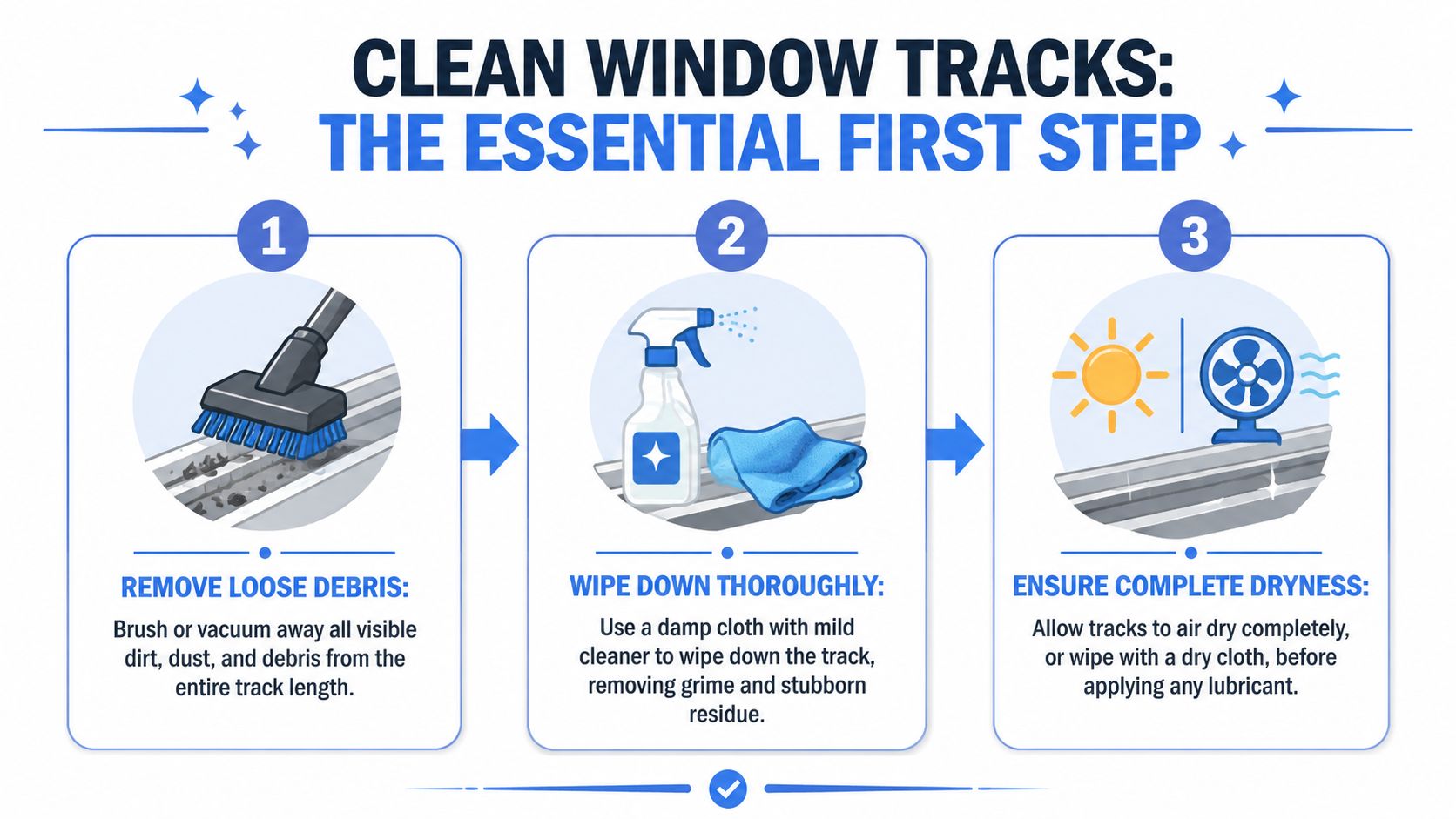
A proper prep job doesn't need fancy tools. A vacuum with a crevice tool, a stiff dry brush, a microfiber cloth, and a mild cleaner handle most residential tracks. If the debris is packed in corners, a small nylon detailing brush helps loosen what a cloth can't reach.
Use this sequence:
For a closer walkthrough, this article on how to clean window tracks properly is worth keeping open while you work.
A quick visual guide helps if you want to see the process at a glance.
Professional cleaners only use two methods for the glass itself: a squeegee or a pure-water system. But neither method changes the basic rule for tracks. Dirt has to come out before any maintenance product goes in.
Clean tracks let lubricant do its job. Dirty tracks turn lubricant into a binder for more debris.
If you skip prep, the lubricant mixes with old dust and the channel gets pasty. Then the sash drags through that residue every time you move it. That's why the cleaning step isn't optional. It's the whole foundation of the repair.
Once the track is clean and dry, application should feel controlled and minimal. This is not a “spray until it shines” job. The goal is a light coating exactly where the window moves.
Most silicone sprays come with a thin straw. Use it. Aim into the channel or the specific contact points instead of fogging the whole frame. A narrow, targeted line is better than overspray on the glass, sill, and surrounding finish.
A simple approach works well:
If you're working on vinyl units, this guide on how to lubricate vinyl windows is a useful companion because it focuses on the materials many homeowners have today.
The most common mistake is overapplication. The track looks dry, so people keep spraying. Then dust sticks to the excess and the window starts dragging again.
The second mistake is lubricating the wrong part. If the resistance comes from a failed balance, bent frame, damaged roller, or swollen wood component, lubricant won't solve it. It might make the movement feel different for a short time, but it won't correct the cause.
This is solid seasonal maintenance for homeowners in Denver, CO and Scottsdale, AZ, where temperature swings, dust, and normal wear all affect how windows move over time.
Sometimes the track is clean, the lubricant is right, and the window still fights you. That's when you stop treating it like a friction problem and start looking at the structure and hardware.
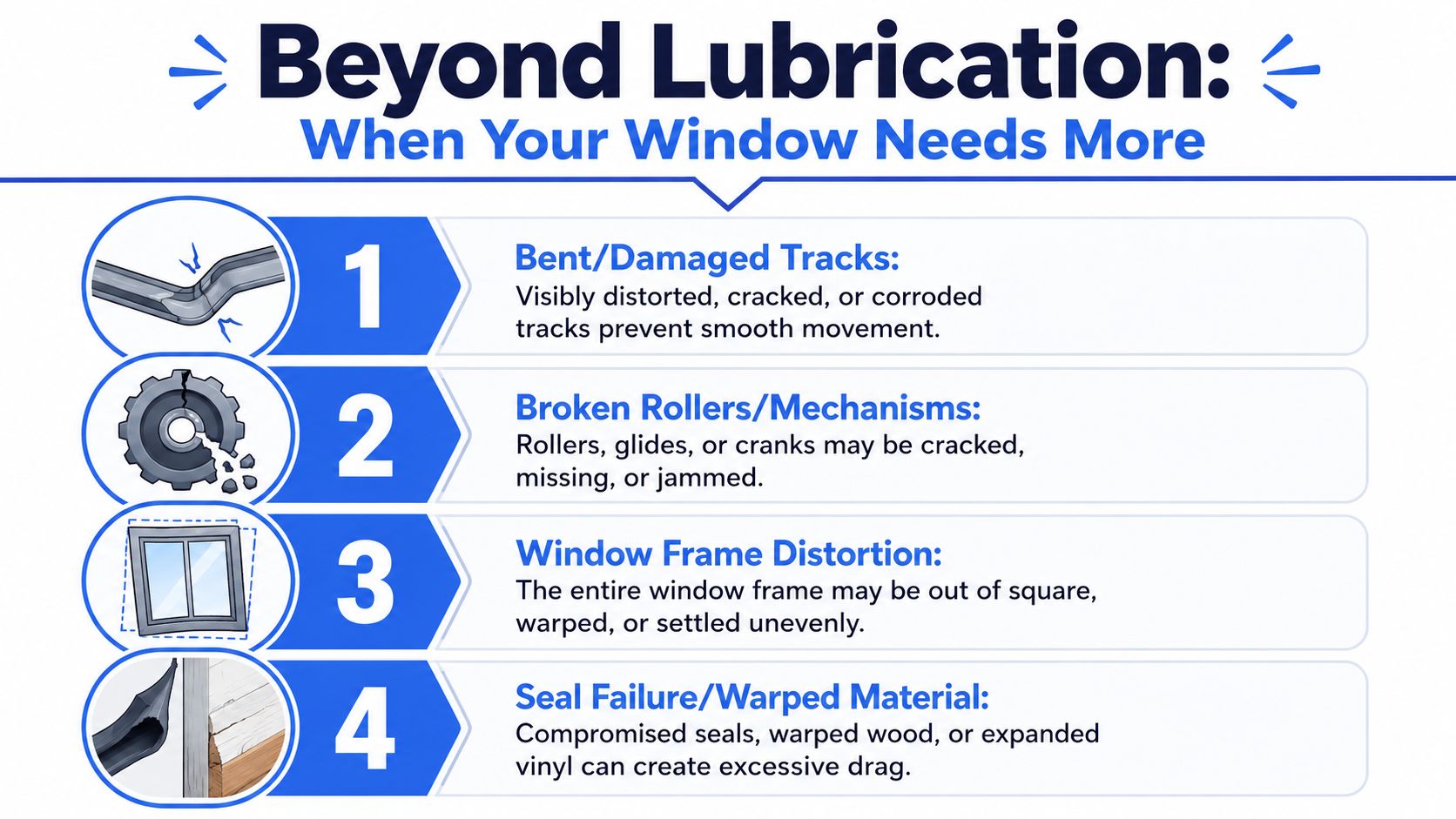
A few symptoms usually point beyond lubrication:
If you can see the track bowing inward, rollers wobbling, or the sash rubbing the frame edge, stop adding product. Lubricant isn't a structural repair.
For many residential and commercial windows, a dry silicone or dry-lube product is often the better technical choice over oil-based lubricants because these formulas are designed to dry quickly, reduce dust adhesion, and are specified as safe on common materials including vinyl and plastic as outlined in this window hardware guidance from Centra Windows. That's especially relevant with modern vinyl and composite systems, where you want smooth movement without leaving a residue that traps dirt.
If your window improves only slightly after a proper cleaning and light lubrication, the track probably isn't the whole story.
Call for expert help when:
A technician can tell the difference between normal drag and failing hardware quickly. That saves time, avoids wasted products, and prevents damage from forcing a window that's already off line.
For a sticky track, I wouldn't. Standard WD-40 leaves a wet film. That film catches dust, grit, and insect debris, which turns a temporary improvement into another dirty track.
It can still have a place as a light penetrant on rusted metal parts during repair work, but that is different from lubricating the sliding path itself.
Go by performance, not the calendar.
If the window starts dragging, chattering, or sounding scratchy after the track is already clean, it usually needs another light application. In dusty areas, homes with pets, or properties near construction, buildup comes back faster, so maintenance tends to come up sooner.
No. Older aluminum windows, newer vinyl frames, painted surfaces, and rubber weatherstripping do not all tolerate the same products equally well.
Check the label before you spray anything. If the product is not labeled for window tracks, vinyl, or plastic-contact areas, don't guess on it.
Sometimes, but only in specific spots and in very small amounts. Grease is easier to overapply, and extra product in a track usually becomes a dirt magnet.
If a window needs that much help to move, I start looking harder at rollers, balance hardware, sash alignment, and track condition. At that point, lubrication may be covering up a repair issue instead of solving it.
Stop when the window still binds after a full cleaning and a light, correct application of lubricant.
That usually means the problem is no longer basic maintenance. Worn rollers, bent tracks, a sash that has shifted out of square, or failing balances need inspection and repair. That is the same line a technician uses. A proper service call can save you from forcing the sash, cracking parts, or wearing out the track even faster.
If your windows still drag, scrape, or refuse to move the way they should, Professional Window Cleaning can help. The team has been serving homes and businesses across Arizona, Nevada, and Colorado for over 26 years, and they know the difference between a track that needs cleaning and a window that needs real repair attention.
Read our blog posts regularly and keep learning.