Care and Maintenance
High Rise Window Cleaning Cost: A 2026 Pricing Guide
Explore high rise window cleaning cost in 2026, from per-window and per-floor rates to Arizona, Colorado, and Nevada examples that help you budget


Choosing the right window water stain remover really comes down to the stain itself. Some are just simple mineral deposits, but others are permanent damage to the glass. For fresh, light spots, a simple mix of distilled white vinegar and water often does the trick and dissolves the minerals right off.
But for those tougher, set-in stains? You'll need to bring in specialized, non-abrasive chemical cleaners. Professional Window Cleaning has been cleaning windows for over 26 years!
Those chalky, white spots that ruin your otherwise perfect view aren't just dirt. They're mineral deposits left behind after water evaporates. We see this all the time in the cities we service, from sunny Phoenix to the high plains of Denver, where the water is naturally packed with minerals.
Here’s what happens: a water droplet lands on your window, the H2O evaporates, but minerals like calcium and magnesium stay behind. Over time, these minerals bond directly with the porous surface of the glass, creating that stubborn, semi-transparent film.
Not all water stains are created equal. In our 26 years of experience, we've learned to categorize them into two distinct stages. Knowing the difference is the key to picking the right approach and, more importantly, avoiding making things worse.
This decision tree gives you a clear visual of the critical difference between a simple deposit and permanent etching.
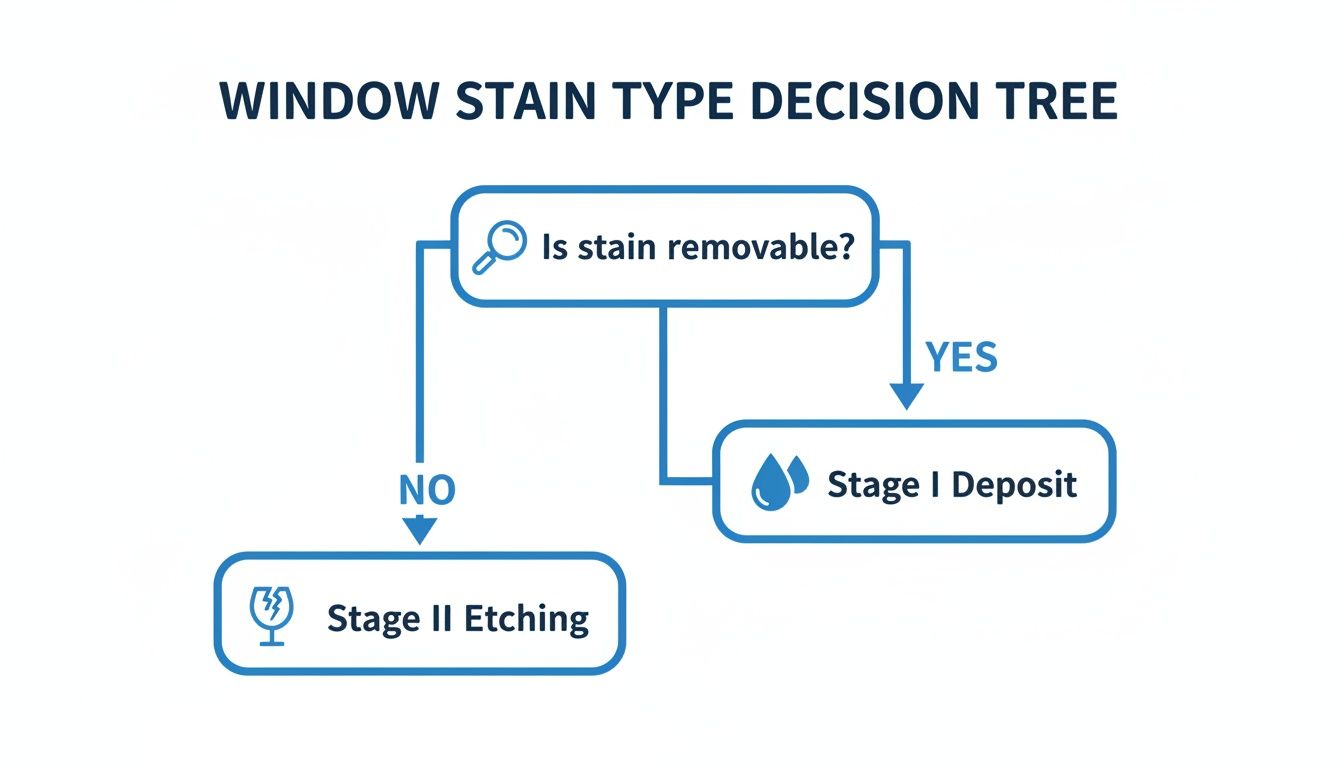
The main takeaway here is that removability is the defining factor. Once a stain becomes etched, standard cleaning methods just won't work anymore. This is exactly why dealing with water spots quickly is so important for protecting your windows.
To help you get started, here’s a quick guide to identifying the type of stain you're dealing with and where it might be coming from.
Use this quick guide to identify the type of stain on your windows and understand its origin—the first step toward effective removal.
Understanding these distinctions will save you time, effort, and potential frustration.
While hard water is the usual suspect, other sources are just as guilty of leaving these frustrating marks. Pinpointing the source is the best way to prevent them from coming right back.
Sprinkler overspray, for instance, is a huge problem for both homes and businesses. That repeated cycle of wetting and drying supercharges mineral buildup, especially in dry climates. Another sneaky cause is acid rain, which contains pollutants that can etch glass over time, leaving behind deposits that are a real headache to remove.
Hard water stains are a major issue, especially in the regions we serve. In the Phoenix area, water can have as much as 15-20 grains of minerals per gallon.
For a homeowner, untreated stains can etch the glass and potentially slash curb appeal by 10-15%. For property managers in bustling cities like Las Vegas or Scottsdale, the cost of ignoring these stains can add up fast. You can find more detail in market analyses of professional-grade stain removers.
When you first notice those faint, chalky outlines on your glass, you don’t always need to jump to heavy-duty chemicals. For light, Stage I mineral deposits, a couple of common household items can work wonders. These DIY solutions are safe, cheap, and perfect for the kind of routine upkeep that keeps your windows looking their best, a common task for residents in Denver.
Before you start, it’s always a smart move to test your cleaning mix on a small, out-of-the-way spot on the window. This simple check ensures the method is safe for your glass and won’t cause any surprises.
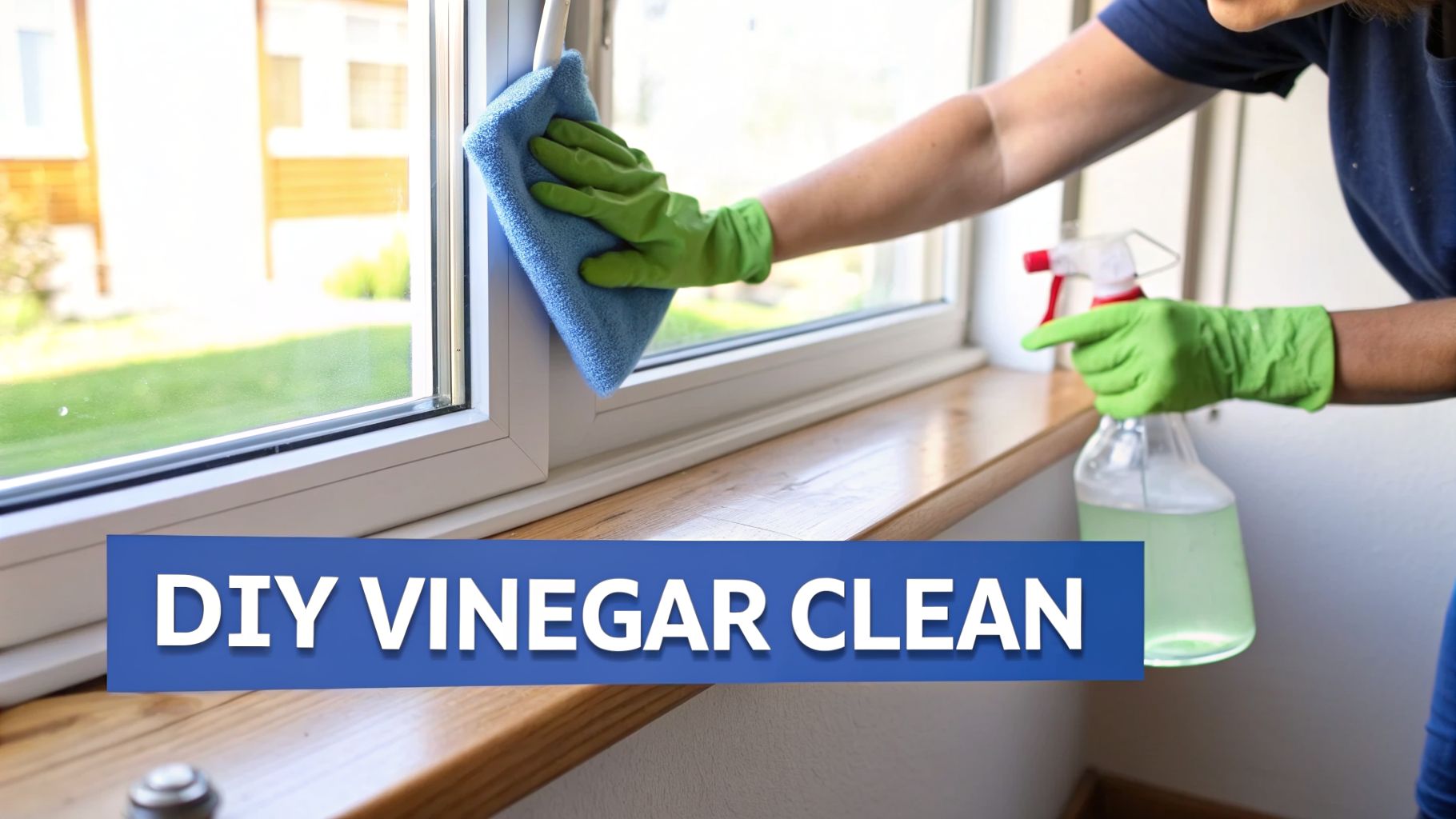
One of the most trusted methods in any homeowner's playbook is distilled white vinegar. Its natural acidity is perfect for breaking down the alkaline mineral deposits—like calcium and magnesium—that create those stubborn hard water stains.
Here’s how to mix and use this simple but powerful cleaner:
For stains that are a bit more stubborn but haven't etched the glass yet, a baking soda paste can give you the extra scrubbing power you need without being abrasive. Baking soda acts as a mild abrasive, lifting deposits without scratching the surface.
To make it, just mix baking soda with a tiny bit of water until you have a thick, spreadable paste. Apply it directly to the water spots and let it sit for about 10-15 minutes. Then, using a damp microfiber cloth, gently rub the spot to lift the stain. Finish by rinsing the glass thoroughly with clean, distilled water and drying it completely.
Crucial Safety Tip: Never, ever use harsh tools like scouring pads, steel wool (unless it's the #0000 grade for very specific, advanced uses), or razor blades on your windows. These can easily leave permanent scratches, turning a minor cleaning task into a costly replacement project. Always stick to soft cloths and gentle pressure.
Going beyond just spot-treating stains, understanding how to handle regular glass maintenance is key to preventing future buildup. For example, knowing how to clean skylights effectively offers great insights into caring for hard-to-reach glass that’s constantly exposed to the weather. These DIY methods are a fantastic first line of defense for homeowners everywhere, helping maintain clear views without risk. For more advice, check out our guide on the best cleaner for hard water stains.
So, you’ve tried the classic vinegar solution and even made a baking soda paste, but those stubborn water stains are just laughing at you. Don’t worry, it happens. When you’re dealing with years of built-up mineral deposits, it’s time to bring out the bigger guns.
This is a common headache for homeowners, especially in places like Scottsdale, where hard water from sprinklers can bake onto the glass, leaving behind tough, calcified spots that DIY remedies can't touch.
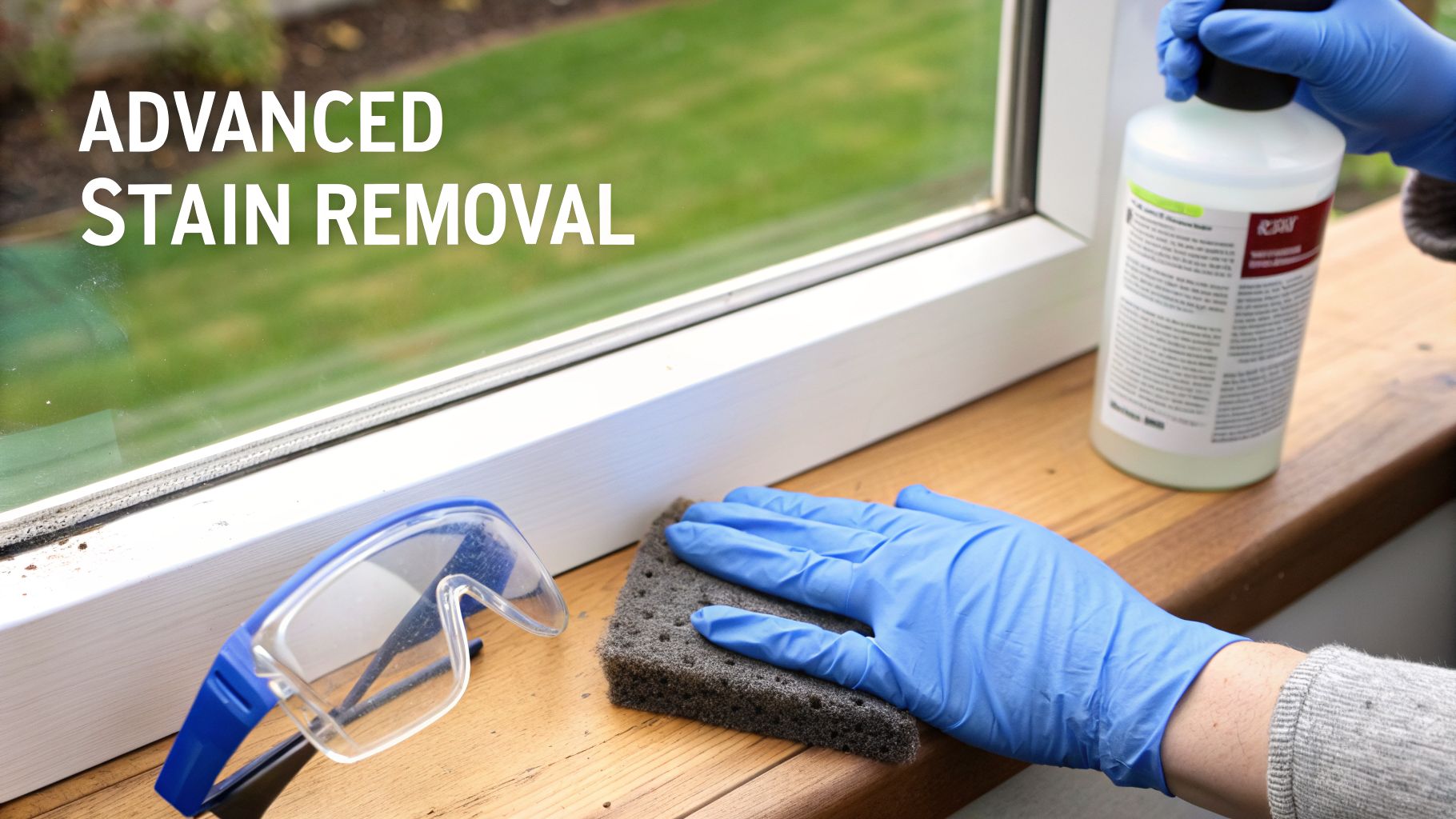
For stains that have put up a real fight, a commercial-grade, non-abrasive window water stain remover is your next logical step. These products are specifically engineered to dissolve heavy mineral buildup without harming the glass itself.
When you're shopping, look for formulas that contain mild acids like sulfamic acid or glycolic acid. These are the workhorses that break down the calcium and magnesium bonds but are far gentler on your windows than harsh industrial chemicals.
Safety here is absolutely non-negotiable. Before you even open the bottle, make sure you have the right personal protective equipment (PPE):
Follow the manufacturer’s directions to the letter. You'll typically apply the solution with a non-abrasive pad and work it into the stain. The most important rule? Never let the chemical dry on the glass. Once you're done, rinse the window thoroughly with clean water.
If you’ve tried everything else and a few tenacious spots just won’t budge, you can turn to #0000 (quadruple-ought) steel wool. I have to be clear: this is a last-resort technique that demands extreme care. This grade of steel wool is so fine that, when used correctly, it can shear off the mineral deposits without scratching the glass.
The absolute key is to always use it wet. Lubricate the surface with soapy water or your commercial cleaning solution. Never, ever use it dry—that’s a surefire way to end up with a scratched-up window. Use light, even pressure and work in small, circular motions.
Think of this as the final attempt before you have to consider the stain permanent.
Hard water spots are a massive issue in the professional cleaning world. For crews servicing large properties like stadiums and condos in Phoenix, these stubborn stains affect an estimated 85% of windows in high-mineral areas. On the residential side, 62% of homeowners say these stains are their number one cleaning complaint. For set-in stains from years of neglect, powder removers are often the go-to solution. Since 1999, our team at Professional Window Cleaning has specialized in tackling these tough jobs for commercial clients, often using powerful removers that can dissolve heavy limescale in less than five minutes. You can dig deeper into the market data on stain removal products to see just how big this problem is.
Sometimes, no amount of scrubbing or chemicals will make a difference. If you’ve gone through these advanced techniques and that cloudy, chalky mark is still there, you’re probably looking at Stage II etching.
At this point, the minerals haven't just sat on top of the glass; they’ve corroded and permanently damaged the surface. The only fix is professional glass restoration or, in the most severe cases, complete window replacement. Knowing when to stop can save you a lot of frustration and prevent you from accidentally causing more damage.
You’ve tried the homemade vinegar spray. You’ve even given the more advanced techniques a shot, but some water stains are just plain stubborn. There comes a point where the best window water stain remover isn’t a product you can buy—it’s the skill, experience, and specialized gear of a professional.
When you're dealing with widespread, severe mineral buildup or simply want a flawless result without the risk, calling in an expert is the smartest move you can make.
At Professional Window Cleaning, we bring over 26 years of experience to the job. We've seen every kind of water stain imaginable in places like Las Vegas, and trust us, we know that tackling severe mineral deposits takes more than elbow grease. It demands the right professional-grade tools and proven methods to safely restore your glass.
In our world, there are ONLY 2 methods of window cleaning professionals use: the use of a squeegee or the use of a pure-water system. These techniques are the gold standard for a reason—they're safe, unbelievably effective, and can't be replicated with a garden hose and a roll of paper towels.
The beauty of a pure-water system is that it leaves windows perfectly spotless without any chemical detergents. The windows are simply rinsed and left to air dry, resulting in a crystal-clear finish that stays cleaner for longer.
This technology is a complete game-changer, especially for multi-story homes and commercial buildings. In places like vibrant Denver, a pure-water system lets our technicians safely and efficiently clean windows several stories high from the ground using water-fed poles. This often eliminates the need for ladders or lifts, which makes the job safer and faster.
Calling a professional is about more than just convenience; it’s about protecting your investment. High-end homes in cities like Phoenix often have specialty coated or tinted windows that can be easily ruined by the wrong chemicals or abrasive tools. Our trained technicians know exactly how to identify different types of glass and use the correct, safe cleaning method.
You save yourself from the physical risk of climbing ladders and the frustration of spending a whole afternoon on a project only to be left with streaks. Instead, you get the peace of mind that comes with a guaranteed, pristine result that boosts your property's curb appeal and value.
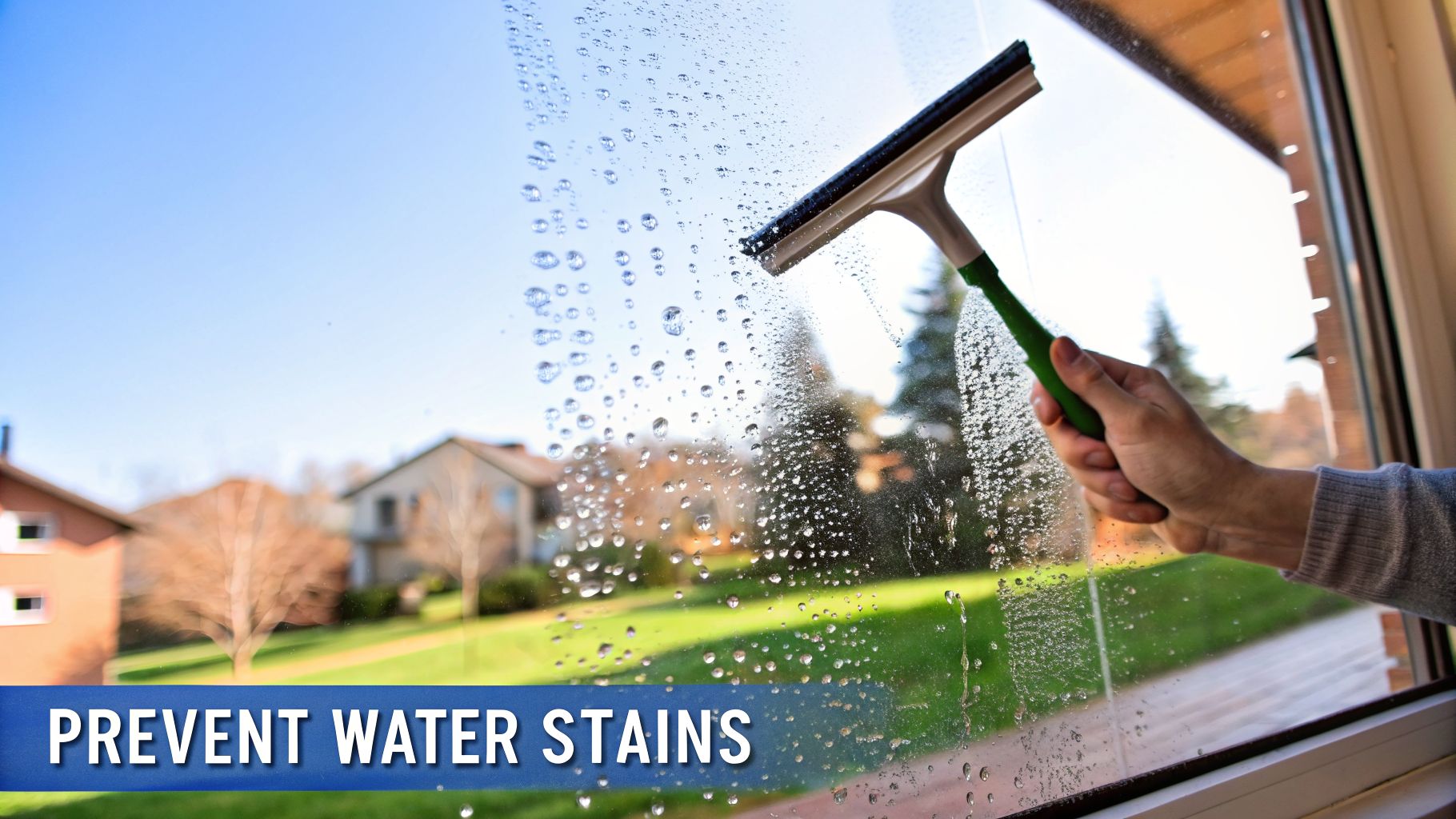
Getting your windows spotless and free of those stubborn mineral deposits is a great feeling. But the real work? It starts now. The single best window water stain remover is simply preventing the stains from ever showing up.
This means you’ve got to switch from a reactive cleaning mindset to a proactive maintenance strategy. It all comes down to controlling where water comes from and how it behaves on your glass. A few smart moves today will save you countless hours of scrubbing later, keeping your windows crystal clear all year.
One of the most common culprits behind water stains, especially for homeowners in places like Scottsdale, is a rogue sprinkler system. If a sprinkler head is blasting your windows with hard water every day, you’re basically asking for severe mineral buildup.
It only takes a few minutes to walk your property and check your sprinklers. Adjusting the heads to water the lawn—not the glass—is one of the simplest and most effective changes you can make. It's a small tweak that can completely eliminate the primary source of hard water stains.
Another often-overlooked area is your roof’s drainage. Properly functioning gutters are critical, and understanding what a gutter apron is and ensuring it's installed correctly can make a huge difference. Good drainage prevents mineral-heavy roof runoff from sheeting down your siding and onto your windows every time it rains.
For a more long-term solution, think about applying a hydrophobic glass sealant. These advanced coatings create an invisible, ultra-slick barrier on the glass that makes it incredibly difficult for water to stick.
Instead of clinging to the surface and evaporating, water is forced to bead up and roll right off, taking minerals and dirt along for the ride.
It works just like a freshly waxed car. You see the water bead up and slide away instead of flattening out. This dramatically cuts down on the mineral deposits left behind, helping your windows maintain that just-cleaned clarity for much longer.
In major U.S. markets like Arizona and Nevada, where hard water is a reality for 76 million households, being proactive is key. For high-rise owners in Las Vegas, drip lines can slash tenant satisfaction by 22%. If left untreated, these stains can etch into the glass at a rate of 0.1-0.5 mm per year, contributing to over $500 million in annual glass replacement costs across the U.S. By embracing professional services and preventative strategies, property managers can see savings of up to 35% compared to DIY methods, all while avoiding permanent surface damage.
At the end of the day, the best defense is a good offense. Regular cleaning simply doesn't give mineral deposits the time they need to bond with the glass and become a real nightmare to remove.
For businesses in cities like Phoenix, this means getting a recurring professional cleaning schedule on the books. A scheduled service is the most reliable way to protect your investment and maintain a pristine appearance.
To figure out the ideal frequency for your building, check out our guide on how often windows should be cleaned. It will help you ensure your windows always look their best while protecting them from long-term damage.
Even with the best DIY methods, you're bound to run into questions when battling stubborn hard water spots. Getting the right answers can be the difference between sparkling clear glass and a frustrating Saturday afternoon that yields zero results. With our experience cleaning windows for over 26 years, we've heard just about every question you can imagine.
We've gathered a few of the most common ones our clients ask about using a window water stain remover and getting that perfect, professional finish.
It's a tempting thought. Powerful cleaners like CLR or Lime-A-Way are fantastic at dissolving mineral buildup, but they're way too aggressive for most windows.
These harsh chemicals can easily damage delicate window frames, eat away at the rubber seals that keep your windows airtight, or even strip the paint right off your siding. We’ve seen it happen. The safest bet is to always start with the gentlest method first, like that 50/50 vinegar and water solution. For anything tougher, especially on coated or tinted glass, it's best to call a pro who uses industry-approved, glass-safe solutions to protect your entire window assembly.
A pressure washer is an amazing tool for blasting off loose dirt and grime, but it's completely useless against bonded mineral stains. The problem is chemical, not physical—the minerals have literally fused to the glass and need to be dissolved, not just pushed off.
Worse yet, pointing a high-pressure stream at your windows is a huge risk. You can easily break the airtight seals in double-pane windows, which leads to fogging. You can also force water behind your siding and into your wall cavities, creating a perfect recipe for mold. Professionals use ONLY two methods: a squeegee or a pure-water system which is much lower and safer pressure.
This is the big one. To figure it out, run your fingernail gently across the dry, clean spot. If the surface feels totally smooth, you're likely dealing with a Stage I deposit that can still be removed with the right techniques.
But if you feel a distinct roughness, a dip, or an indentation, the stain has progressed to Stage II etching. This means the minerals have chemically corroded the glass itself, leaving permanent damage. No amount of scrubbing or cleaning solution will fix it. At this point, professional glass restoration or a full window replacement are your only real options.
The ideal schedule really comes down to where you live. For homes and businesses in areas with notoriously hard water and lots of dust, like Phoenix, we recommend a professional cleaning at least twice a year.
For high-visibility commercial properties in places like Scottsdale, a quarterly schedule is often best. This kind of proactive maintenance stops mineral buildup from sprinklers and general exposure before it starts. It keeps your property looking pristine and protects your glass from long-term damage, which is the best way to avoid needing a heavy-duty window water stain remover in the first place.
When your DIY efforts just aren't cutting it, trust the experts at Professional Window Cleaning to restore the clarity and beauty of your windows. With more than two decades of experience and the best tools in the business, we guarantee a flawless, streak-free finish every single time. Contact us today for a free estimate and see what a difference a professional touch can make. Learn more at https://www.professionalwindowcleaning.com.
Read our blog posts regularly and keep learning.