Care and Maintenance
Best Hard Water Stain Remover for Windows: 2026 Guide
Discover the best hard water stain remover for windows that actually works. Our 2026 guide reviews top products to restore streak-free shine.


At 8 a.m., the lobby glass looks fine from the parking lot. Then you walk the frontage, catch the pollen film in the sun, and look up at upper floors that haven't had a proper exterior clean in months. That's the point where commercial window cleaning stops being a simple janitorial task and turns into an access, technique, and maintenance decision.
The best way to clean commercial windows depends on one thing first. Which of the only two professional methods fits the job. Window cleaning pros use either a squeegee system or a pure-water system. Everything else is a variation on those two approaches.
Professional Window Cleaning has been cleaning windows for over 26 years. Across markets like Las Vegas, Phoenix, Denver, and Scottsdale, the difference between a clean result and a frustrating one usually comes down to picking the right method before anyone fills a bucket or extends a pole.
Commercial glass gets dirty in different ways, and that's why one-size-fits-all advice falls apart fast. Lobby doors collect fingerprints, sneeze mist, and hand oils. Exterior office glass picks up dust, irrigation overspray, airborne soil, and runoff lines from frames. Upper façades add wind exposure, access limitations, and more risk if a crew chooses the wrong setup.
In the field, there are only two real professional cleaning methods:
That sounds simple, but the choice isn't casual. A crew has to look at height, glass type, soil level, surrounding foot traffic, available water supply, and whether the job is plain maintenance or actual restoration.
Practical rule: If the question is only “How do I make the glass look better today,” you're already behind. The first question is “What method fits this building without creating damage or access problems?”
A lot of bad window cleaning starts with the wrong assumption. People focus on streaks and ignore risk, or they focus on access and ignore glass condition. Both mistakes cost time.
Safety standards changed the trade for a reason. A major turning point came in 1987, when ANSI adopted the ASME safety standard for window cleaning as ANSI/ASME 39.1-1987. OSHA later described it as providing criteria that hadn't previously been available and as setting industry-accepted practices for cleaning windows on all buildings. A later safety review also cited OSHA accident data showing 88 window-cleaning accidents over a 15-year period, with 62 fatalities, and noted that ladder mishaps are the most common cause of window-cleaning accidents, as summarized in this window-cleaning accident statistics review.
Before cleaning starts, experienced crews usually sort through factors like these:
That's where the best way to clean commercial windows gets decided. Not by habit, but by fit.
Most buyers ask for a result. Clean glass, no streaks, no disruption. Crews have to choose the method that gets there without wasting labor or introducing risk. For commercial work, that means comparing squeegee cleaning against pure-water cleaning based on the building itself.
Squeegee work is still the benchmark for close-detail glass. It's excellent on storefronts, interior panes, partitions, lobby glass, and lower exterior windows where a tech can work the edges, corners, and sill detail by hand. It also gives you better control on greasy soil, fingerprints, and first-time cleanup where you need to watch the blade edge and inspect every pass.
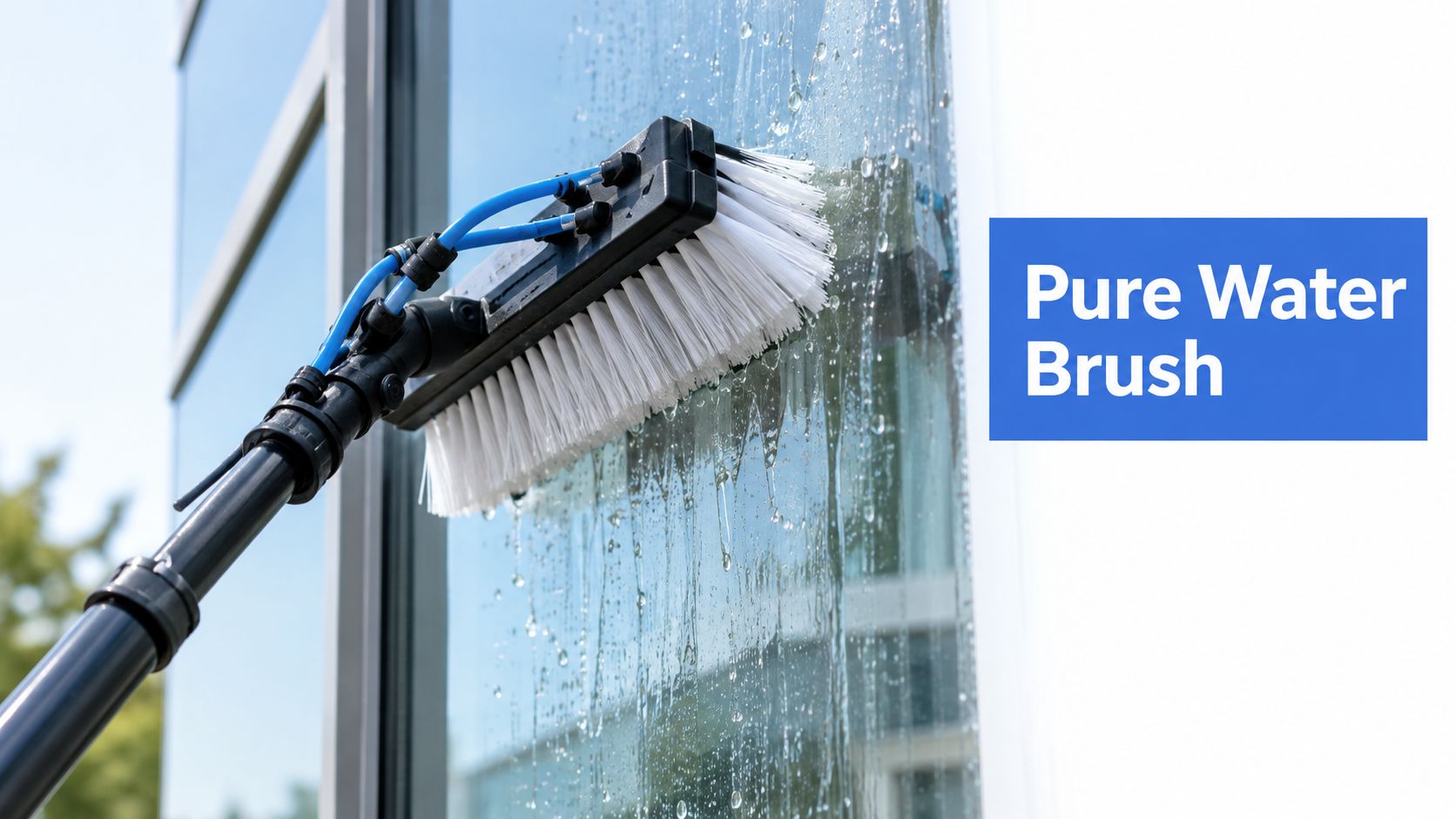
Pure-water cleaning is strongest on exterior glass that's high, repetitive, or awkward to reach. Professional guidance notes that pure-water systems are the preferred approach for upper stories because telescoping poles and brush heads can clean and rinse from the ground, then let the glass dry naturally without wiping, as described in this guide to squeegee and pure-water exterior techniques.
| Criterion | Squeegee Method | Pure-Water Method |
|---|---|---|
| Best use case | Storefronts, interiors, detailed lower glass | Upper stories, exterior façades, hard-to-reach glass |
| Finish control | High control on edges, corners, and heavy fingerprints | Strong on broad exterior maintenance cleaning |
| Access style | Hand work, short poles, close contact | Ground-based telescoping poles or elevated setups |
| Speed on large exteriors | Slower on repetitive upper glass | Faster on expansive exterior elevations |
| Water quality dependence | Uses cleaning solution and blade technique | Depends on properly purified water |
| Typical challenge | More labor per pane | Needs filtration, flow, and rinse discipline |
The cleanest decision usually comes down to these points:
Glass-industry guidance also matters here. Standard cleaning solutions for architectural glass should not include acids, and scrapers should not be part of routine cleaning. Commercial guidance also notes that mineral deposits, adhesive, and specialty glass often need a separate inspection before cleaning, which is covered in this commercial window washing guide on maintenance versus restoration issues.
If you want a deeper look at equipment layouts and system types, this overview of a window washing system is useful for matching tools to building conditions.
Squeegee work looks easy until someone leaves lines on every pane. The tool isn't the trick. The workflow is.
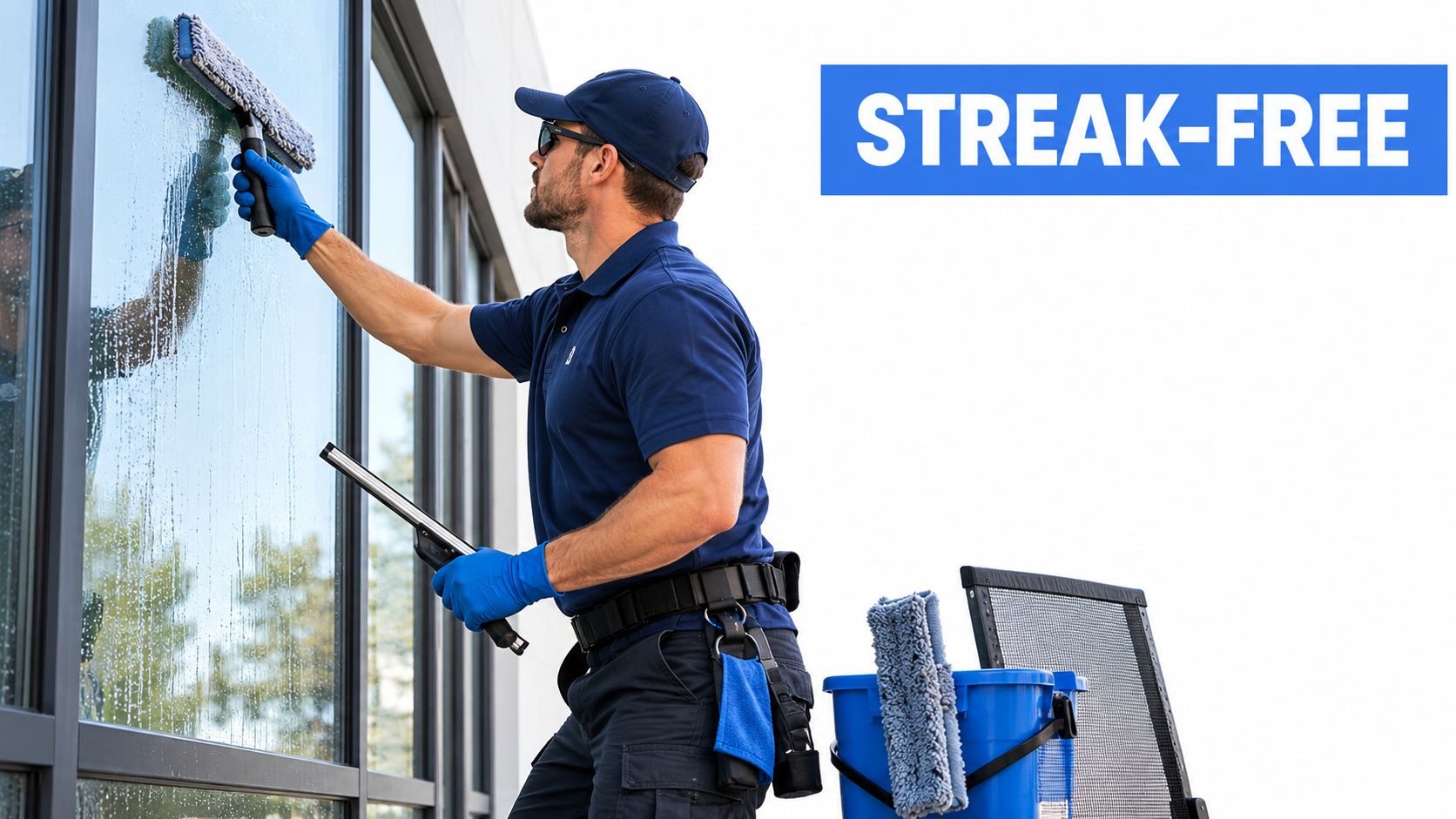
A proper squeegee kit usually includes a bucket, a washer or T-bar sleeve, a quality squeegee, clean detailing cloths, and a glass-safe cleaning solution mixed to label directions. The biggest rookie mistake is using a random soap mix that leaves film behind or gums up the rubber.
Get the pane fully wet, but don't flood the frame. A dry corner or missed strip is where skip marks start.
Professional guidance on squeegee use says the blade is typically held at about a 30-degree angle, and each pass should overlap the previous one by roughly one inch to prevent lines, as shown in this professional squeegee technique guide.
For movement pattern, there are two standards:
That same distinction is outlined in this guide to the S-method and straight-pull method.
Keep the rubber edge clean. A perfect stroke with a dirty blade still leaves a dirty line.
A clean result usually comes from small habits, not flashy technique:
On hot glass, work smaller sections. On cold glass, check rubber stiffness because the blade can lose contact and leave chatter. On interior office glass, reduce excess water because carpet, mullions, and sill finishes don't forgive slop.
The last step isn't packing up. It's changing your angle and reading the glass against available light. That's where you catch fine lines, missed fingerprints near pull handles, and residue along the bottom edge.
This is also where a lot of experienced techs separate maintenance from overworking the pane. If the glass has bonded staining that doesn't release with proper routine technique, more squeegee passes won't fix it.
Pure-water cleaning solves a different problem than squeegee work. It's built for height, reach, and broad exterior maintenance where direct hand work on every pane isn't practical.
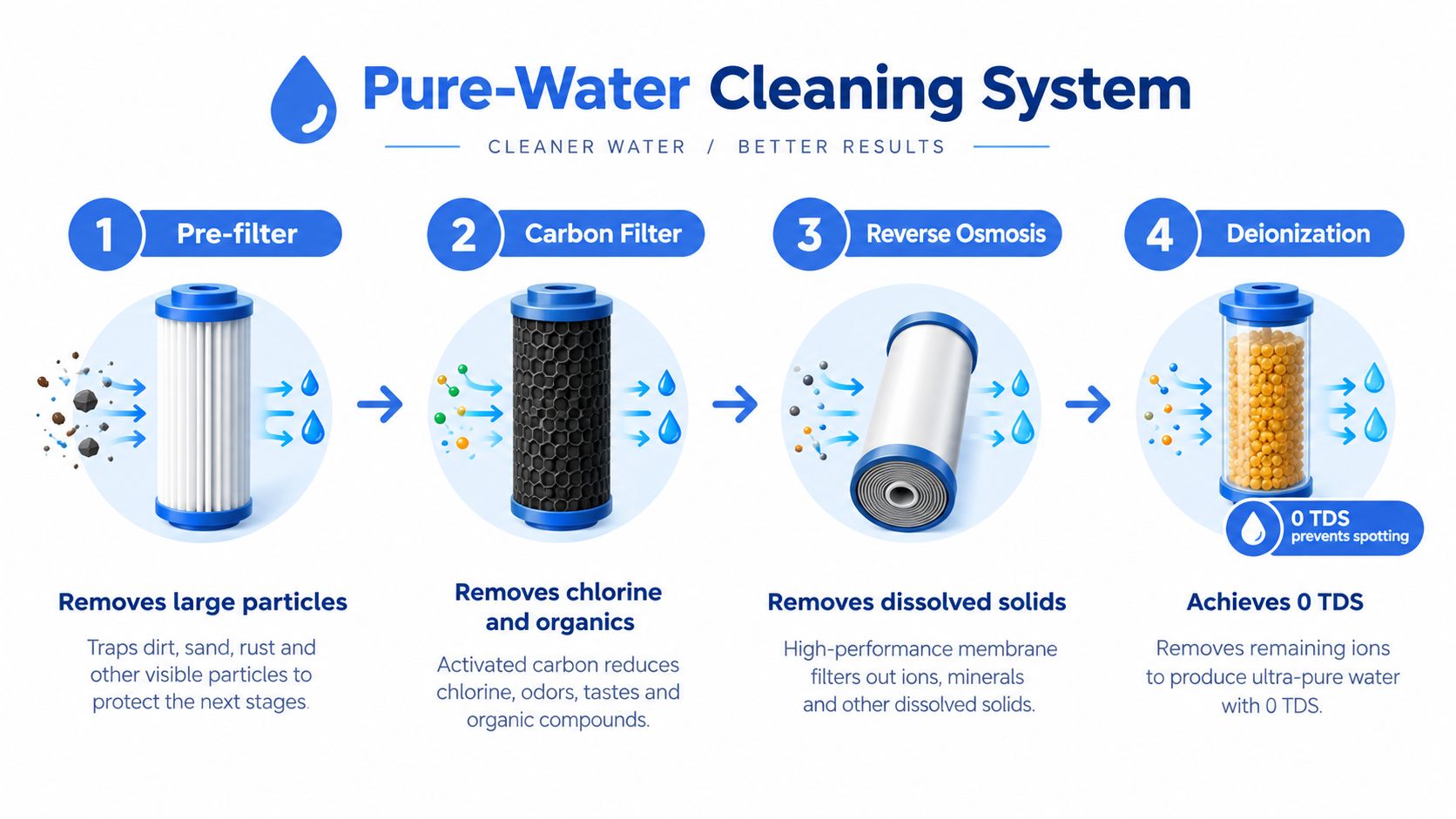
Tap water carries minerals and impurities. When that water dries on glass, those solids stay behind as spots or haze. Pure-water systems filter those impurities out so the rinse can dry without leaving chemical or mineral residue.
One industry supplier describes the process as using water purified to a zero-total-dissolved-solids standard for commercial cleaning equipment in this ultra-pure water system catalog.
A working pure-water setup usually includes a filtration unit, hose reel, pump or supply line, telescoping pole, and a brush head matched to the glass and frame condition. The brush loosens soil. The rinse carries it away.
Good results depend on sequence:
This walkthrough shows the system in action:
Pure-water shines on buildings where a crew can stay on the ground and still reach the working area. It's especially useful for exterior office glass, mid-rise façades, dealership glass, and repetitive maintenance routes where setting and resetting ladders would slow the job and increase exposure.
Field note: Pure water works best when the operator treats rinsing as the finish step, not as an afterthought. Most bad pure-water results come from incomplete rinsing or dirty frames bleeding back.
It also handles regular exterior maintenance well because there's no soap film left behind. That can help keep routine dust and environmental soil from building around residue lines. The catch is that pure water won't magically fix etched glass, construction debris, or mineral staining that has already bonded to the surface.
The cleaning method matters, but access decisions matter first. If the setup is wrong, the job is wrong.
A real commercial job should begin with a written hazard review. You're checking pedestrian traffic, overhead conditions, surface slope, anchor points, electrical proximity, weather, and whether the glass can be serviced from the ground.
That order matters because many jobs can be simplified by choosing a pure-water approach from grade instead of forcing ladders where they don't belong.
| Height Range | Recommended Access | Minimum PPE | Governing Standard |
|---|---|---|---|
| Ground-access exterior glass | Water-fed pole or hand work from grade | Gloves, slip-resistant footwear, eye protection as needed | Site-specific risk assessment and local rules |
| Low elevated work | Properly rated ladder only where footing and setup are controlled | Gloves, slip-resistant footwear, ladder-safe setup practices | OSHA walking-working surface and ladder rules |
| Higher façade work | Lift, rope-descent system, or suspended platform based on building conditions | Full-body harness and task-specific fall protection | OSHA fall-protection requirements and applicable window-cleaning standards |
| High-rise specialty access | Rope access or suspended platform with trained personnel | Full PPE for access system and fall arrest | Applicable OSHA, ANSI, and local façade-access rules |
Ground-level storefront work doesn't need the same PPE package as suspended exterior work. But every level has basics.
Glass-industry cleaning guidance also pushes the planning side hard. It emphasizes risk assessment, secure work zones, trained workers, and choosing the right access method before cleaning begins, while warning against routine use of metal scrapers and acids on architectural glass in this architectural glass cleaning procedures document.
The most avoidable jobsite errors are usually simple:
Clean glass isn't the only measure of a finished job. A sound access plan is part of the work.
A good maintenance schedule is based on exposure and expectations, not on a random date circled on a calendar. Different properties soil at different speeds, and the schedule should reflect that.
Retail glass at entrances usually needs the most attention because people touch it all day and street-level grime shows immediately. Mid-rise offices often settle into a steadier routine. Properties near traffic, landscaping overspray, construction, or heavy dust need shorter cycles because the glass loses its clean look much faster.
This is a useful benchmark graphic for thinking through cadence by property type:
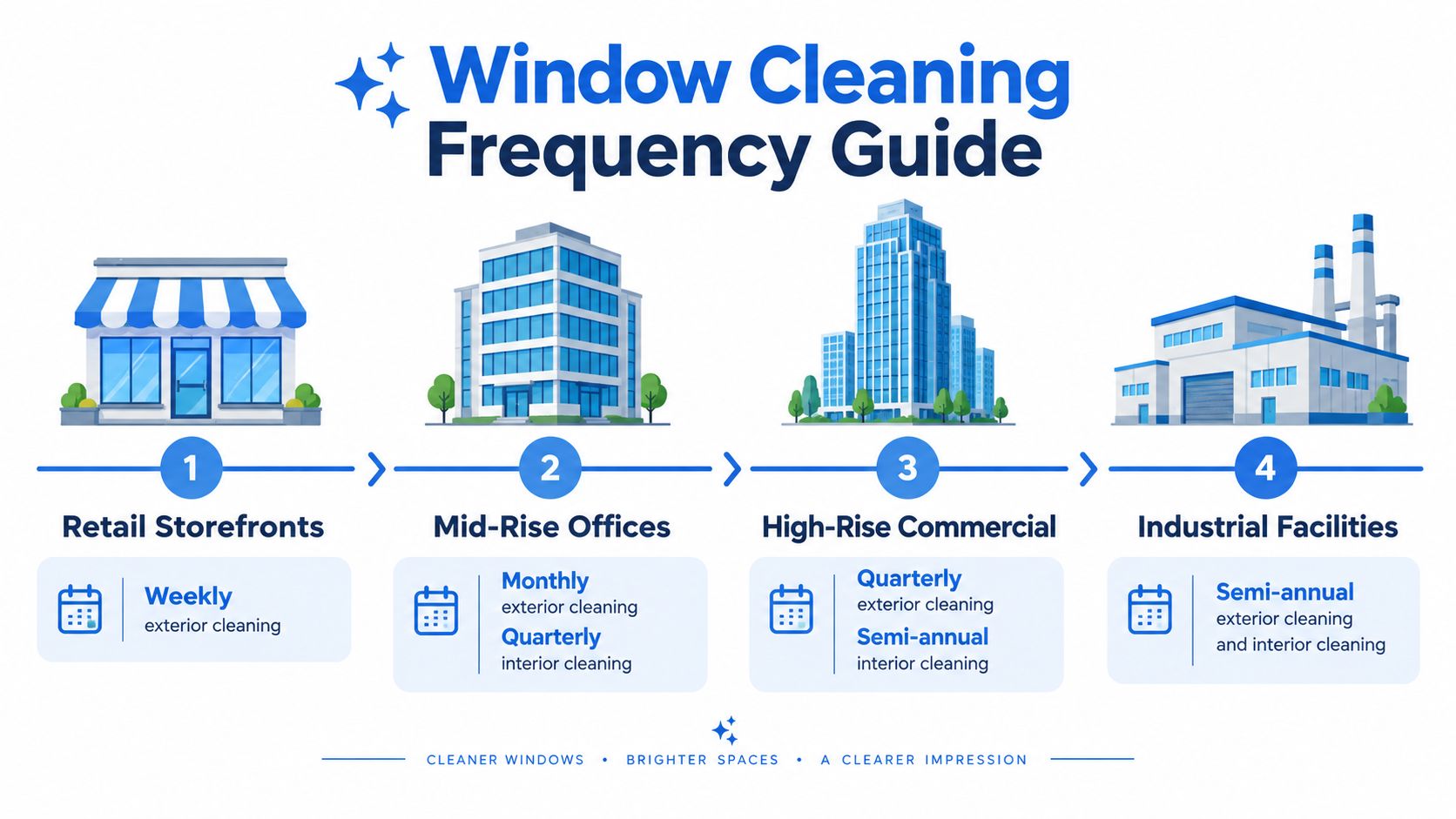
The strongest schedules split work by task, not just by date:
A simple service log helps more than expected. Record the date, weather, method used, and anything unusual such as sprinkler spotting, sealant bleed, or scratch concerns. The next crew won't have to guess what happened last time.
That's the part many schedules miss. Routine cleaning removes normal dirt. It doesn't fix etched mineral deposits, adhesive residue, or fabricating debris concerns. If those conditions are present, they need their own scope.
For a practical look at cadence planning, this article on how often commercial windows should be cleaned helps map frequency to property use and exposure.
Most “the windows still look bad” complaints come from three sources. Bad rubber, bad water, or the wrong expectation for what maintenance cleaning can fix.
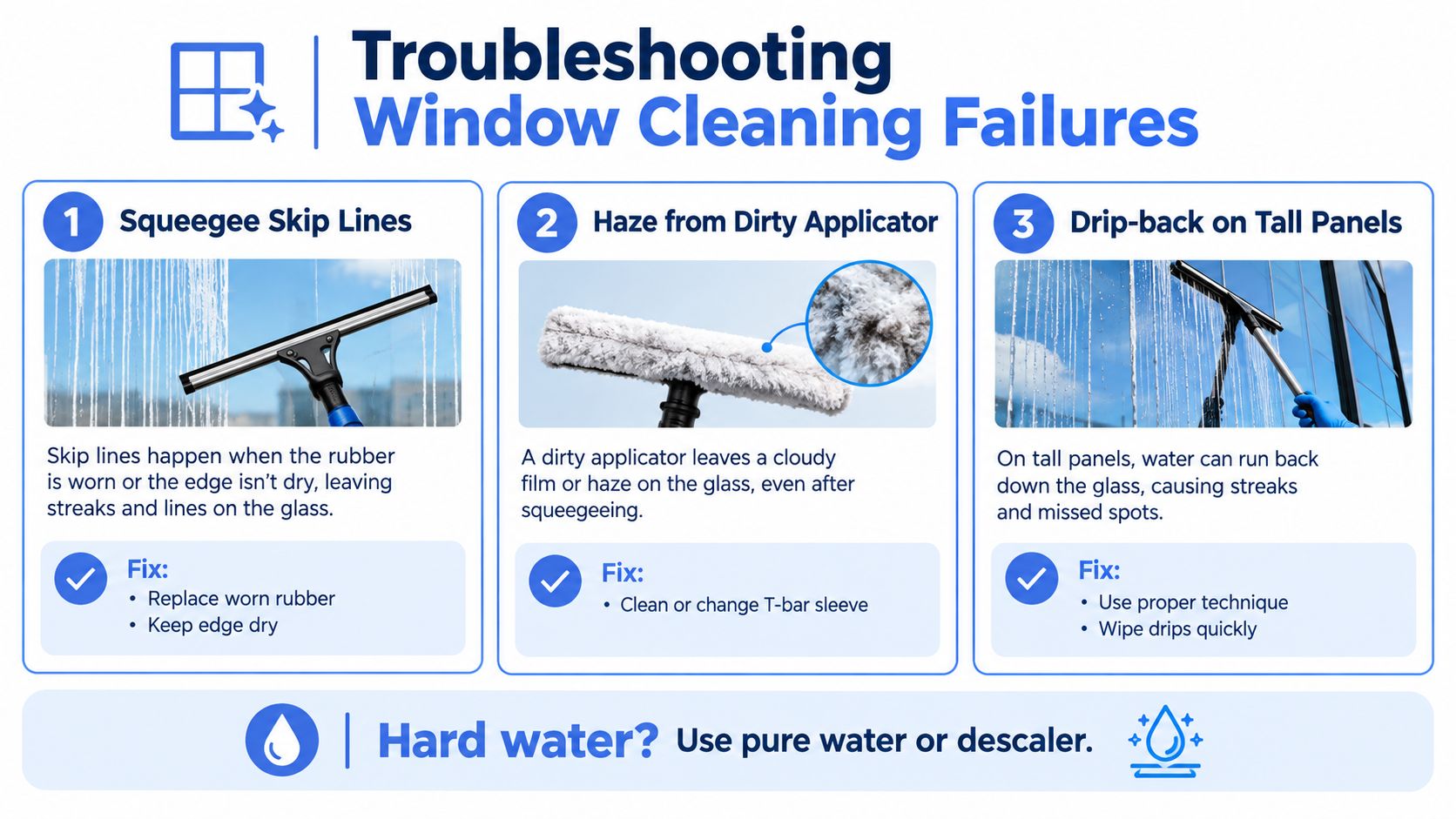
If you see skip lines, inspect the squeegee rubber before you blame technique. If the glass has haze, check the washer sleeve, detailing cloths, and solution residue. If tall panes keep dripping after you finish them, the top frame or gasket line is probably bleeding down.
Two clean passes with the right method should tell you whether the issue is dirt or damage. If the mark stays put, stop treating it like routine cleaning.
Hard-water spotting is a mineral problem, not a basic dust problem. Left alone, it can move from visible spotting to surface damage. But crews get into trouble by reaching for stronger chemistry or metal scrapers too quickly.
Glass guidance is clear on the big point: standard cleaning solutions should not include acids, and scrapers should not be part of routine cleaning. That matters even more on coated, tempered, Low-E, or specialty architectural glass, where surface damage can look like scratching but may be coating removal.
The best way to clean commercial windows isn't always more aggressive. Sometimes it's knowing when to stop, document the condition, and hand the pane off for restoration-specific treatment instead of forcing a maintenance method to do a restoration job.
Professional Window Cleaning handles commercial window cleaning, high-rise access work, and maintenance planning using the two methods that matter on the job: squeegee cleaning and pure-water cleaning. If you need help choosing the right approach for your building, or you want a crew that understands the line between routine maintenance and restoration risk, visit Professional Window Cleaning.
Read our blog posts regularly and keep learning.