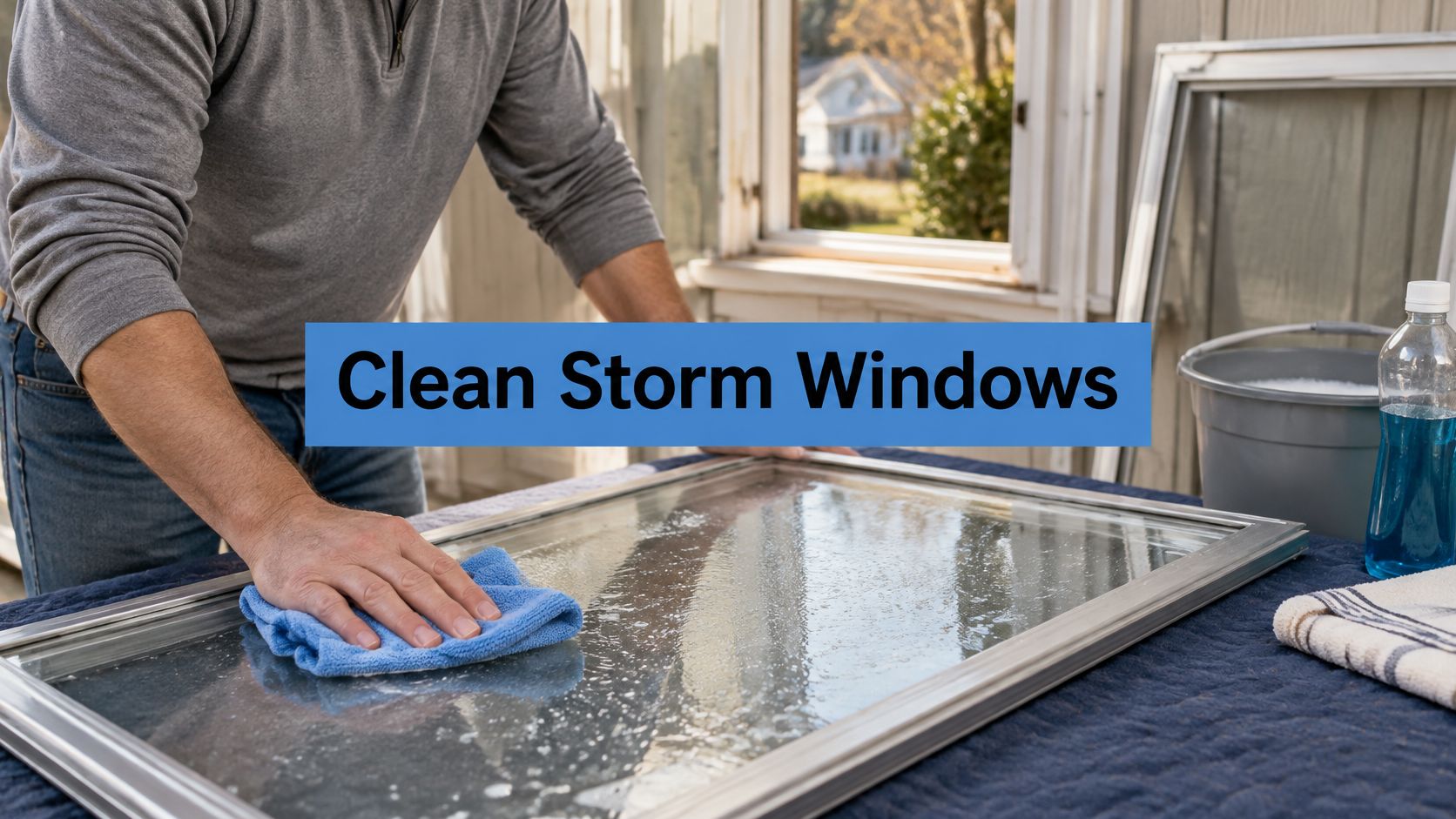
Care and Maintenance
How a Window Cleaner with Extension Reaches High Glass
Learn how a window cleaner with extension works, when a pole is safe, how to choose one and where ladders or professionals are the better call.


Fresh water stains come off when you soak the glass in a 1:1 white vinegar and water solution for 5-10 minutes, agitate with microfiber, rinse, and dry completely. Marks that stay cloudy after that soak are a different problem, and scrubbing them harder is how a film becomes permanent haze.
You're at the shower door or the storefront, and the glass looks milky again even though you wiped it last week. Sprinkler mist hit the pane at dawn. Shower spray dried in place. Those white rings aren't dirt you missed. They're minerals that stayed when the water left.
I would start with the cheapest fix, and I would not reach for a polishing compound until two short field tests say the glass is still intact. A water stain remover from glass only works when the mark is sitting on the surface. If the surface itself has changed, a stronger chemical scars it. Diagnose first, dissolve second, and stop the next dry cycle before it starts.
Picture a storefront misted by sprinklers at dawn, or a shower door that clouds up after you already wiped it this week. Those marks usually aren't absorbed into the glass. They're mineral deposits left when hard water dries.
A 2022 American Glass Research investigation examined white haze on filled vodka and gin bottles. The deposits were primarily calcium carbonate (CaCO3), plus smaller, variable amounts of magnesium, phosphorus, and sulfur. Lab deposits matched commercial bottles, so the haze was precipitation, not residue coming out of the glass. The calcium came from hard water added at filling. Reducing alkali on the glass didn't stop it. Hard water did.
The same drying leaves white spots on windows, showers, vehicle glass, and façades. That chemistry is a daily fight in Arizona, Nevada, and Colorado, even though the bottle study doesn't measure local hardness.
Fresh scale dissolves. Older film can bond or alter the surface, and then you need restoration, not a rougher pad. A short vinegar soak still clears most fresh spots. After that, the question is whether the glass itself is still sound.
Start on the lowest rung that matches the mark. A stronger bottle isn't better when the spot is only a week old.
| Remover | Best for | How to apply | Dwell time | Risk to glass |
|---|---|---|---|---|
| White vinegar 1:1 with water | Fresh mineral spots on windows, mirrors, shower glass | Spray, keep wet, agitate with microfiber, rinse, dry | 5-10 minutes | Low |
| Baking soda paste | Spots that survive the vinegar soak | Apply thin paste, rub gently with damp microfiber, rinse, dry | 1-2 minutes per spot | Low to moderate, mild abrasive |
| Commercial water spot remover | Heavy buildup, auto glass, boat and RV glass | Small test patch, follow label, buff with microfiber | Per label | Moderate, check coated-glass warnings |
| Cerium oxide or polishing compound | Bonded scale on uncoated glass | Hand or machine polish with a pad, then rinse | Until haze lifts | High, can scratch glass if overworked |
| Professional restoration | Etched glass, high windows, storefronts, large areas | Book a service visit with stain diagnosis | One appointment | Low, handled by trained technicians |
White vinegar loosens fresh carbonate scale because mild acid reacts with it. Baking soda paste adds a very light scrub for spots that survive the soak. Keep the cloth damp. Commercial removers suit heavy film on auto, boat, and RV glass only when the label says the formula is safe for that glass, coating included. Cerium oxide belongs on uncoated glass, in experienced hands. Overworking a pad can scratch a clear pane into a worse haze. Professional restoration is the stop for etched glass, high windows, and large areas.
Before you climb:
Shelves are crowded with spot removers. Pick what the stain needs, not the strongest jug. If the first two rows fail, a harsher chemical is the wrong next move. Run the field tests first. Etched glass skips this ladder entirely.
Two checks take about half a minute. They decide whether you clean or you stop.
The wet test. Spray plain water on the mark. Surface residue darkens or seems to vanish while it's wet, then returns as it dries. Etched haze looks the same wet or dry.
The fingernail test. Glide a nail across the spot. A gritty, raised texture means bonded mineral scale. A smooth cloudy patch means the glass surface itself has changed.
| What you see and feel | Likely cause | Next step |
|---|---|---|
| Mark darkens or fades when wet, returns when dry | Surface mineral residue | Vinegar soak method, then angled-light check |
| White spots lift with a 5-10 minute vinegar soak | Fresh calcium carbonate scale | Repeat once, rinse with demineralized water, dry fully |
| Gritty raised texture that catches a fingernail | Bonded mineral scale | Baking soda paste or commercial remover on a test patch |
| Smooth cloudy haze that cleaning does not change | Etched or corroded glass surface | Stop scrubbing, get professional polishing or replacement advice |
| Rainbow or oily iridescence on the pane | Weathered glass from long mineral exposure | Professional assessment before any abrasive product |
Minerals from hard water can chemically bond to glass, and deposits left for a long time may corrode or etch the surface until polishing or replacement is the only workable option, per architectural glass cleaning guidance. Rain can also leach alkaline material from nearby concrete onto the pane. That attack isn't ordinary water spotting, and acid won't reverse it.
Practical rule: A mark that changes when wet, or that responds on a small test area, is more likely surface scale. Haze that stays after a glass-safe treatment is etching.
Stop home treatment on coated glass, sealed units, and high panels. Hard scrubbing there can wreck coatings, seals, and the stone or metal beside the pane. Follow the glass maker's instructions. If you don't know the coating, don't guess with acid or a polishing pad.
I would not polish a smooth, unchanged haze at home. That's how softened glass turns into permanent haze.
Work one pane. Keep it wet. Judge the result only after it's fully dry.
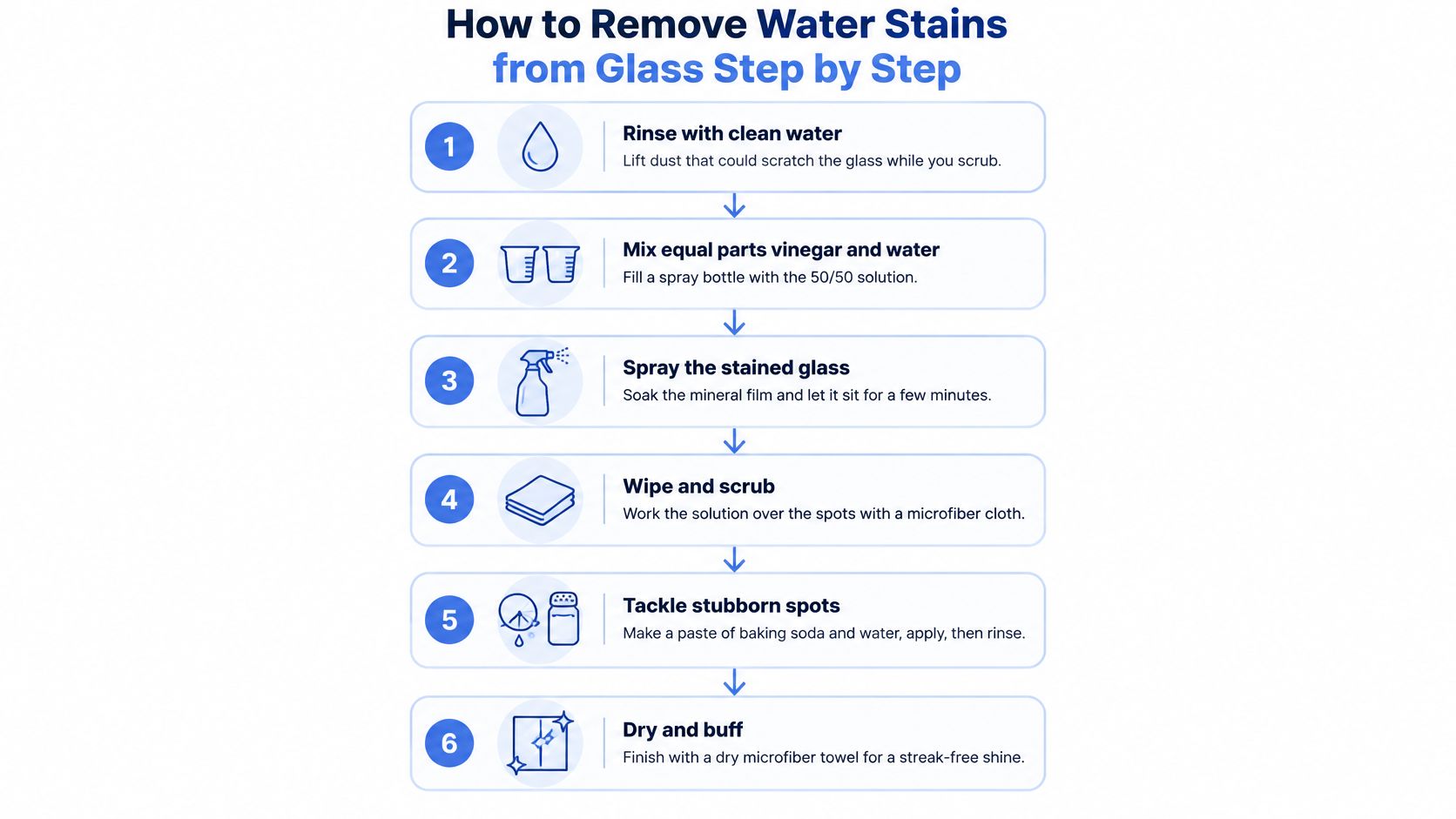
This vinegar mix is the water stain remover from glass I reach for first on fresh film. For light-to-moderate staining, Martha Stewart's glass-cleaning walkthrough matches a controlled acid soak, and it also recommends rinse water at 20 ppm total dissolved solids or below, because tap minerals spot the pane again as it dries.
Shower doors are the repeat offenders. A practical companion for enclosures is this guide to clear hard water marks from glass from Top Cleaners, useful when limescale returns on glass you use every day.
Letting vinegar dry on hot glass doesn't clean the spot. It sets a new film.
Watch a careful hand work the same sequence, then copy the pressure, not the speed.
Success is uniform clarity and no white film once the pane is fully dry. If angled light still shows a smooth cloud, stop. More acid won't rebuild the surface.
Removal fails if the next shower or sprinkler cycle air-dries on the same pane.

A weekly vinegar-and-water wipe keeps light buildup from hardening. Finish with a dry towel so nothing is left to mark the glass.
Never let mineral-rich water air-dry on glass. Every dried cycle lays down another layer of calcium the next cleaning has to fight.
Call for help when sprinkler staining covers a storefront, shower scale is years deep, the glass sits above the first story, the unit is coated or sealed, or the pane fails the wet test and the fingernail check. That last signal matters most. A smooth, cloudy patch means the minerals have bitten into the surface itself, and no household acid will pull them back out.
Every professional clean comes down to two methods. A clear account of the squeegee process names them: the squeegee method and a pure-water system. The technician wets and agitates the glass so the dirt loosens, then pulls the liquid off with a rubber-bladed squeegee. That control suits detailed work on glass within reach. A pure-water system feeds purified water up a pole so the exterior dries without leftover minerals or chemicals, which is why it earns its keep on higher floors.
The pick depends on glass condition, height, access, water quality, and the finish you want, as notes on matching the method to the job describe. A crew can squeegee indoors and run pure water outdoors in the same visit. Heavy sprinkler staining or construction residue still gets direct detailing after the standard clean. Whatever name a company puts on the service, the work runs on one of those two methods.
Hard-water spotting is routine in Phoenix, Las Vegas, Denver, and Scottsdale. Office glass gets specialized treatments that remove hard water stains and mineral deposits, and HOA service removes them with specialized techniques and solutions. On homes, storefronts, and towers, eco-friendly solutions take off dirt, grime, streaks, and hard water spots.
Professional Window Cleaning's business profile dates the company to 1999, serving residential, commercial, and high-rise clients across Arizona, Colorado, and Nevada. Washing comes with a streak-free guarantee, and a free estimate is available before anyone climbs a ladder.
If the mark responds to water or the vinegar soak, keep working gently. If it stays cloudy after two careful rounds and feels smooth, stop. The surface is etched.
Polishing can improve some etched panes. It still won't bring back a factory surface. When the glass is past restoration, or the damage sits inside the pane rather than on it, broken glass panel replacement is the honest route. For bonded scale that still has a chance, our glass restoration services are the step after DIY stops.
Test the vinegar method on one small pane today. If the stain survives, the spotting is widespread, or the glass is hard to reach, ask for that free estimate.
Professional Window Cleaning clears hard-water film from homes, offices, storefronts, and high-rise glass, then checks the finish in real light. If a vinegar soak isn't enough, or you'd rather not work from a ladder, visit Professional Window Cleaning and request a free estimate. We'll tell you whether the pane needs cleaning, restoration, or replacement before anyone polishes it.
Read our blog posts regularly and keep learning.